Importance and Challenges of Rubidium and Cesium Extraction
Rubidium and cesium are important rare and valuable metal resources, widely used in strategic fields such as aerospace, pharmaceuticals, energy, electronic devices, and the chemical industry. The selection of extraction equipment and processes for rubidium and cesium is therefore critically important.
Although salt lake brines contain abundant rubidium and cesium resources, their concentrations are generally very low (typically below 10 mg/L), while coexisting metal elements such as sodium and potassium are present at extremely high levels (ranging from several grams to tens of grams per liter). Due to the very similar chemical properties of potassium and rubidium, potassium becomes the most significant interfering ion in the extraction process, posing severe challenges to the efficient recovery of rubidium and cesium from salt lake brines.
During the extraction of salts such as potassium chloride from salt lakes, rubidium and cesium salts are often co-precipitated and lost, resulting in resource wastage. Therefore, the development of effective separation methods to efficiently recover rubidium and cesium during salt lake brine processing has become a major research focus.
Technical Advantages of Solvent Extraction for Rubidium and Cesium Recovery
In recent years, the primary methods for extracting rubidium and cesium from ores have been ion exchange and solvent extraction. Among these, solvent extraction demonstrates superior application prospects due to its high selectivity, low energy consumption, and ease of continuous operation.
The most widely studied extractants include calixarene crown ethers and 4-tert-butyl-2-(α-methylbenzyl)phenol (abbreviated as t-BAMBP). In comparison, t-BAMBP offers advantages such as lower cost, high separation efficiency, and easy stripping, making it highly promising for industrial applications. The extraction mechanism of this extractant involves ion exchange between hydrogen ions from the phenolic hydroxyl group and metal cations, and the process must be conducted under strongly alkaline conditions.
Applicability of CWL-M Centrifugal Extractor in TBP-Based Rubidium and Cesium Extraction Systems
In response to the limitations of using tributyl phosphate (TBP) as a single extractant—such as relatively low extraction efficiency, severe equipment corrosion, high extractant loss, and potential environmental pollution—Zhengzhou Tiei Extraction Technology Co., Ltd. has developed a cost-effective solution for rubidium and cesium extraction, through extensive research and experimentation.
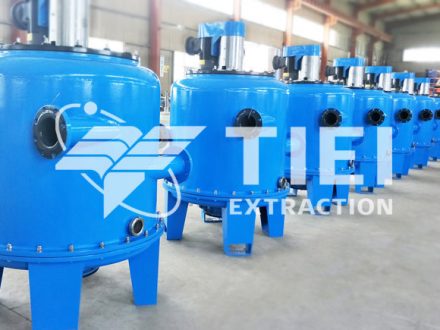
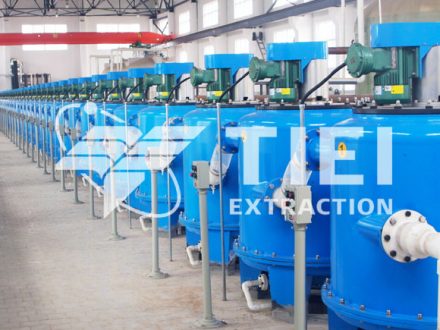
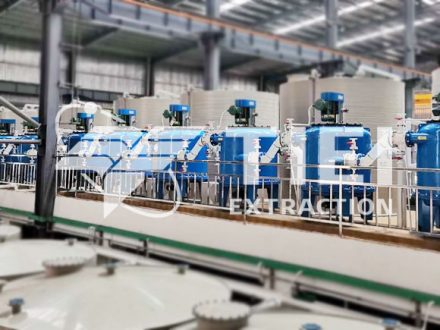
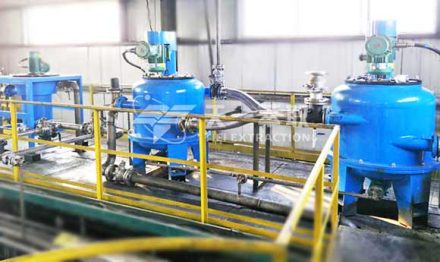
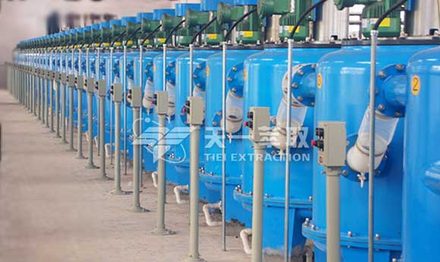
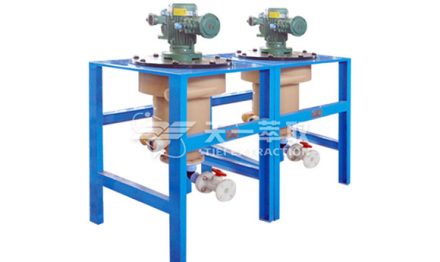
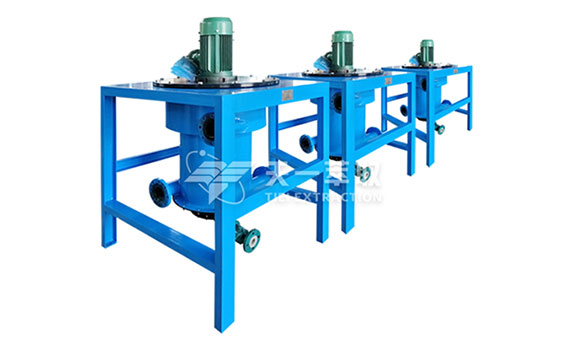
Experimental results demonstrate that, in the context of rubidium and cesium recovery from brine using TBP extraction, the CWL-M series centrifugal extractor—serving as the core liquid-liquid extraction equipment—exhibits exceptional suitability:
1.Outstanding corrosion resistance: After multi-stage countercurrent extraction operation, no corrosion was observed. The CWL-M series centrifugal extractor shows superior corrosion resistance compared with similar equipment.
2.Qualified extraction efficiency: Following multi-stage countercurrent extraction, the rubidium and cesium recovery rates meet process requirements.
3.Stable operation: Continuous operation ensures a smooth and controllable extraction process.
The CWL-M series centrifugal extractor demonstrates excellent corrosion resistance, stable extraction performance, and reliable continuous operation in TBP-based rubidium and cesium extraction systems. It represents an ideal equipment choice for the recovery of rubidium and cesium resources from salt lake brines.
Email: sales@tieiextraction.com
Whatsapp: +86 19069612820