Pyruvic acid is an important organic acid product. In the production of pyruvic acid through fermentation, the downstream extraction process directly determines product yield and quality. Currently, the main methods used to extract pyruvic acid from fermentation broth include vacuum distillation, reverse osmosis, ion exchange, and organic solvent extraction. Among these methods, solvent extraction has attracted considerable attention in industrial production due to its relatively simple operation, high recovery rate, and stable product quality. The principle is to achieve selective separation by utilizing the differences in the partition coefficients of pyruvic acid and impurities in organic solvents.
Solvent extraction places high requirements on the selection and regeneration performance of the extractant. In early processes, diethyl ether was used as an extractant. However, diethyl ether presents problems such as toxicity, high volatility, and flammability and explosiveness. In addition, its recovery rate and product purity were unsatisfactory, resulting in considerable environmental and safety concerns. Therefore, selecting a suitable extractant, choosing an appropriate centrifugal extractor, and further optimizing the extraction process and equipment configuration are key steps in developing a pyruvic acid extraction process.
Continuous Process Route from Fermentation Broth to Sodium Pyruvate
The following section describes the complete extraction process using the preparation of sodium pyruvate from pyruvic acid fermentation broth as an example.
1.Fermentation Broth Pretreatment
After fermentation is completed, the resulting pyruvic acid fermentation broth is first subjected to centrifugation to remove most of the microbial cells and suspended solids, thereby reducing the load on subsequent resin treatment and extraction processes.
2.Resin Treatment and pH Adjustment
The centrifuged supernatant is passed through a cation exchange resin to adjust the pH of the solution and remove some of the pigments and cationic components. After treatment through the resin column, the resulting fermentation broth is adjusted to a pH of 1.0–5.0. In other words, the pH of the fermentation broth before extraction is maintained within the range of 1.0–5.0.
3.Extractant Selection and Extraction
The pyruvic acid concentration in the fermentation broth before extraction is generally 20–120 g/L, with a preferred range of 40–80 g/L. Suitable extractants include organic solvents such as ethyl acetate, butyl acetate, and tributyl phosphate (TBP), among which TBP delivers better performance. The extractant volume is 100%–200% of the fermentation broth volume at this stage. After extraction and stripping, the pH of the back-extraction solution is adjusted to 5.0–7.0 using a sodium hydroxide solution.
4.Concentration and Crystallization
The stripping solution is concentrated under vacuum, with the pyruvic acid content in the concentrate controlled at 200–400 g/L. The crystals are washed with ethanol and then dried in a constant-temperature oven at 50–60°C to obtain white sodium pyruvate crystals.
Continuous Extraction Solution and Equipment Configuration
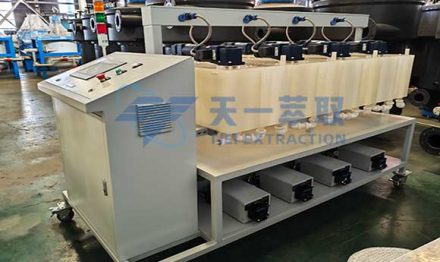
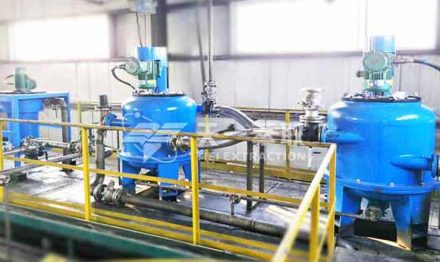
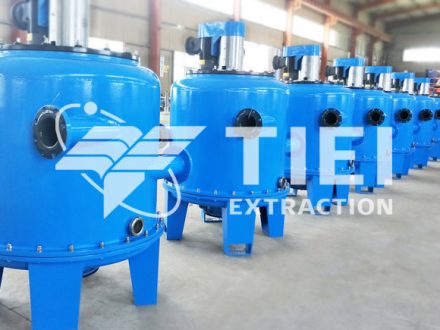
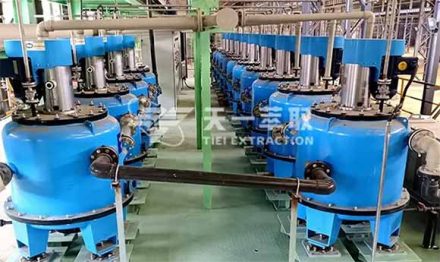
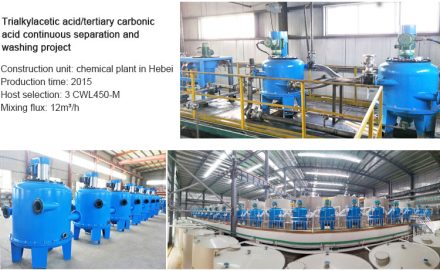
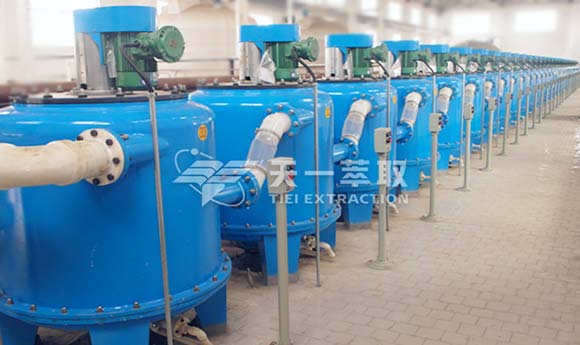
For the extraction section, Zhengzhou Tiei Extraction Technology Co., Ltd. recommends adopting a multistage counter-current extraction process using the CWL-M Series Centrifugal Extractors. As the core liquid-liquid extraction equipment, the CWL-M Centrifugal Extractor utilizes centrifugal force to achieve rapid mixing and separation of the two phases. It features short residence times per stage and rapid phase separation. Continuous counter-current extraction can be achieved through multistage series connection. This continuous process enables continuous feeding of the pretreated fermentation broth and extractant, multistage counter-current contact, and continuous phase separation, helping improve the stability and operational continuity of the extraction process.
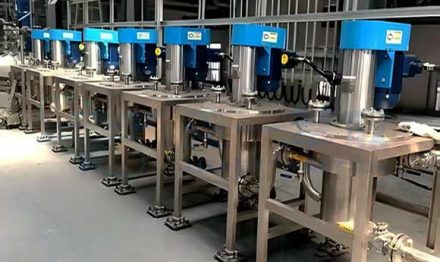
Compared with traditional mixer-settlers, the CWL-M Centrifugal Extractor features a compact footprint, low solvent hold-up, and simple operation, making it suitable for scale-up from laboratory testing to industrial production. For projects still in the process validation stage, pilot-scale testing can first be conducted using laboratory-scale extractors to determine key parameters such as extractant ratio, phase ratio, and number of extraction stages. These parameters can then serve as the basis for selecting industrial-scale extraction and separation equipment.
Process Advantages
This process uses tributyl phosphate (TBP) as the extractant, which provides a relatively high partition coefficient and good selectivity for pyruvic acid in the fermentation broth. TBP has low solubility in aqueous solutions, minimizing solvent losses during extraction. It can also be reused after stripping and regeneration. In addition, TBP is not easily volatile under operating conditions, and its toxicity and associated hazards are relatively low, making its environmental impact comparatively manageable. Combined with the CWL-M Series multistage counter-current centrifugal extraction equipment, this process can form a continuous pyruvic acid extraction solution covering fermentation broth pretreatment, extraction, stripping, concentration, and crystallization.
Conclusion
From fermentation broth pretreatment to extraction, stripping, concentration, and crystallization, the matching of operating parameters at each stage affects the final product yield and purity. Zhengzhou Tiei Extraction Technology Co., Ltd. provides a complete product line of CWL-M Centrifugal Extractors, ranging from laboratory-scale models to industrial-scale equipment, as well as process design and equipment selection support for pyruvic acid extraction from fermentation broth.
For more detailed process parameters or equipment solutions, please contact the Zhengzhou Tiei Extraction Technology Co., Ltd. for further consultation.
Email: sales@tieiextraction.com
Whatsapp: +86 19069612820