With the continued growth in the number of new energy vehicles, the first batches of vehicles and power batteries are gradually entering their end-of-life cycle, bringing increasing attention to resource recycling across the automotive industry chain. Meanwhile, the accumulated number of traditional fuel-powered and hybrid vehicles reaching the end of their service life is also driving growing demand for three-way catalytic converter recycling. It should be noted that pure electric vehicles are not equipped with three-way catalytic converters, whereas plug-in hybrid and range-extended electric vehicles still use exhaust after-treatment systems. Therefore, the growth potential of three-way catalytic converter recycling is driven primarily by the combined impact of hybrid vehicle adoption and the scrappage cycle of traditional fuel-powered vehicles.
Platinum, palladium and rhodium in three-way catalytic converters are important precious metals used in automotive exhaust purification. Their concentrations in catalytic converters are generally higher than those found in primary ores, earning them the reputation of "mobile urban platinum mines." If end-of-life three-way catalytic converters are improperly stockpiled or enter unauthorized recycling channels, they may not only result in the waste of valuable precious metal resources but also pose environmental risks due to their substrates, coatings, and residual materials. Proper recycling is therefore valuable from both resource utilization and environmental protection perspectives. For recycling companies, improving platinum, palladium and rhodium recovery rates while ensuring stable separation purity is essential to building competitiveness in this growing market.
The Key to Precious Metal Recovery from Three-Way Catalytic Converters Lies in Separation
Precious metal recovery from three-way catalytic converters generally involves several stages, including pretreatment, enrichment, leaching, separation and purification, and refining. During pretreatment, the outer casing is removed, and the catalyst is crushed and ground to obtain powder containing platinum, palladium, and rhodium. In the enrichment stage, pyrometallurgical or hydrometallurgical processes can be used to separate the precious metals from the substrate. Subsequently, acid leaching transfers platinum, palladium, and rhodium into solution, followed by solvent extraction and refining to obtain high-purity precious metal products.
Among these stages, solvent extraction and separation of the leachate play an important role in determining recovery efficiency and product purity. Platinum, palladium and rhodium have similar chemical properties, and various impurities are often present simultaneously in the solution. Traditional precipitation methods involve relatively long process flows and significant material losses, while pyrometallurgical processes feature high energy consumption and long processing cycles. Solvent extraction offers advantages such as high selectivity and continuous operation, making it a key unit operation in hydrometallurgical recovery processes. The phase separation performance, entrainment level, and continuous operating stability of the extraction equipment directly affect the recovery rates and separation purity of platinum, palladium and rhodium.
Advantages of the CWL-M Centrifugal Extractor in Platinum, Palladium and Rhodium Separation
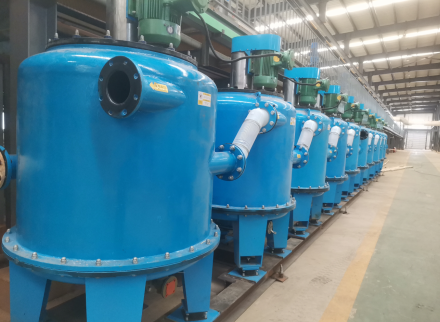
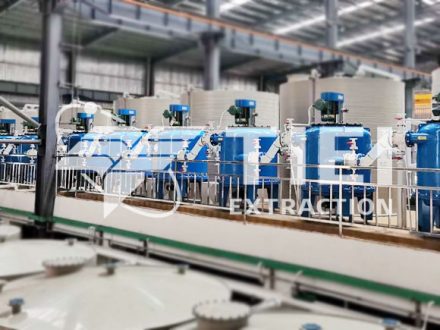
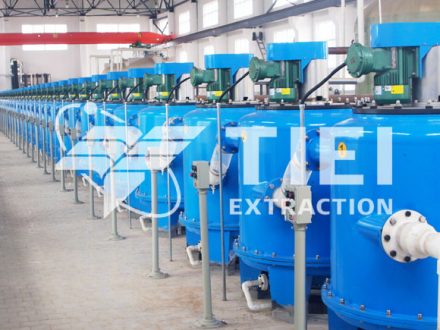
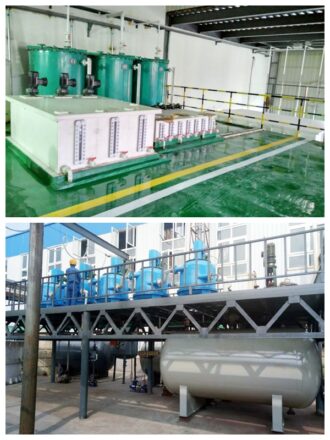
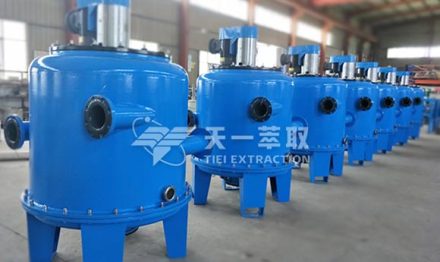
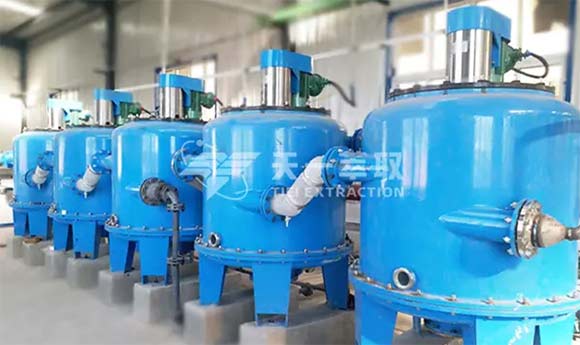
The CWL-M centrifugal extractor developed by Zhengzhou Tiei Extraction Technology Co., Ltd. is a new type of liquid-liquid extraction equipment suitable for the extraction and separation of platinum, palladium and rhodium from three-way catalytic converter leachates. The equipment utilizes a centrifugal force field to achieve rapid mixing, mass transfer, and separation between two liquid phases. It features a short liquid residence time per stage and rapid phase separation, effectively reducing emulsification and phase entrainment. It is well suited to complex precious metal feed solutions, including systems with relatively small density differences between the two phases. The equipment can operate in a fully enclosed configuration to reduce organic solvent volatilization. Materials can be selected according to the corrosiveness of the process solution, and the equipment supports continuous multistage countercurrent extraction through series connections.
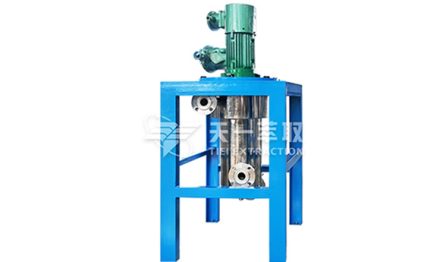
During process development, laboratory-scale centrifugal extractor can first be used for preliminary testing to screen extractants, determine the phase ratio and number of extraction stages, and obtain data on the extraction rates and separation performance of platinum, palladium and rhodium. Based on these results, industrial-scale extraction equipment can be selected and the process flow designed accordingly. Compared with traditional mixer-settlers, CWL-M centrifugal extractor features a smaller footprint, lower solvent hold-up, and a higher degree of continuous operation, helping improve precious metal recovery rates while reducing overall operating costs.
Conclusion
The overlapping scrappage cycles of new energy vehicles and traditional fuel-powered vehicles are creating new market opportunities for precious metal recovery from three-way catalytic converters. Realizing the recovery value of platinum, palladium and rhodium depends on appropriately matched extraction processes and reliable centrifugal extraction equipment. Zhengzhou Tiei Extraction Technology Co., Ltd. offers a complete product range, from laboratory-scale centrifugal extractors to industrial-scale CWL-M centrifugal extractors, and provides process validation and equipment selection support for precious metal recovery from three-way catalytic converters. For more detailed equipment solutions, please feel free to contact Zhengzhou Tiei Extraction.
Email: sales@tieiextraction.com
Whatsapp: +86 19069612820