In industries such as hydrometallurgy, electroplating, and chemicals, large volumes of chloride-containing wastewater rich in iron (Fe) and zinc (Zn) are generated. This type of wastewater has a complex composition, and because iron and zinc exhibit similar chemical properties, their separation is difficult. Direct treatment not only leads to the loss of valuable metal resources but also imposes significant environmental pressure. Achieving efficient and economical separation of iron and zinc, and recovering valuable metals, has become a critical challenge for the industry.
Traditional methods such as precipitation and displacement often suffer from problems such as long processes, high reagent consumption, incomplete separation, and the potential for secondary pollution. Solvent extraction, as a mature and highly efficient separation technology, demonstrates its unique advantages. The choice of core equipment for the extraction process directly determines both separation performance and operating costs.
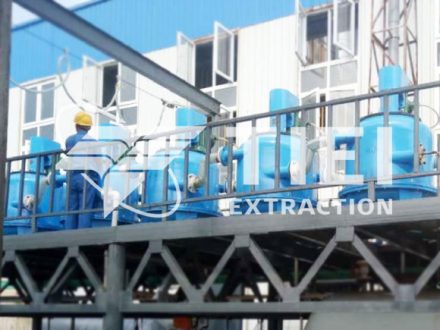
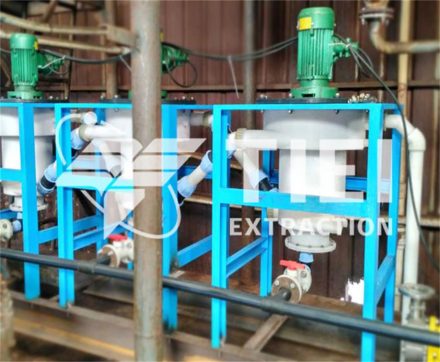
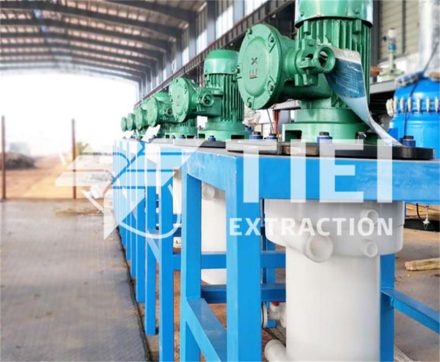
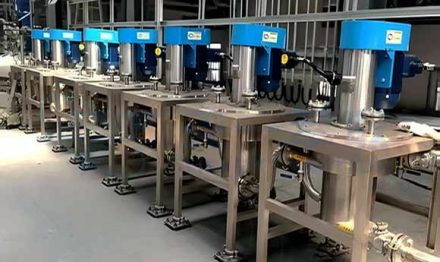
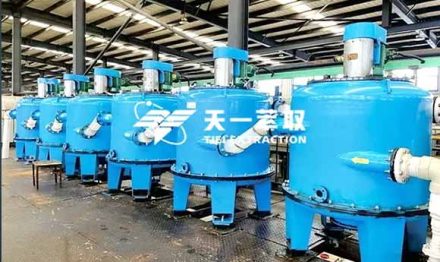
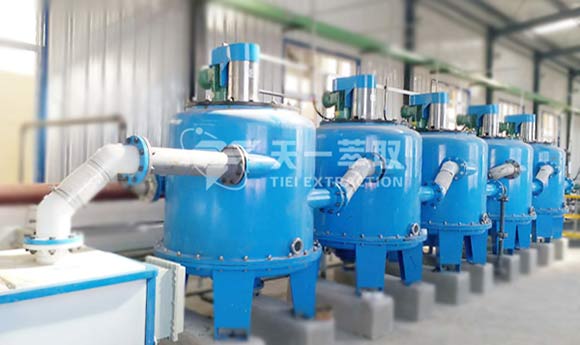
Zhengzhou Tiei Extraction Co., Ltd., with its advanced CWL-M series centrifugal extractors, provides an exceptional solution for the separation of iron and zinc from chloride-containing wastewater.
Technical Core: Why is centrifugal extraction the ideal choice for iron–zinc separation?
In chloride-containing wastewater systems, iron typically exists as Fe³⁺ and zinc as Zn²⁺. Specific extractants (such as TBP and P₂O₄) can selectively bind to iron or zinc ions, "capturing" them from the aqueous phase into the organic phase, thus achieving separation.
The superior performance of Tiei Extraction's centrifugal extractor in this process stems from its three core advantages:
- 1.High-efficiency mass transfer and high separation coefficient
The centrifugal extractor utilizes the powerful centrifugal force generated by high-speed rotation to shear, mix, and separate the two-phase liquids, creating an extremely large mass transfer specific surface area.
For high-viscosity chlorine-containing wastewater extractant systems, this forced and rapid mixing can instantly complete mass transfer, significantly shortening the time required to reach equilibrium. This ensures an extremely high zinc-iron separation coefficient, resulting in higher purity zinc (or iron) in the effluent phase. - 2.Short stage residence time, avoiding iron ion stripping and third phase formation
Fe³⁺ in chlorine-containing wastewater is prone to hydrolysis or stripping difficulties under long residence times, even forming a difficult-to-handle "third phase," clogging pipes and disrupting production.
The Tiei Extraction CWL-M centrifugal extractor has a single-stage residence time measured in seconds. The material passes through the equipment rapidly, greatly inhibiting the hydrolysis and side reactions of Fe³⁺, ensuring continuous and stable operation of the extraction process, and fundamentally solving this industry problem. - 3.High adaptability, large processing capacity, and small footprint
The CWL-M series centrifugal extractor allows for flexible adjustment of speed and flow ratio, easily handling fluctuations in incoming water quality and concentration, offering high process flexibility.
Centrifugal extractors can achieve multi-stage countercurrent extraction, replacing bulky mixer settler, and saving more than 2/3 of the floor space, making it particularly suitable for renovations or new construction projects with limited plant space.
Process Flow
Taking the common "iron extraction and zinc retention" process as an example:
- Pretreatment: Chlorine-containing wastewater is acidified to ensure that Fe exists stably in the Fe³⁺ form.
- Extraction Section: Wastewater and a specific extractant are contacted countercurrently in the centrifugal extractor. The extractant selectively complexes and extracts Fe³⁺. The iron-rich organic phase flows out from one end, while the purified zinc-containing aqueous phase is discharged from the other end and enters the zinc recovery system.
- Stripping Section: The iron-loaded organic phase enters the stripping section and is mixed with a stripping agent such as dilute hydrochloric acid in another centrifugal extractor. Fe³⁺ is stripping to the aqueous phase, generating a high-purity ferric chloride solution, which can be sold as a byproduct. The regenerated extractant is returned to the extraction section for recycling.
- Resource Recovery: The purified zinc-containing solution can be used to recover metallic zinc or prepare zinc salts through electrolysis or precipitation, turning waste into treasure.
Email: sales@tieiextraction.com
Whatsapp: +86 19069612820