During the production of acrylic acid and acrylates, wastewater treatment has long been recognized by the industry as a major technical challenge. This wastewater originates from side reactions during the oxidation of propylene to produce acrolein. Part of the propylene is deeply oxidized into acrylic acid, which subsequently enters the aqueous phase during washing, absorption, and other process stages, forming a low-concentration acrylic acid aqueous solution. This type of wastewater is characterized by complex composition, strong biological toxicity, and poor biodegradability. If it is directly introduced into a biological treatment system, it can significantly inhibit microbial activity, resulting in low efficiency and high operating costs for traditional wastewater treatment processes.
Limitations of Traditional Processes
For many years, the industry has mainly adopted two treatment approaches:
1.Azeotropic dehydration and concentration. In this process, toluene is used as an azeotropic agent, and acrylic acid is concentrated through distillation for subsequent use in the production of crude acrylic acid or butyl acrylate. However, this route is highly energy-intensive. A large amount of water must be evaporated from low-concentration wastewater, requiring substantial steam consumption. In addition, toluene, as a toxic and hazardous substance, poses operational and environmental risks. More importantly, the concentrated product still contains a certain proportion of water, resulting in limited product purity and poor overall economic performance.
2.Neutralization followed by discharge or incineration. In this process, alkali is added to adjust the pH before the wastewater is sent to a wastewater treatment plant or an incinerator. However, acrylic acid itself has an inhibitory effect on biological degradation, making pretreatment difficult. Incineration, meanwhile, results in the complete loss of valuable organic acid resources and brings increasing carbon emission pressure.
Neither of the above methods fundamentally solves the problem of separating water from acrylic acid, nor do they enable the recovery of valuable acrylic acid. Against the global backdrop of increasingly stringent environmental regulations and increasingly refined carbon footprint management, the industry urgently needs an innovative technology that can achieve both environmental and economic benefits.
“Solvent Extraction + Distillation” Integrated Process: From “End-of-Pipe Treatment” to “Resource Regeneration”
To address this challenge, the integrated process of “solvent extraction + distillation recovery” provides an industrially feasible solution for near-zero discharge and resource recovery from acrylic acid wastewater.
Extraction Section: A dedicated extractant with high selectivity for acrylic acid and immiscibility with water is selected and brought into full contact with the wastewater in high-efficiency liquid-liquid extraction equipment. Acrylic acid preferentially transfers from the aqueous phase to the organic phase, thereby enabling rapid separation from the major impurities in the aqueous phase. After extraction, the acrylic acid concentration in the raffinate is greatly reduced, allowing the treated water to enter a conventional biological treatment system or an advanced treatment unit for compliant discharge or reuse.
Stripping Section: The acrylic-acid-loaded organic phase enters the stripping system and reacts with a specific stripping agent, such as dilute alkali solution, transferring acrylic acid into the stripping aqueous phase. At the same time, the organic extractant is fully regenerated and recycled back to the extraction section, with extremely low solvent losses.
Purification Section: The high-concentration acrylic acid salt solution undergoes subsequent processes such as acidification and distillation, producing acrylic acid that meets industrial standards. This truly transforms waste into a valuable resource.
The entire process adopts a closed-loop circulation design, with low extractant losses and controllable secondary pollution. Moreover, the process can be operated at ambient or near-ambient temperatures throughout, significantly reducing energy consumption compared with azeotropic distillation.
Core Equipment: CWL-M Series Centrifugal Extractor
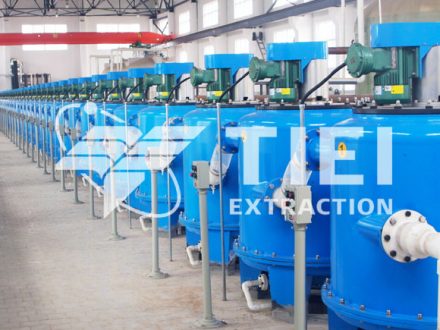
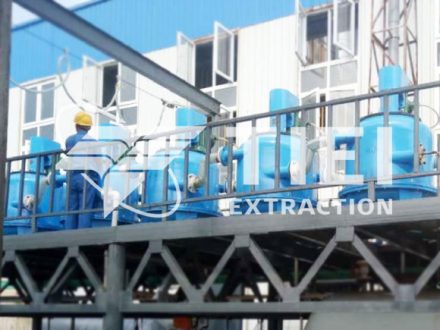
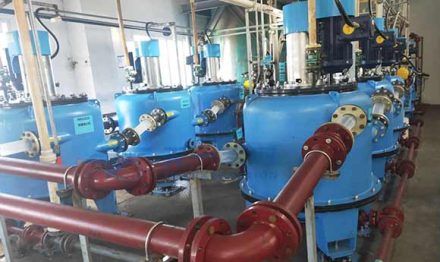
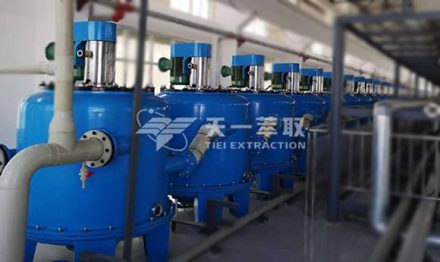
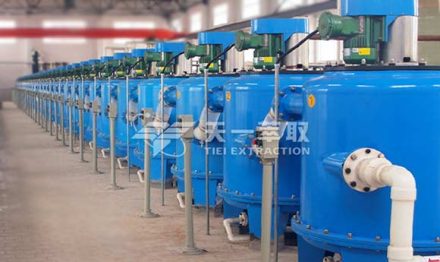
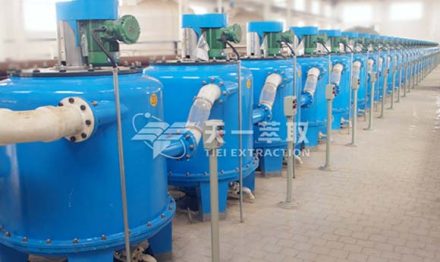
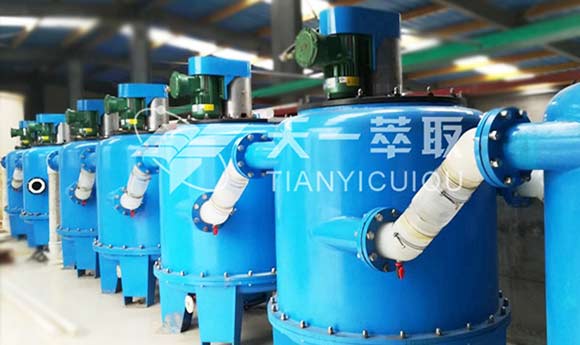
The efficient implementation of this process relies on reliable equipment support. The core liquid-liquid extraction unit of this integrated process is the CWL-M series centrifugal extractor developed by Zhengzhou Tiei Extraction Technology Co., Ltd. The equipment offers the following outstanding advantages:
1.Ultra-high mass transfer efficiency
By utilizing a high-speed rotating centrifugal field, the equipment achieves intensive mixing and rapid phase separation between the two phases. Its single-stage extraction efficiency is significantly higher than that of traditional mixer-settlers, making it particularly suitable for systems such as acrylic acid wastewater, which have relatively low concentrations, high phase ratios, and require a relatively large number of theoretical stages.
2.Extremely short phase separation time
The residence time is only several seconds to several tens of seconds, effectively minimizing the risk of thermal polymerization or esterification side reactions of acrylic acid under acidic conditions, thereby ensuring product yield and quality.
3.Fully enclosed operation
The equipment is fully sealed throughout the process, preventing the leakage of organic vapors and significantly improving the operating environment while meeting high EHS (Environment, Health, and Safety) requirements.
4.Flexibility and scalability
The equipment supports flexible multi-stage configurations, including counter-current and cross-current operation. Parameters such as rotational speed and phase ratio can be adjusted according to fluctuations in wastewater quality. The system can also be readily integrated with DCS automatic control, making it suitable for different treatment scales ranging from laboratory testing to industrial applications.
Process Performance and Economic Benefits
For typical acrylic acid production wastewater containing low-to-medium concentrations of acrylic acid, together with small amounts of aldehydes, phenols, polymerization inhibitors, and other impurities, a conventional configuration of three-stage counter-current extraction + two-stage stripping can achieve a single-pass acrylic acid extraction rate of consistently above 98%.
After deacidification, the COD content of the wastewater is significantly reduced, while the B/C ratio is improved, greatly reducing the load on subsequent biological treatment. At the same time, the recovered crude acrylic acid can be further purified and then either returned to the production chain or sold externally, creating direct economic value for the enterprise.
Taking a medium-scale industrial installation as an example, extractant circulation losses can be controlled within several parts per thousand, while steam consumption can be reduced by more than 50% compared with azeotropic distillation. The overall treatment cost, including chemicals, energy consumption, and maintenance, is significantly lower than that of incineration or neutralization-and-discharge routes, and the investment payback period is typically less than two years.
Conclusion
The “solvent extraction + distillation” integrated process fundamentally transforms the traditional model of treating acrylic acid wastewater through high-energy-consumption incineration or neutralization and discharge, converting complex “end-of-pipe treatment” into a high-value-added “resource regeneration” process. The solution not only enables efficient separation and recovery of acrylic acid and near-zero-loss recycling of the extractant, but also significantly reduces the load on subsequent biological treatment and lowers carbon emission intensity, providing enterprises with dual protection in terms of environmental compliance and economic returns.
Relying on the outstanding advantages of the CWL-M series centrifugal extractor, including high mass transfer efficiency, fully enclosed continuous operation, and flexible stage configuration, the process can effectively address wastewater treatment challenges under different operating scales and varying water quality conditions, ensuring stable and safe long-term operation. Zhengzhou Tiei Extraction Technology Co., Ltd. has been deeply engaged in the field of liquid-liquid extraction for more than ten years. The company has full-chain service capabilities covering bench-scale process validation → pilot-scale scale-up → industrial turnkey equipment delivery, and the technology has already been successfully implemented in multiple chemical industry projects.
If you are looking for a comprehensive acrylic acid wastewater treatment solution featuring low energy consumption and high recovery efficiency, or are considering a technical upgrade or retrofit of an existing unit, please feel free to contact us.
Email: sales@tieiextraction.com
Whatsapp: +86 19069612820