During the production of acrylic acid and its esters, a large amount of high-concentration wastewater containing organic acids, aldehydes, polymers, and various by-products is generated. This type of wastewater is characterized by high COD, poor biodegradability, strong acidity, and high salinity, making it one of the most difficult industrial wastewaters to treat in the chemical industry. As global environmental regulations continue to become more stringent, how to treat acrylic acid wastewater economically and efficiently has become a critical challenge for related enterprises.
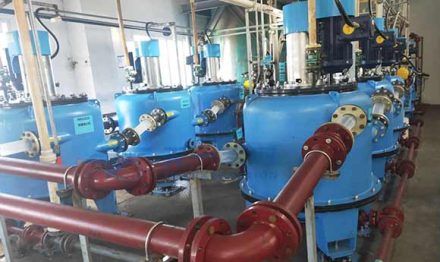
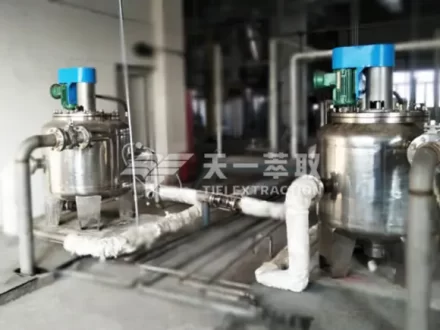
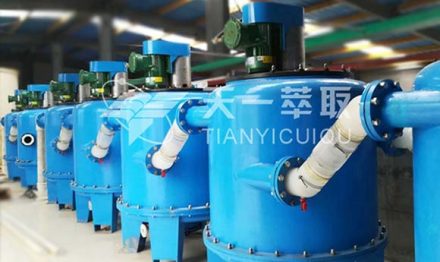
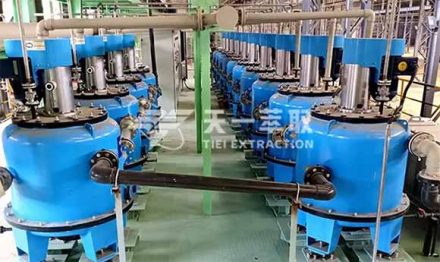
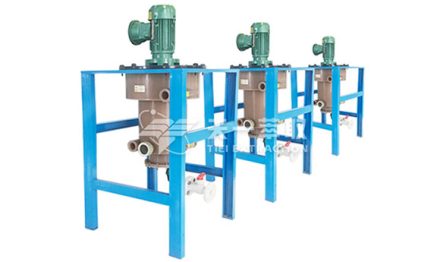
As a professional equipment supplier in the field of liquid-liquid extraction and separation, Zhengzhou Tiei Extraction Technology Co., Ltd. has developed a highly efficient, stable, and continuously operating solution for acrylic acid wastewater treatment based on its independently developed CWL-M Series Centrifugal Extractor.
Challenges in Acrylic Acid Wastewater Treatment
Acrylic acid wastewater is typically generated from esterification reactions, distillation processes, and equipment cleaning operations. Its main characteristics include:
High organic content: COD values can reach tens of thousands to hundreds of thousands of milligrams per liter.
Complex composition: Contains acrylic acid, acetic acid, formaldehyde, acrolein, polymers, inhibitors, and other substances.
Poor biodegradability: Low BOD/COD ratio, making direct biological treatment difficult.
Strong acidity: Typically exhibits a low pH value, requiring corrosion-resistant equipment materials.
High salinity: Catalysts and neutralizing agents introduced during production contribute to elevated salt content.
Traditional treatment methods such as incineration involve high energy consumption and large capital investment. Multiple-effect evaporation and crystallization processes are associated with high operating costs, while biological treatment requires significant dilution and often suffers from unstable performance. Against this background, solvent extraction technology has attracted increasing attention due to its advantages, including high selectivity, recovery of valuable components, and operation at relatively low temperatures.
Process Flow of Liquid-Liquid Extraction for Acrylic Acid Wastewater Treatment
The core principle of liquid-liquid extraction in acrylic acid wastewater treatment is to utilize the difference in solubility of target components between two liquid phases. Organic acids and other valuable compounds are transferred from the aqueous phase to the organic phase, thereby achieving separation and recovery.
The process flow is as follows:
1.Pretreatment Stage
The wastewater first enters an equalization tank for homogenization and flow balancing. It is then subjected to fine filtration to remove suspended solids and prevent blockage of the extraction equipment.
2.Extraction Stage
The pretreated wastewater and extractant are fed into the CWL-M Centrifugal Extractor at a predetermined phase ratio. Under the high centrifugal force generated by the high-speed rotor, the two liquid phases undergo intensive mixing and rapid separation. Organic acids such as acrylic acid are extracted into the organic phase (extract phase), while the COD of the raffinate aqueous phase is significantly reduced.
3.Washing Stage
The loaded organic phase enters the washing process, where pure water or dilute acid is used to remove small amounts of entrained impurities. This improves extraction selectivity and enhances product purity.
4.Stripping Stage
The washed loaded organic phase enters the stripping process and comes into contact with a stripping agent, such as an alkaline solution, inside the CWL-M Centrifugal Extractor. The organic acids are transferred back into the aqueous phase, forming an acrylic acid salt solution, while the organic phase is regenerated and recycled for continuous use.
5.Post-Treatment Stage
The acrylic acid salt solution obtained from stripping can be further processed through concentration, acidification, and other steps to recover acrylic acid products. Depending on water quality requirements, the raffinate aqueous phase can be directed to a subsequent biological treatment system or reused within the process.
This process enables the closed-loop recycling of the extractant. While effectively reducing the COD of the wastewater, it also recovers valuable organic acid resources, delivering both environmental and economic benefits.
Technical Advantages of the CWL-M Centrifugal Extractor
The CWL-M Series Centrifugal Extractor is a new-generation liquid-liquid extraction and separation equipment independently developed by Zhengzhou Tiei Extraction Technology Co., Ltd. It demonstrates the following significant advantages in acrylic acid wastewater treatment:
1.High Mass Transfer Efficiency and Excellent Extraction Performance
The CWL-M Centrifugal Extractor utilizes the strong centrifugal force generated by the high-speed rotating drum to ensure thorough contact and intensive mixing between the light and heavy liquid phases within the mixing zone. The liquid droplets are finely dispersed, creating a large mass transfer area and achieving extraction efficiencies far superior to those of conventional mixer-settlers. For systems such as acrylic acid with relatively limited distribution coefficients, high mass transfer efficiency translates into lower extractant consumption and improved treatment performance.
2.Rapid Phase Separation with Minimal Entrainment
Within the centrifugal force field, the density difference between the light and heavy phases is significantly amplified, enabling extremely rapid phase separation. Both outlet streams exhibit excellent clarity with minimal entrainment losses. This feature is particularly important for reducing extractant consumption and lowering the load on subsequent stripping processes.
3.Strong Adaptability and Stable Operation
The CWL-M Centrifugal Extractor is manufactured using corrosion-resistant materials such as stainless steel, Hastelloy, and titanium, allowing it to withstand the acidic and corrosive environment associated with acrylic acid wastewater. In addition, the equipment has strong tolerance to fluctuations in feed flow rate and phase ratio, ensuring stable operation under varying process conditions.
4.Fully Enclosed Operation for Safety and Environmental Protection
The CWL-M Centrifugal Extractor features a fully enclosed design, effectively preventing the volatilization and leakage of organic solvents. This improves the working environment, enhances operational safety, and meets the modern chemical industry's requirements for intrinsic safety and environmental protection.
5.Compact Structure and Small Footprint
Compared with conventional extraction equipment, the CWL-M Centrifugal Extractor offers a compact structure, high processing capacity, and significantly reduced installation space per unit of throughput. This makes it particularly suitable for upgrading and retrofitting existing production facilities.
6.Continuous and Automated Operation
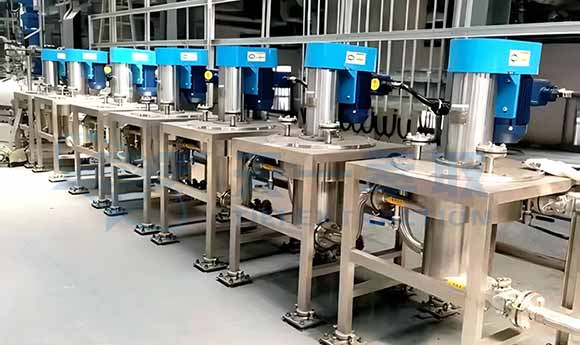
Multiple CWL-M Centrifugal Extractor units can be connected in series to achieve continuous counter-current extraction. Combined with an automatic control system, key parameters such as flow rate, rotational speed, and temperature can be monitored and adjusted remotely, reducing manual intervention and labor intensity.
CWL-M Centrifugal Extractor Application Value and Future Prospects
The application of the CWL-M Centrifugal Extractor in acrylic acid wastewater treatment can bring multiple benefits to enterprises:
Environmental Benefits: Significantly reduces COD and organic acid content in wastewater, creating favorable conditions for subsequent biological treatment and ensuring compliance with discharge regulations.
Resource Recovery: Recovers acrylic acid and its derivatives from wastewater, transforming waste into valuable resources and promoting resource utilization.
Economic Benefits: Compared with traditional technologies such as incineration, operating costs are significantly reduced. In addition, the recovery of valuable components can generate direct economic returns.
Technological Advancement: Promotes cleaner production practices, enhances environmental performance, and strengthens the market competitiveness of enterprises.
Conclusion
As the chemical industry continues to advance toward greener and more sustainable development, solvent extraction technology is expected to play an increasingly important role in the treatment of organic industrial wastewater. Zhengzhou Tiei Extraction Technology Co., Ltd. will continue to focus on the innovation and optimization of centrifugal extraction technology, providing more efficient and reliable separation solutions for the fine chemical industries.
Email: sales@tieiextraction.com
Whatsapp: +86 19069612820