Nickel is a recognized toxic heavy metal with bioaccumulative and persistent characteristics. Once released into water bodies or soil, it can enter the food chain and pose threats to ecosystems and human health. In industrial processes such as electroplating, metallurgy, and battery manufacturing, large volumes of nickel-containing wastewater are generated. If not properly treated, these effluents can cause long-term environmental damage to surrounding areas. Therefore, developing efficient, economical, and sustainable technologies for nickel removal and recovery has become a shared challenge in the global industrial environmental protection sector.
Why Choose Liquid-Liquid Extraction?
Among the various treatment methods for nickel-containing wastewater, liquid-liquid extraction stands out due to its excellent selectivity, high recovery efficiency, and resource recovery potential.
This technology utilizes the affinity of specific organic solvents for nickel ions, transferring nickel from the wastewater into the organic phase. Through a subsequent stripping process, the nickel is transferred into a clean aqueous phase, achieving both concentration and recovery. The treated aqueous phase can be safely discharged or reused, while the organic phase can be recycled within the process. The entire operation is clean and efficient, generating no secondary sludge waste.
The Core Processes of Nickel-containing Wastewater Treatment
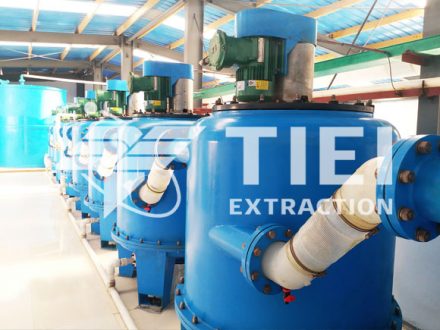
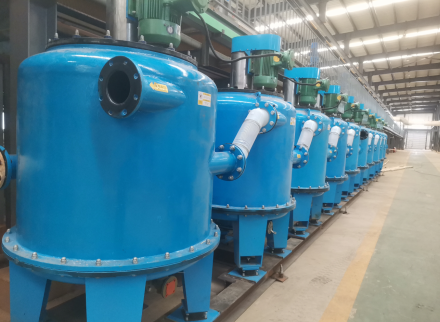
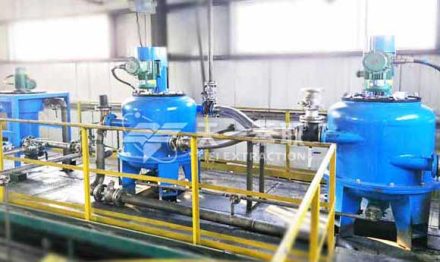
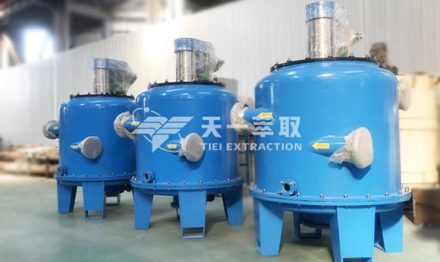
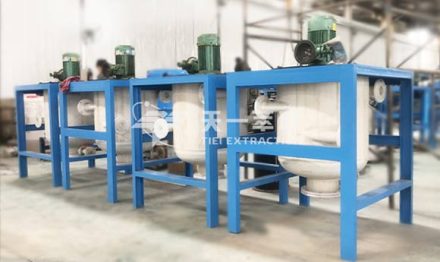
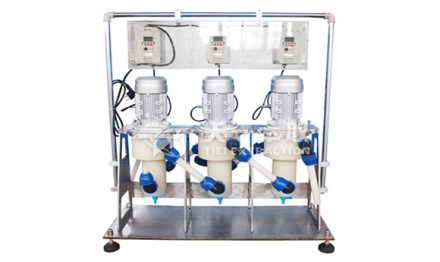
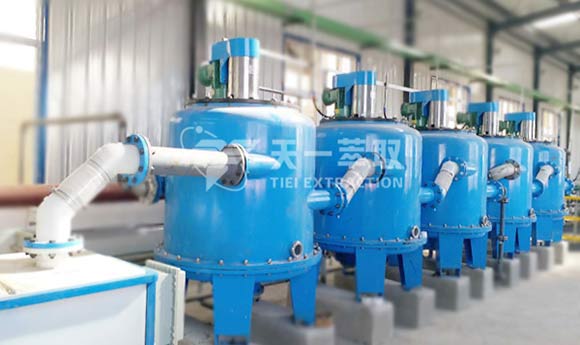
The CWL-M Series Centrifugal Extractor, independently developed by Zhengzhou Tiei Extraction, is specifically designed for liquid-liquid extraction and separation applications. It is particularly suitable for the large-scale continuous treatment of nickel-containing wastewater. The core process is as follows:
1.Wastewater Pretreatment and pH Adjustment
Nickel-containing wastewater is first filtered to remove suspended solids. The pH is then adjusted to the optimal extraction range (typically weakly acidic or neutral) to ensure that nickel ions remain in an extractable form.
2.Extraction Stage
The pretreated wastewater and the selected extractant (such as P204, P507, or specific chelating extractants) are simultaneously fed into the CWL-M Centrifugal Extractor at a predetermined ratio.
Within the high-speed rotating centrifugal field, the two phases are intensely mixed, forming fine droplets that significantly increase the interfacial contact area. This enables the rapid transfer of nickel ions from the aqueous phase to the organic phase. The mixed liquid is then quickly separated under centrifugal force, with the heavy phase (aqueous phase) and light phase (organic phase) continuously discharged through separate outlets.
3.Scrubbing and Stripping Stage
The nickel-loaded organic phase enters the scrubbing stage, where entrained impurity ions are removed. It then proceeds to the stripping stage, where it contacts an acid solution (such as dilute sulfuric acid). Nickel ions are stripped back into the aqueous phase, producing a high-concentration nickel salt solution that can be directly reused in electroplating baths or utilized as a recovered raw material. The regenerated organic phase is recycled back to the extraction stage for continued use.
4.Final Effluent
After extraction, the nickel concentration in the raffinate (extracted aqueous phase) is reduced to an extremely low level. Depending on local environmental regulations, the treated water can undergo simple neutralization before discharge or be directly reused.
The entire process is continuous and fully enclosed, enabling automated control, simple operation, and stable performance.
Core Advantages of the CWL-M Centrifugal Extractor
1.Extremely Short Stage Residence Time
CWL-M centrifugal extractor features a compact design that integrates the mixing and separation zones. The contact time between the two phases is only a few seconds, significantly shortening the extraction equilibrium time and increasing the processing capacity per unit volume. This makes it particularly suitable for systems such as nickel extraction, where mass transfer occurs relatively quickly.
2.Excellent Phase Separation Capability
The powerful centrifugal force (up to several hundred times the force of gravity) enables fine droplets to rapidly coalesce and separate. Even when the density difference between the two phases is small or emulsification tendencies exist, clear phase separation can still be achieved, ensuring stable effluent quality.
3.High Extraction Efficiency and Low Reagent Consumption
Efficient mixing and mass transfer significantly improve the single-stage extraction rate, which typically exceeds 90% in one stage. Deep nickel removal can be easily achieved through multi-stage operation. In addition, thorough phase separation minimizes organic phase entrainment losses, substantially reducing the consumption of extractants and stripping agents.
4.Reduced Capital and Operating Costs
The compact structure requires only one-fifth to one-tenth of the footprint of traditional mixer-settler systems, greatly reducing civil construction and installation costs. Its low-power design (small motor power requirements) and low solvent replenishment demand make long-term operating costs more competitive.
5.Strong Adaptability and Operational Flexibility
The CWL-M centrifugal extractor is available in a variety of construction materials, including stainless steel, titanium, Hastelloy, and fluoropolymer-lined materials, enabling operation under different pH and temperature conditions. Processing capacity can be flexibly adjusted according to actual requirements, allowing the system to accommodate fluctuations in wastewater flow rates.
6.Enclosed Operation for Safety and Environmental Protection
The fully enclosed design eliminates organic solvent evaporation, improves the working environment, complies with occupational health and safety requirements, and prevents secondary pollution.
Wide Range of Applications
- Electroplating Industry: Recovery of nickel from nickel-plating rinse water and aged plating solutions, as well as wastewater purification.
- Metallurgical Industry: Treatment of nickel-containing acidic wastewater generated during hydrometallurgical processes and recovery of nickel resources.
- Battery Material Manufacturing: Nickel extraction from wastewater generated during ternary precursor production and leach solutions from spent battery recycling.
- Other Industries: Nickel-containing waste liquids from catalyst production, the electronics industry, and other industrial processes.
Conclusion
In response to increasingly stringent environmental regulations and growing demands for resource recycling, the combination of liquid-liquid extraction technology and the CWL-M Centrifugal Extractor provides an efficient, economical, and sustainable solution for nickel-containing wastewater treatment. This process not only ensures that treated effluent meets the most stringent discharge standards but also converts “waste” into valuable nickel products, truly achieving a win-win balance between environmental protection and economic benefits.
Zhengzhou Tiei Extraction is committed to providing customized extraction and separation technologies and equipment to customers worldwide. For more detailed information about our equipment and solutions, please feel free to contact us.
Email: sales@tieiextraction.com
Whatsapp: +86 19069612820