The mature fermentation broth of citric acid has a complex composition. In addition to the target product, citric acid, it also contains mycelium, cellulose, raw material residues, and various acidic impurities such as oxalic acid, isocitric acid, and gluconic acid, as well as soluble impurities including polysaccharides, proteins, pigments, and others. To obtain high-purity citric acid products, the process generally involves four key stages: solid-liquid separation to obtain a clarified filtrate, preliminary purification of citric acid, ion exchange and decolorization for further purification, and final evaporation, crystallization, and drying. Among these stages, the efficient extraction of citric acid from the filtrate directly determines the complexity of the overall process, equipment investment, product yield, and overall production cost, making it the core step of the entire purification process.
At present, the mainstream citric acid extraction technologies include the calcium salt precipitation method, solvent extraction, ion exchange, and chromatography. Although the traditional calcium salt method, particularly the calcium hydrogen citrate method, is technologically mature and has extensive operational experience, its inherent drawbacks have become increasingly prominent. The process is lengthy and requires large quantities of sulfuric acid and calcium carbonate, while generating significant amounts of waste gas, high-salt wastewater, and solid waste residues, resulting in a heavy burden for subsequent treatment. With increasingly stringent environmental regulations and the growing global demand for cleaner production, traditional calcium salt processes are facing greater environmental and economic challenges.
Solvent extraction has become an ideal alternative to traditional processes due to its excellent separation efficiency, suitability for continuous operation, and environmentally friendly characteristics. Its core chemical principle is that citric acid, acting as a Lewis acid, can undergo a specific complexation reaction with an extractant containing Lewis base groups. The resulting complex transfers from the aqueous phase to the organic phase, thereby achieving efficient separation of citric acid from sugars, proteins, and other polar impurities. After stripping and regeneration, the extractant can be recycled, and the entire process does not generate waste acid or solid waste, significantly reducing downstream treatment costs.
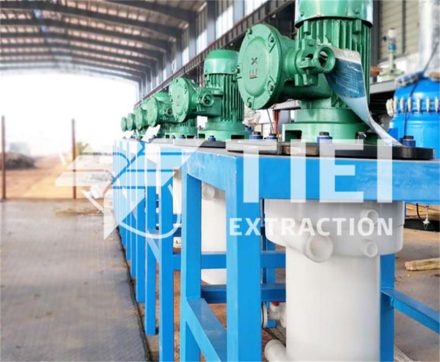
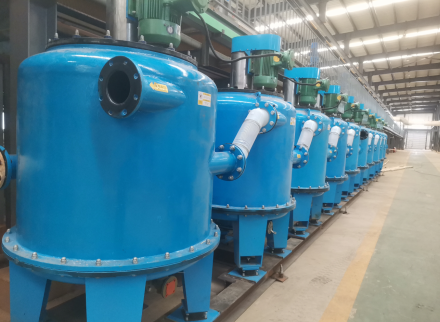
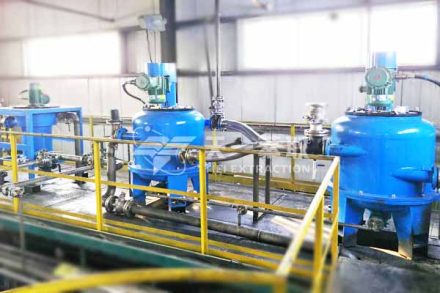
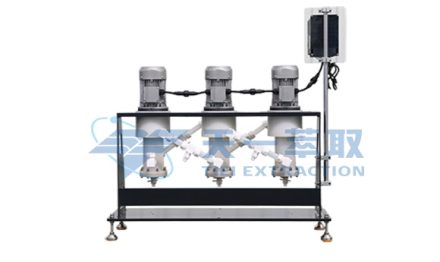
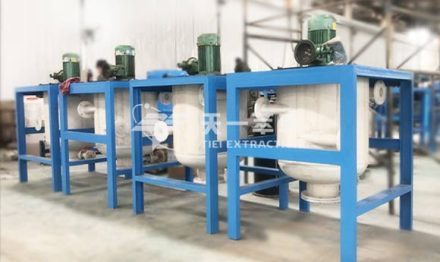
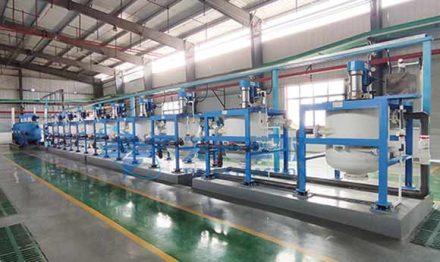
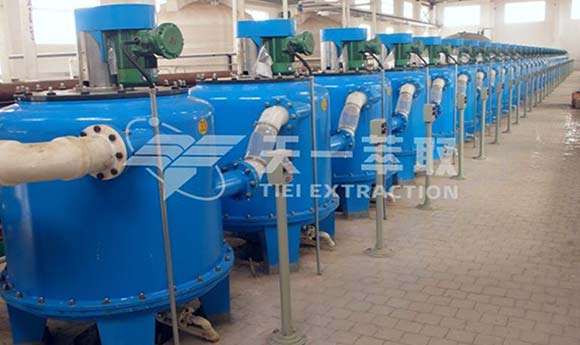
Based on this technological route, Zhengzhou Tiei Extraction Technology Co., Ltd. has developed an integrated citric acid extraction and separation solution centered on the CWL-M centrifugal extractor. The process is simple in design and highly controllable. The specific process is as follows:
Extractant Preparation: N-Tetradecyl-N-dodecylamine and methyl isobutyl ketone are used as the base solvent system, with 2-octanol added as a modifier to formulate a highly selective composite extraction solvent.
Multi-Stage Counter-Current Extraction: The prepared extractant is brought into multi-stage counter-current contact with the citric acid feed solution in the CWL-M centrifugal extractor. The single-stage extraction rate can reach 49%. Through multi-stage series operation, the overall extraction rate can reach as high as 99.3%, ensuring that citric acid is almost completely transferred into the organic phase.
Efficient Stripping and Recovery: The citric-acid-loaded organic phase is rapidly mixed and separated with pure water at an optimized ratio in the centrifugal extractor. The single-stage stripping rate reaches 78.63%. After multi-stage counter-current stripping, the overall recovery rate of citric acid can reach 99.92%, achieving an extremely high product recovery rate.
This technological route not only enables efficient purification of citric acid, but also fundamentally avoids the drawbacks of the traditional calcium salt method, which requires large quantities of acids and alkalis and generates substantial amounts of solid waste. As a result, the entire separation and purification process becomes more environmentally friendly, economical, and sustainable. The CWL-M centrifugal extractor features a modular design, a small footprint, excellent sealing performance, and strong adaptability, allowing it to be flexibly integrated into production lines with different capacity requirements.
Zhengzhou Tiei Extraction Technology Co., Ltd. has extensive experience in extraction process development and engineering applications. Based on customers' specific material characteristics, processing capacity, and purity requirements, we can provide comprehensive technical support covering equipment selection, process parameter optimization, and complete process-line integration. We are committed to helping citric acid producers worldwide achieve the dual goals of cleaner production and cost reduction with increased efficiency.
For detailed process design parameters, equipment configuration solutions, or pilot-scale testing, please feel free to contact us. We will provide professional technical consultation and services.
Email: sales@tieiextraction.com
Whatsapp: +86 19069612820