In the field of non-ferrous metal smelting, separation and purification have always been critical steps that determine product quality and production costs. With declining ore grades and increasingly stringent environmental requirements, traditional extraction technologies face numerous challenges, such as low efficiency, high solvent consumption, and large spatial requirements. How can non-ferrous metals be separated efficiently, precisely, and economically? Zhengzhou Tiei Extraction Technology Co., Ltd., leveraging its CWL-M series centrifugal extractor, offers innovative solutions for the industry.
Non-Ferrous Metal Separation Process
Non-ferrous metal separation typically employs solvent extraction, a method that relies on the distribution differences of metal ions between two immiscible liquid phases to achieve separation. The extraction process consists of three main stages:
1.Extraction Stage
The aqueous feed containing metal ions is thoroughly mixed with an organic extractant in the centrifugal extractor. Target metal ions transfer from the aqueous phase to the organic phase. For example, in copper extraction, copper ions in the leach solution react with the extractant to form a complex in the organic phase, while impurities remain in the aqueous phase.
2.Washing Stage
The loaded organic phase contacts a washing solution to remove mechanically entrained or co-extracted impurity ions, thereby improving the purity of the organic phase.
3.Stripping Stage
The purified loaded organic phase is contacted with a stripping agent, causing the metal ions to transfer back into the aqueous phase, producing a high-concentration metal solution. Simultaneously, the organic phase is regenerated and can be returned to the extraction cycle for reuse.
CWL-M Centrifugal Extractor: A Technological Breakthrough in Traditional Extraction Equipment
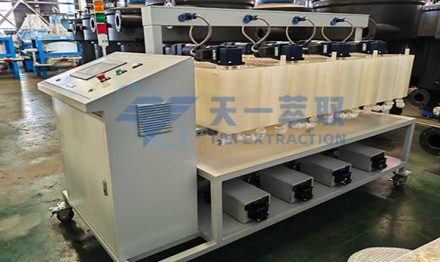
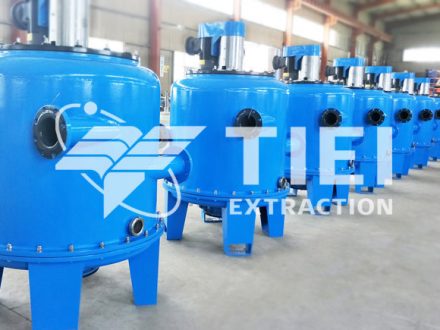
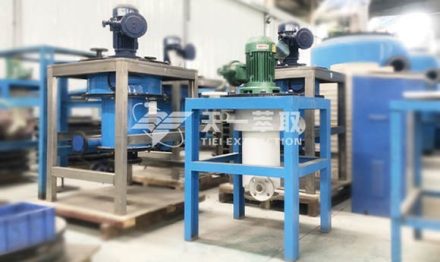
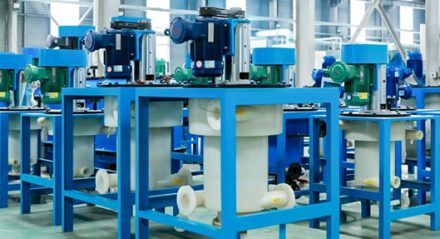
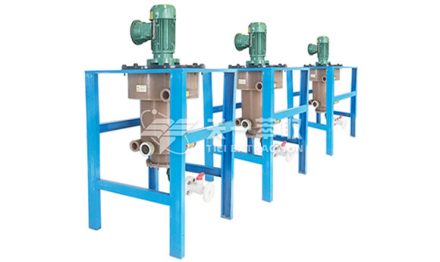
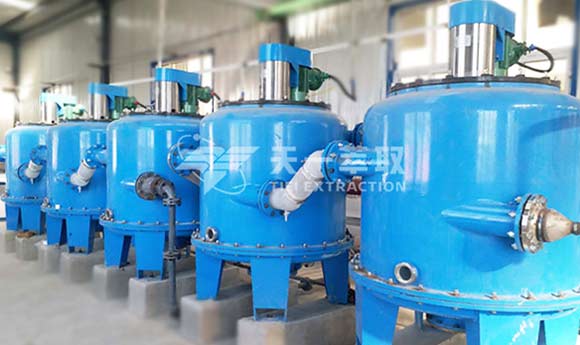
Zhengzhou Tiei Extraction’s independently developed CWL-M series centrifugal extractor utilizes centrifugal force instead of traditional gravity settling to achieve rapid two-phase separation. The CWL-M centrifugal extractor features an overhead-suspension structure, with an integrated design for the drum and mixing chamber. During operation, the two-phase liquid is fully mixed in the mixing chamber for mass transfer, then enters the drum. Under centrifugal forces of 500–1500 times gravity, the light and heavy phases are quickly separated and discharged through separate outlets.
Core Advantages of the CWL-M Centrifugal Extractor in Non-ferrous Metal Separation
1.Extremely Short Residence Time, High Production Efficiency
While traditional mixer-settlers require tens of minutes for two-phase separation, the CWL-M centrifugal extractor completes the process in mere tens of seconds. This feature is particularly suitable for extraction systems that are prone to degradation or emulsification and greatly reduces equipment footprint.
2.Superior Clarification and Low Organic Phase Entrainment
The centrifugal field ensures thorough phase separation, maintaining an organic phase entrainment rate below 50 ppm, significantly reducing organic solvent loss. For high-value metals such as nickel, cobalt, and rare earths, this advantage translates directly into substantial economic benefits.
3.High Stage Efficiency and Precise Separation
The CWL-M centrifugal extractor allows optimization of separation performance through adjustable parameters such as rotational speed and residence time. For metals with similar properties (e.g., rare earth elements), the centrifugal extractor achieves precise separation, ensuring high product quality.
4.Closed Operation for Environmental Safety
The fully enclosed structure prevents organic solvent volatilization, improving the work environment and complying with increasingly strict environmental regulations. For processes using flammable or explosive extractants, safety is significantly enhanced.
5.Compact Footprint and Flexible Operation
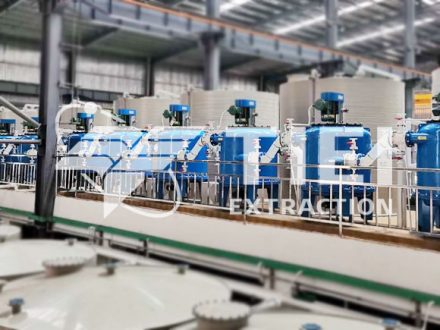
Unlike traditional mixer-settlers occupying hundreds of square meters, the CWL-M centrifugal extractor features a modular design, allowing parallel or series configuration according to processing capacity. This makes it especially suitable for technical upgrade projects or production lines with limited space.
6.High Automation and Stable Operation
Equipped with a variable-frequency control system, the extractor can monitor operating conditions in real time. Its simple structure and easy maintenance significantly reduce labor intensity and operational difficulty.
Application Cases
Rare Earth Separation
A rare earth separation company replaced its original mixer-settler units with CWL-M centrifugal extractors for praseodymium-neodymium separation. The number of extraction stages was reduced from 20 to 14, the organic phase usage decreased by 40%, and the purity of the separated single rare earth exceeded 99.99%.
Copper Hydrometallurgy
In a copper mining project, the CWL-M centrifugal extractors handled low-concentration copper leach solutions. The entrainment rate of the organic phase was controlled below 30 ppm, achieving the copper recovery rate of over 98.5%, which is 3 percentage points higher than traditional equipment.
Nickel-Cobalt Separation
A new energy materials company used the CWL-M centrifugal extractors for deep separation of nickel and cobalt, with a processing capacity of 20 m³/h and a two-phase entrainment rate below 50 ppm, providing high-purity raw materials for subsequent ternary precursor production.
The advancement of non-ferrous metal separation technology is driving improved comprehensive resource utilization. With the outstanding performance of the CWL-M centrifugal extractor, Zhengzhou Tiei Extraction is helping more and more companies overcome bottlenecks in extraction processes. Whether for new projects or retrofits, single-metal recovery or complex element separation, we provide full-process technical support from experimental testing to engineering applications.
Email: sales@tieiextraction.com
Whatsapp: +86 19069612820