With the rapid development of the global new energy industry, lithium, as the core raw material for power batteries, has become increasingly strategic. Among various lithium resources, salt lake brine lithium resources have become an important feedstock for global lithium salt production due to their abundant reserves and relatively low extraction costs. How to extract lithium from high magnesium-to-lithium ratio salt lake brines efficiently, economically, and environmentally remains a key technical challenge for the industry. Against this backdrop, solvent extraction technology, particularly the process route based on the TBP extraction system, combined with high-efficiency liquid-liquid extraction and separation equipment, is becoming a critical driving force for upgrading the salt lake lithium extraction industry.
Technical Challenges and Process Selection for Lithium Extraction from Salt Lake Brine
Salt lake brines have complex compositions. In particular, high magnesium-to-lithium ratio brines present significant challenges because magnesium and lithium ions possess similar chemical properties. Traditional precipitation methods struggle to achieve effective separation and are often associated with high freshwater consumption, substantial evaporation energy requirements, and large reagent consumption, which limit their industrial application and scalability.
Among the various lithium extraction technologies, the TBP extraction process is widely recognized as one of the most effective methods for lithium recovery from high magnesium-to-lithium ratio brines due to its selective extraction capability for lithium ions. Through multi-stage counter-current contact between the organic phase and the aqueous phase, the TBP extraction system enables efficient separation of lithium from impurity ions such as magnesium and calcium, demonstrating strong potential for industrial application.
Core Process Route: Extraction – Scrubbing – Stripping – Regeneration
When utilizing the TBP extraction system for lithium extraction from salt lake brine, the complete process generally consists of four major stages: extraction, scrubbing, stripping, and organic phase regeneration. Each stage imposes strict requirements on equipment performance and process control.
1.Extraction Stage
After pretreatment (removal of suspended solids and pH adjustment), the salt lake brine is brought into thorough contact with the TBP extractant in the extraction equipment. Lithium ions are selectively transferred from the aqueous phase to the organic phase, while most magnesium, calcium, and other impurity ions remain in the aqueous phase (raffinate). The number of extraction stages is typically determined according to the characteristics of the brine and the target extraction efficiency to achieve high lithium recovery.
2.Scrubbing Stage
The loaded organic phase enters the scrubbing stage, where it comes into contact with a scrubbing solution to remove entrained or co-extracted impurity ions such as magnesium and calcium. The scrubbing operation helps improve the purity of the stripping solution and is a critical step in ensuring the quality of the final product.
3.Stripping Stage
The scrubbed loaded organic phase is contacted with a stripping agent (typically a hydrochloric acid solution), allowing lithium ions to transfer back from the organic phase into the aqueous phase, thereby producing a lithium-rich stripping solution. Following subsequent concentration, impurity removal, and lithium precipitation processes, lithium carbonate or lithium hydroxide products can be produced.
4.Organic Phase Regeneration
After stripping, the organic phase undergoes regeneration treatment to remove accumulated impurities or degradation products. Once its extraction performance is restored, the regenerated organic phase is recycled back to the extraction stage, reducing extractant consumption and overall operating costs.
CWL-M Centrifugal Extractor: An Ideal Equipment Choice for Industrial Process Implementation
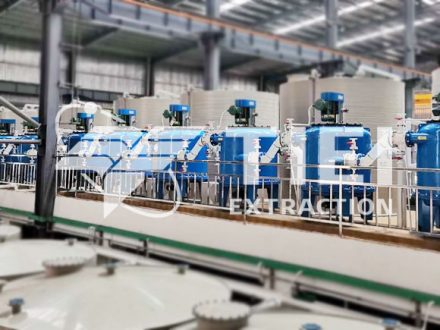
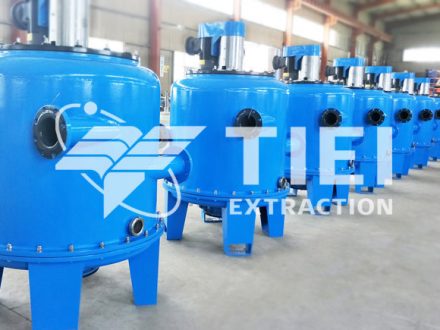
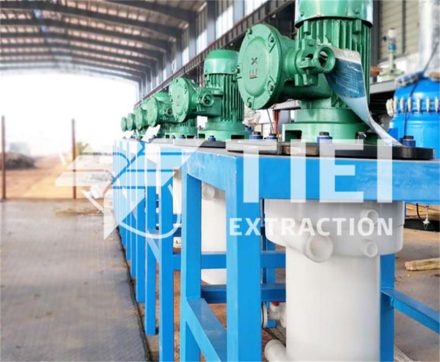
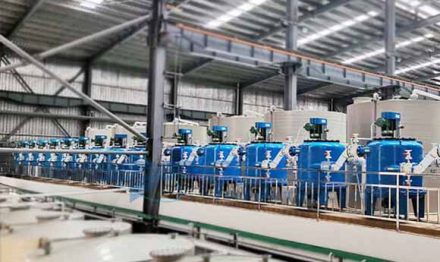
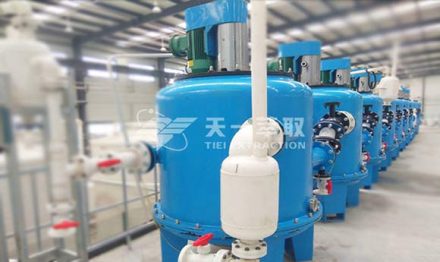
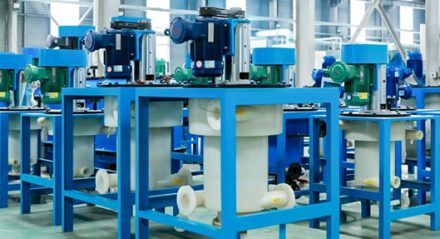
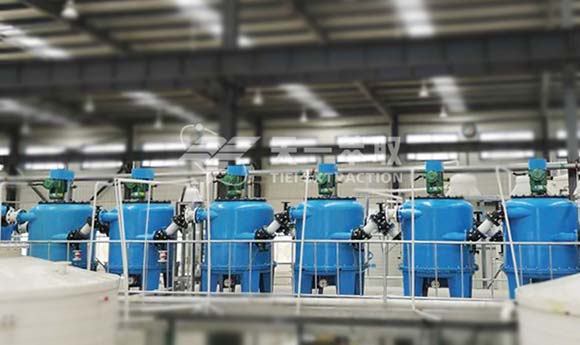
In multistage countercurrent extraction processes, the selection of extraction equipment directly affects extraction efficiency, operational stability, and production costs. The CWL-M Series Centrifugal Extractor, independently developed by Zhengzhou Tiei Extraction Technology Co., Ltd., is specifically designed for liquid-liquid extraction and separation applications and has demonstrated outstanding overall performance in lithium extraction from salt lake brine.
1.Excellent Corrosion Resistance
Salt lake brine is highly corrosive, posing severe challenges to equipment materials during long-term operation. The CWL-M Series Centrifugal Extractor is manufactured using high-quality corrosion-resistant materials. After long-term continuous operation in salt lake brine systems, no obvious signs of corrosion have been observed, fully ensuring the long-term stable operation of the production line while significantly reducing equipment replacement and maintenance frequency.
2.High-Efficiency Extraction and Separation Performance
The CWL-M Centrifugal Extractor utilizes the centrifugal force generated by high-speed rotation to achieve rapid mixing and efficient separation of the two phases. Compared with traditional mixer settlers and extraction columns, it offers the following outstanding advantages:
Compared with mixer settlers:
Significantly reduced footprint, resulting in substantially lower capital investment.
High extraction efficiency, with stage efficiency exceeding 95%.
Lower solvent entrainment, reducing extractant consumption.
Fully enclosed operation effectively minimizes solvent evaporation, improves the working environment, and reduces the risk of environmental pollution.
Compared with extraction columns:
Strong adaptability to variations in the flow ratio of the two liquid phases, providing a wide operating flexibility.
Lower settling time requirements and reduced tendency for flooding.
Stable mass transfer efficiency with less influence from fluctuations in brine quality.
Fast start-up and rapid recovery to normal operation after shutdown.
3.Proven Process Performance
In industrial-scale pilot tests of lithium extraction from salt lake brine using the TBP extraction system, the CWL-M Series Centrifugal Extractor operated in a multistage countercurrent extraction process and achieved the desired lithium extraction efficiency. The entire operation remained stable without abnormalities, fully demonstrating the compatibility of the equipment with the TBP extraction system as well as the reliability of the overall process.
4.Operational Flexibility and Easy Maintenance
The CWL-M Series Centrifugal Extractor is equipped with variable-frequency speed control, allowing the rotor speed to be flexibly adjusted according to brine quality and process requirements to optimize extraction performance. With its compact structure and convenient maintenance design, the equipment effectively reduces downtime and ensures continuous production.
Against the backdrop of continuously growing global demand for lithium resources, efficient and reliable lithium extraction technologies for salt lake brine offer broad market prospects. The process route combining the TBP extraction system with the CWL-M Series Centrifugal Extractor, featuring outstanding extraction efficiency, stable operating performance, and excellent economic benefits, is becoming an important technological direction in the field of salt lake brine lithium extraction.
Zhengzhou Tiei Extraction Technology Co., Ltd. is committed to innovation in liquid-liquid extraction and separation technology and the development of advanced extraction equipment. We continuously provide customers with efficient, reliable, and environmentally friendly extraction solutions. For more information about the application of the CWL-M Series Centrifugal Extractor in lithium extraction from salt lake brine and other industries, please feel free to contact us.
Email: sales@tieiextraction.com
Whatsapp: +86 19069612820