
- About Us
- Equipment
- Solution
- Cases
- News
- Service
- Contact us
Insight into the current events of the day and collect industry hotspots
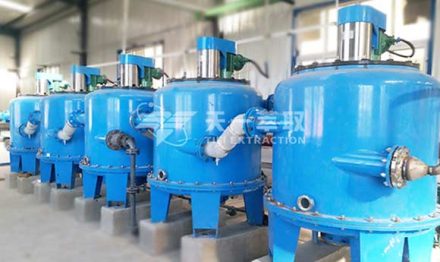
In the production workshop of a fine chemical enterprise, a mature process is operating steadily. A complete sequence—two stages citric acid washes, two stages alkaline washes, and two stages water washes—is repeated cycle after cycle in a 30-cubic-meter reactor. Although…
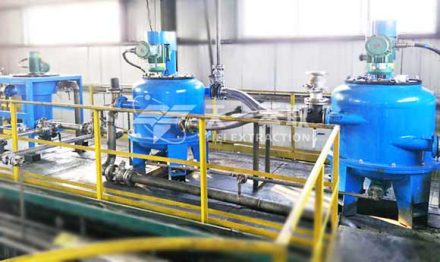
In various industrial fields such as chemicals, pharmaceuticals, and dyeing, dimethylformamide (DMF) is widely used as an important organic solvent. However, high-concentration DMF wastewater (with concentrations of 1%–20%) generated during production presents significant treatment challenges due to its complex composition,…
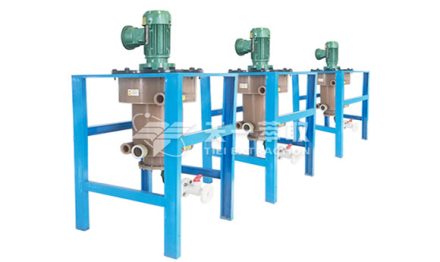
In liquid–liquid extraction processes, the operational stability and separation efficiency of centrifugal extractor are critical, and phase entrainment is a core issue that directly affects product quality and yield. The operating principle of a centrifugal extractor mainly consists of two…
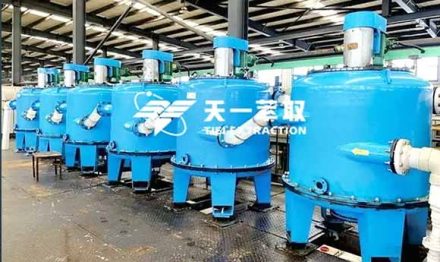
As a key intermediate for a wide range of acid, direct, and reactive dyes used in wool and cotton textile dyeing, H-acid generates wastewater during the production of its crystallization mother liquor that is characterized by high color, strong acidity,…
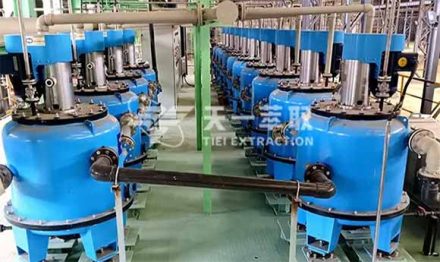
In the hot-dip galvanizing and metal processing industries, the treatment and resource recovery of zinc-containing pickling waste liquor is an important issue that requires balancing environmental protection with economic benefits. Conventional methods such as neutralization–precipitation and evaporation–concentration generally suffer from…
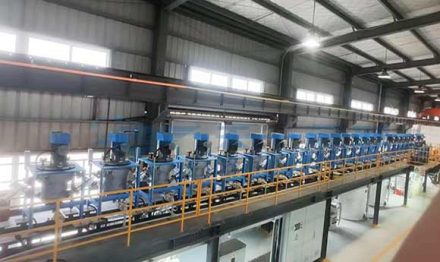
In the process of producing high-purity lithium carbonate from lithium-containing brines, the removal of boron is a critical step. Due to the high solubility of boric acid and borate species in brine, boron is difficult to effectively remove by conventional…


Leave your questions and we will get in touch with you as soon as possible