Naphthalene-based sulfonic acid compounds are important intermediates in the dye industry and are widely used in the production of reactive dyes, acid dyes, mordant dyes, and other products. However, during the production of naphthalene-based dye intermediates, large amounts of wastewater are generated. This wastewater is typically characterized by high concentrations of organic pollutants, high acidity, high color intensity, high COD, and poor biodegradability. If discharged without proper treatment, it can cause serious pollution to soil and water bodies and increase the difficulty of subsequent treatment.
A variety of treatment processes have been developed in the industry for this type of wastewater, but each treatment route has its own applicable conditions and limitations. How to select an efficient, stable, and economical treatment combination according to specific wastewater characteristics has become a key concern for dye intermediate manufacturers.
Characteristics of Naphthalene-Based Dye Intermediate Wastewater
Naphthalene-based dye intermediate wastewater is typically generated from production units such as sulfonation, nitration, reduction, caustic fusion, and acidification. Its composition is complex, with the following major characteristics:
High organic concentration: High COD levels can easily cause shock loading if the wastewater is directly introduced into a biological treatment system.
High acidity: High acidity places higher requirements on equipment corrosion resistance and subsequent neutralization processes.
High color intensity: Stable chromophoric groups make it difficult to completely remove color through conventional decolorization methods.
High salt content: High salinity may inhibit microbial activity and affect the efficiency of biological treatment.
Poor biodegradability: A high proportion of refractory organic compounds results in a low B/C ratio.
Strong toxic inhibition: Certain intermediate compounds may have inhibitory effects on microorganisms.
Therefore, a single biological treatment process is generally unable to directly handle this type of wastewater. Effective pretreatment and resource recovery are usually required first to reduce toxicity and the COD load before the wastewater enters subsequent advanced treatment processes.
Why Is Liquid-Liquid Extraction Suitable for Naphthalene-Based Dye Intermediate Wastewater?
The core principle of liquid-liquid extraction is to utilize the differences in solubility or distribution coefficients of organic pollutants between the aqueous phase and the organic phase, transferring the target intermediate from the aqueous phase into the extraction phase to achieve separation, enrichment, and recovery. For naphthalene-based dye intermediate wastewater, liquid-liquid extraction offers the following advantages:
1.Suitable for high-concentration wastewater: It can directly treat wastewater with high COD and high concentrations of organic compounds.
2.Resistant to acidic and high-salt systems: With appropriate selection of extractants and equipment materials, the process can be adapted to high-acidity and high-salinity operating conditions.
3.Recovery of valuable intermediates: In addition to reducing the pollutant load, the process may enable the recovery of valuable resources.
4.Improved biodegradability: After extraction, the toxicity of the wastewater is reduced, creating more favorable conditions for subsequent biological treatment.
5.Continuous operation: The process is suitable for industrial scale-up and automated control.
The key factors affecting extraction performance include extractant selection, phase ratio, number of stages, mixing and mass-transfer efficiency, and phase separation performance. Traditional extraction equipment, such as mixer-settlers, generally requires a large footprint, has relatively slow phase separation, and may result in significant solvent entrainment. Centrifugal extractors can effectively address these issues.
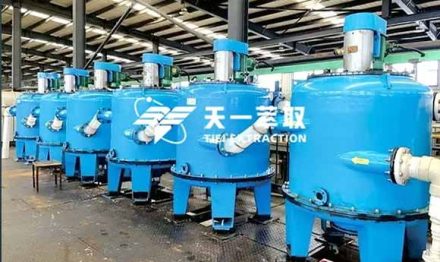
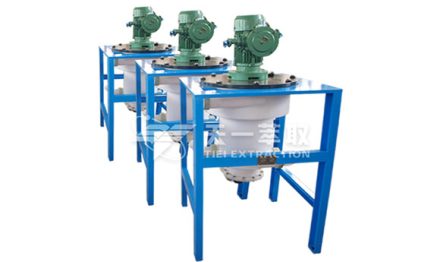
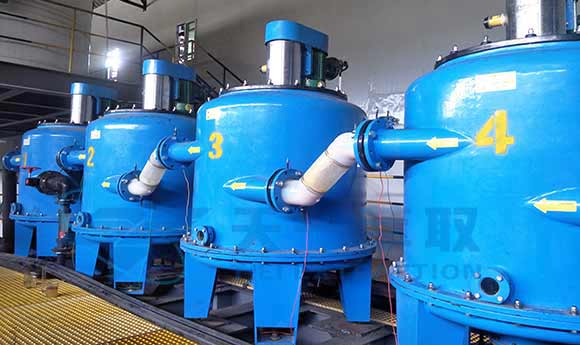
CWL-M Centrifugal Extractor: Core Equipment for High-Efficiency Extraction of Naphthalene-Based Wastewater
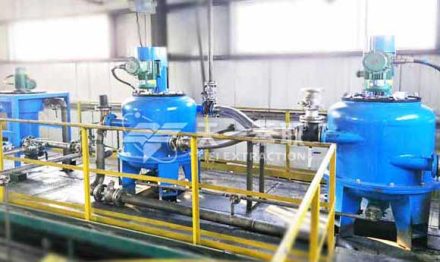
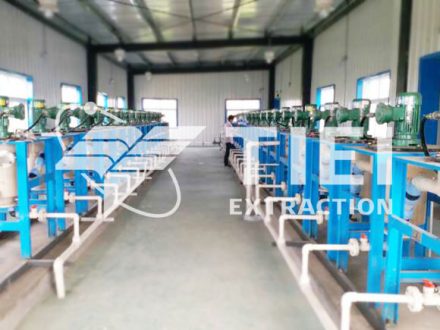
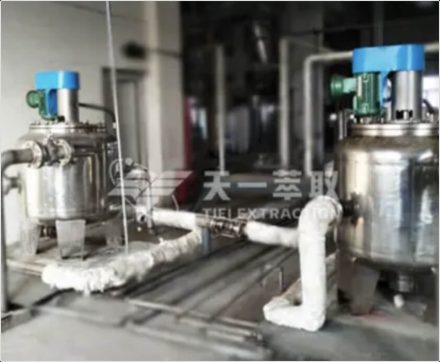
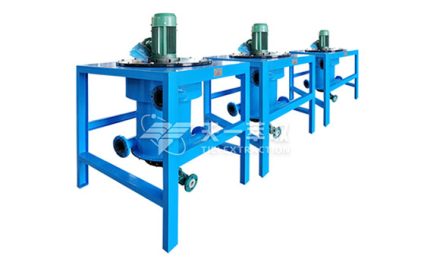
The CWL-M Centrifugal Extractor is a new type of automated centrifugal extraction equipment developed by Zhengzhou Tiei Extraction Technology Co., Ltd. It utilizes the centrifugal force generated by high-speed rotation to enhance two-phase mixing and mass transfer while achieving rapid phase separation. It is particularly suitable for treating dye intermediate wastewater that is prone to emulsification and characterized by high acidity, high toxicity, high concentration, and poor biodegradability.
The CWL-M Centrifugal Extractor offers the following key advantages:
1.Short Residence Time
It is suitable for wastewater systems that require short residence times or are prone to emulsification or have relatively poor stability.
2.Rapid Phase Separation
Centrifugal force accelerates two-phase separation, reducing emulsion entrainment and solvent loss while improving operational stability.
3.High Extraction Efficiency
Through multistage counter-current extraction, naphthalene-based intermediates can be effectively separated and enriched, reducing COD and color intensity in the wastewater.
4.Recyclable Solvent
The extractant can be regenerated through stripping and recycled, reducing solvent consumption and overall operating costs.
5.Automated Continuous Operation
Continuous feeding and stable operation can be achieved, reducing manual intervention and making the equipment suitable for industrial scale-up.
6.Small Footprint and Good Sealing Performance
The compact structure makes the equipment suitable for plant modification projects. Sealed operation is beneficial for handling highly acidic, toxic, and volatile materials while improving the working environment.
7.Flexible Material and Configuration Options
Appropriate equipment materials and extractant systems can be selected according to the acidity or alkalinity, corrosiveness, and specific process requirements of the wastewater.
Therefore, in the treatment of naphthalene-based dye intermediate wastewater, the CWL-M Centrifugal Extractor is not only a pretreatment equipment but also a key piece of equipment for achieving resource recovery, cost reduction, and efficiency improvement.
Conclusion
Naphthalene-based dye intermediate wastewater is difficult to treat, and a single treatment process often cannot simultaneously achieve both treatment performance and cost efficiency. With advantages such as rapid phase separation, high extraction efficiency, solvent recycling, automated operation, and a small footprint, the CWL-M Centrifugal Extractor is becoming an important option for the treatment of naphthalene-based dye intermediate wastewater.
For more information about the application of the CWL-M Centrifugal Extractor in naphthalene-based dye intermediate wastewater treatment, please contact Zhengzhou Tiei Extraction for equipment selection, laboratory-scale testing, and pilot-scale testing support.
Email: sales@tieiextraction.com
Whatsapp: +86 19069612820