In the metallurgical, electroplating, and chemical industries, the recovery of zinc from hydrochloric acid waste liquid is both a crucial step in resource recycling and a challenge for environmental governance. Traditional precipitation methods suffer from low efficiency and secondary pollution, while solvent extraction, with its advantages of high efficiency and selectivity, is gradually becoming the mainstream method. Among them, centrifugal extractors significantly improve zinc recovery rates and process economics by enhancing the efficiency of two-phase mixing and separation.
Process Flow for Zinc Recovery from Hydrochloric Acid Waste Liquid
1.Pretreatment Stage
Hydrochloric acid waste liquid typically contains impurity ions such as Fe³⁺ and Cu²⁺. The pH needs to be adjusted to 2-3 to allow Fe³⁺ to precipitate as ferric hydroxide, while maintaining zinc's stable Zn²⁺ state. The pretreated solution is then precisely filtered to remove suspended solids, ensuring the subsequent extraction process is not interfered with by solid particles.
2.Construction of the Extraction Reaction System
P₂O₄ (di-(2-ethylhexyl)phosphoric acid) is selected as the extractant, as its phosphate groups exhibit strong selectivity for Zn²⁺. The extractant is mixed with a diluent (such as sulfonated kerosene) to form the organic phase; the aqueous phase is pretreated hydrochloric acid waste liquid. The two phases achieve efficient contact in the centrifugal extractor.
3.Centrifugal Extraction Core Process
The centrifugal extractor completes the zinc transfer through the following steps:
Mixing Stage: High-speed drum rotation (1500-3000 rpm) generates strong shear force, causing the organic and aqueous phases to form micron-sized emulsion droplets within 0.1-0.5 seconds, greatly increasing the mass transfer area.
Separation Stage: The density difference of the mixture causes the two phases to separate rapidly under centrifugal force. The organic phase carrying Zn²⁺ is discharged through the light phase outlet, while the aqueous phase is returned to the system from the heavy phase outlet.
Stripping Regeneration: The loaded organic phase is contacted with dilute sulfuric acid (pH<1) in another centrifugal extractor. Zn²⁺ is stripped into the aqueous phase to form a zinc sulfate solution. The organic phase regains its extraction capacity and is recycled.
4.Product Purification and Waste Liquid Treatment
The zinc sulfate solution is evaporated, concentrated, crystallized, and dried to obtain a high-purity zinc sulfate product (ZnSO₄·7H₂O content ≥98%). The residual aqueous phase is neutralized and discharged after meeting the standards, realizing a closed-loop circulation throughout the entire process.
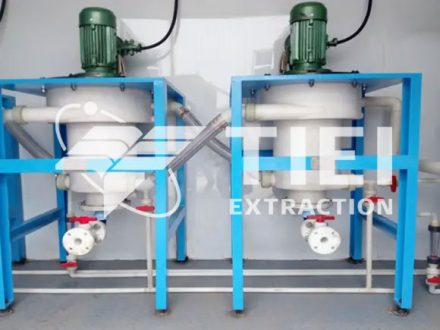
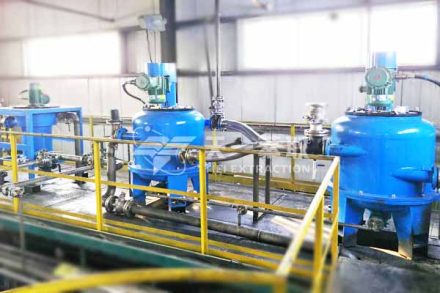
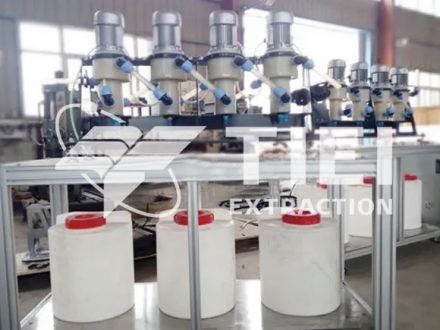
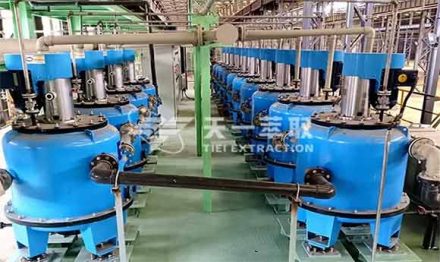
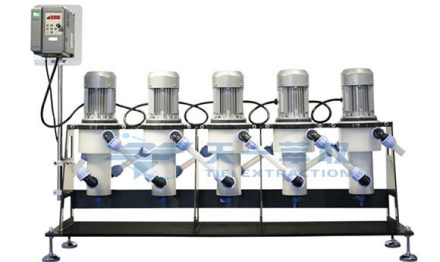
Technical Advantages of Zhengzhou Tiei Extraction CWL-M Centrifugal Extractor
1.Top-suspended structure, low energy consumption, no leakage risk
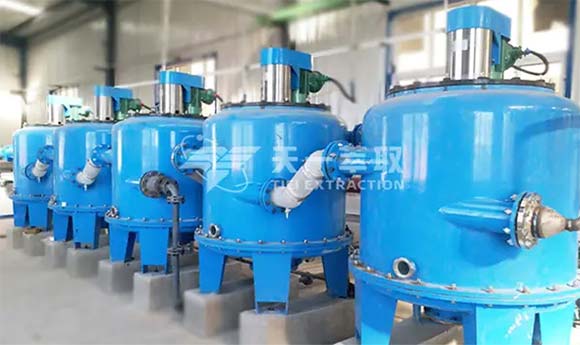
2.High-molecular hybrid material, resistant to strong corrosion
3.Multiple mixing intensities available, flexibly adaptable to feed systems
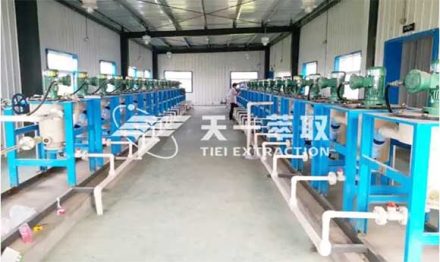
4.High degree of automation, excellent operating environment
5.No disassembly required to replace the heavy phase weir plate, easy operation and maintenance
6.Compact structure, low liquid holdup, high extraction efficiency
For more details about the CWL-M Centrifugal Extractor, welcome contact us.
Email: sales@tieiextraction.com
Whatsapp: +86 19069612820