In the production fields of fine chemicals, pharmaceuticals, coatings, and new energy materials, glycol ether organic solvents (such as ethylene glycol ethers, propylene glycol ethers, isopropyl ether, and isopropanol) are widely used. However, these production processes generate large amounts of glycol ether-containing organic wastewater. For example, during the production of isopropanol, approximately 3–5 tons of organic wastewater containing isopropyl ether and isopropanol are generated for every ton of isopropanol produced. The COD concentration of this type of wastewater can reach as high as 50,000–100,000 mg/L. Due to its strong organic solubility and poor biodegradability, direct discharge without effective treatment not only leads to the waste of valuable resources but also poses serious environmental risks.
The Challenges of Glycol Ether Organic Wastewater
Glycol ether compounds possess both hydroxyl groups and ether bonds in their molecular structures, resulting in strong chemical stability and making them difficult for microorganisms to degrade in traditional biological treatment processes. The wastewater composition is complex, often containing alcohols, esters, organic acids, and other by-products. In addition, significant fluctuations in wastewater quality and flow rate place extremely high requirements on the impact resistance of treatment equipment.
Although traditional distillation methods can recover part of the solvents, the boiling point difference between isopropyl ether and isopropanol is only 12°C, making separation difficult and energy-intensive. Adsorption and biological treatment methods also face challenges such as low treatment efficiency and high risks of secondary pollution, making them difficult to meet the dual requirements of current environmental discharge standards and resource recycling.
Centrifugal Extraction Technology: Achieving Resource Recovery
Centrifugal extraction technology utilizes the centrifugal force generated by high-speed rotation to achieve intensive mixing and mass transfer between glycol ether wastewater and extractant at the micron scale. The two phases are then rapidly separated based on their density differences.
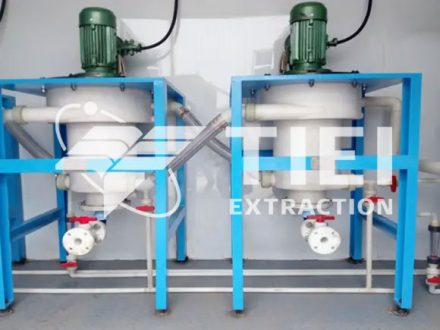
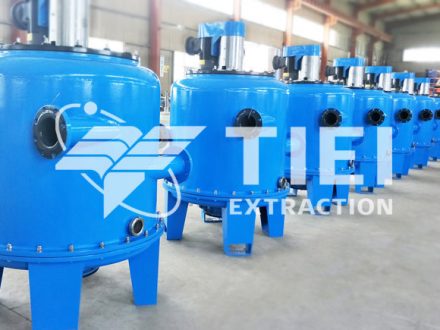
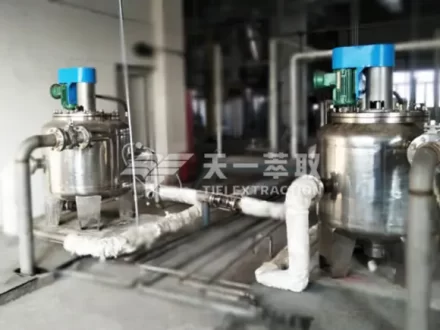
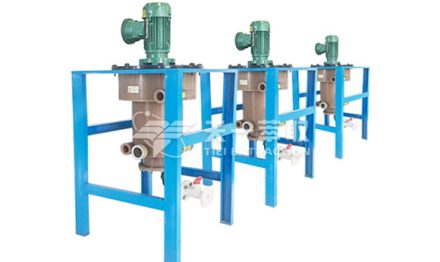
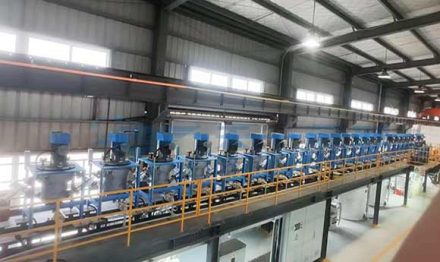
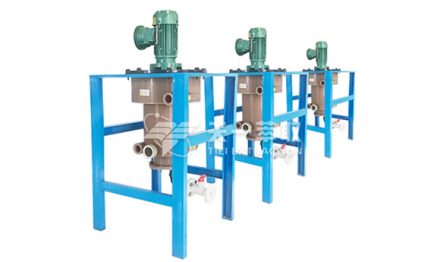
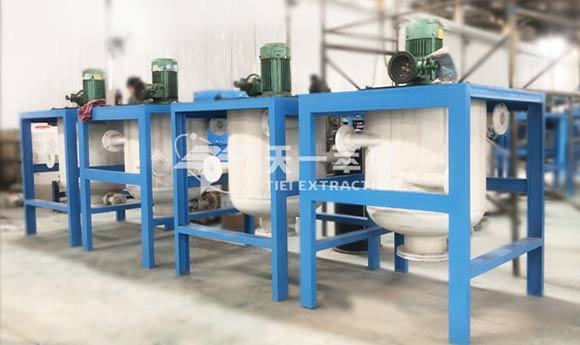
The CWL-M centrifugal extractor adopts a multi-stage counter-current extraction design, with the number of stages (typically 3–5 stages) flexibly adjusted according to wastewater composition to achieve efficient enrichment of target components. The centrifugal extractor capacity can be adjusted within the range of 5–50 m³/h, meeting the wastewater treatment requirements of enterprises with different production scales.
Its core technological breakthroughs are reflected in three aspects:
1.Efficient Mass Transfer and Separation within Seconds
The high-speed rotating drum generates a centrifugal force field, enabling rapid renewal of the interface between glycol ether molecules and the extractant within seconds. Compared with traditional gravity extraction equipment, the separation efficiency is increased by 3–5 times. The single-stage extraction efficiency can exceed 92%, while the total extraction rate can exceed 99.5% after three-stage counter-current operation. The built-in mixing chamber of the equipment combines turbulent shear and laminar diffusion effects, significantly improving the distribution coefficient and effectively reducing extractant consumption.
2.Anti-Emulsification Design for Complex Systems
Glycol ether wastewater is prone to forming stable emulsified layers, which often cause phase separation difficulties in traditional equipment. The CWL-M centrifugal extractor adopts a three-stage separation structure: the first stage performs rapid coarse separation and phase stratification; the second stage removes entrained materials at the interface through clarification; the third stage ensures fine separation and clear treated water quality. Combined with the dynamic adsorption film effect of co-solvents, the thickness of the emulsified layer can be controlled below 0.3 mm, ensuring continuous operation without clogging.
3.Fully Enclosed Operation for Safety and Environmental Protection
The CWL-M centrifugal extractor adopts a fully sealed structure to effectively prevent the volatilization and leakage of organic solvents, reducing environmental and safety risks. The wetted parts can be manufactured using 316L stainless steel, duplex stainless steel, or fluoropolymer materials, allowing resistance to strong acidic and alkaline environments with a pH range of 0–14. The designed service life of the equipment can reach more than 10 years.
Process Flow of Glycol Ether Organic Wastewater Treatment
The centrifugal extraction process for glycol ether organic wastewater treatment follows a complete route of: “Pretreatment → Extraction → Stripping → Resource Recovery → Wastewater Compliance Treatment”
1.Wastewater Pretreatment
Suspended solids are removed through filtration. The wastewater pH is adjusted to an appropriate range (generally 6.5–7.5), and the temperature is controlled at 30–40°C to create stable conditions for subsequent extraction.
2.Multi-stage Counter-current Extraction
After pretreatment, the wastewater and specialized extractant (such as ethylene glycol and tributyl phosphate) are introduced into the CWL-M centrifugal extractor according to the optimized ratio. Taking the isopropyl ether–isopropanol system as an example, ethylene glycol can form an azeotropic mixture with isopropyl ether, disrupting the original azeotropic composition and significantly improving separation efficiency. After 3–5 stages of counter-current extraction, the removal rate of glycol ether compounds can exceed 95%, and the COD concentration of treated wastewater can be significantly reduced to below 1,000 mg/L.
3.Stripping and Solvent Regeneration
The organic phase loaded with glycol ethers is contacted with the back-extractant, allowing the target components to be transferred back into the aqueous phase to obtain a high-concentration glycol ether solution. After regeneration, the extractant can be recycled, with a utilization rate exceeding 99%.
4.Resource Recovery and Wastewater Compliance Treatment
The recovered crude glycol ether products can be purified through distillation, achieving a purity of over 99%, and can be directly reused in production processes. The COD concentration of the treated raffinate aqueous phase is significantly reduced and can enter the biological treatment system directly. The final effluent COD can be reduced to below 50 mg/L, meeting the requirements of first-class discharge standards.
Conclusion
Against the background of increasingly stringent environmental regulations and growing demand for resource recovery, the CWL-M centrifugal extractor provides an efficient, economical, and environmentally friendly technical solution for glycol ether organic wastewater treatment. By overcoming the key challenges of traditional processes, including low separation efficiency, severe resource waste, and difficulties in achieving environmental compliance, this technology not only helps enterprises achieve wastewater discharge standards but also creates additional economic benefits through resource recovery.
Whether dealing with ethylene glycol ether, propylene glycol ether, or isopropyl ether–isopropanol systems, Tiei Extraction provides a one-stop service covering everything from laboratory-scale testing to industrial-scale implementation.
Email: sales@tieiextraction.com
Whatsapp: +86 19069612820