In the chemical and pharmaceutical production industries, N,N-Dimethylformamide (DMF), as a “universal solvent,” is widely used in various applications. However, DMF wastewater treatment has long been a global challenge for the industry. This type of wastewater is characterized by the “three highs” — high concentration, high toxicity, and high COD. DMF concentrations are often as high as 8%–12%, while COD values can reach tens of thousands of mg/L, posing a serious threat to the ecological environment.
Faced with the dual pressures of environmental compliance and cost reduction with efficiency improvement, traditional treatment methods such as distillation, biological treatment, and traditional extraction have gradually exposed critical shortcomings, including high energy consumption, low efficiency, severe fouling, and high operating costs. The industry urgently needs a brand-new, efficient, and economical technical solution.
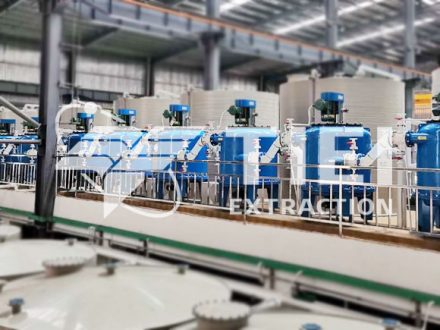
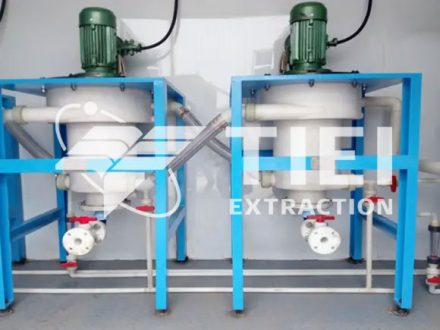
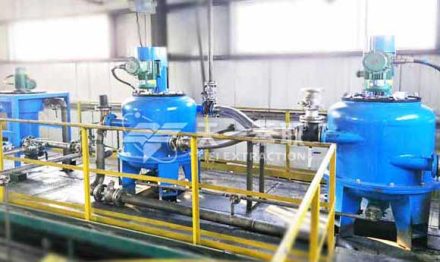
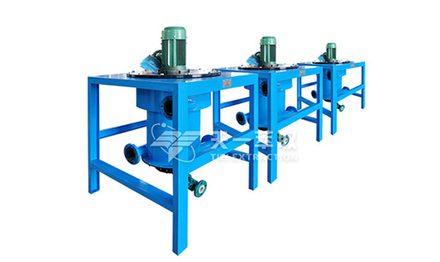
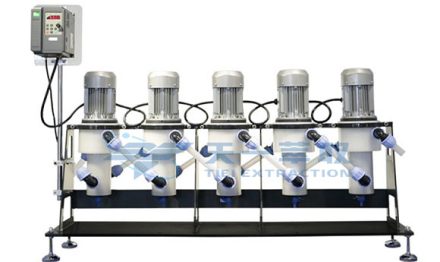
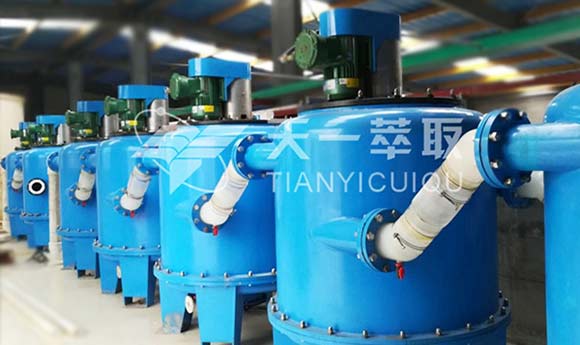
Zhengzhou Tiei Extraction Technology Co., Ltd., with its core product — the CWL-M Series Centrifugal Extractor — provides an innovative solution for source treatment and resource recovery of DMF wastewater.
Addressing the Core Challenges: Why Traditional DMF Wastewater Treatment Falls Short
The limitations of traditional processes have placed enterprises in a dilemma when dealing with DMF wastewater treatment:
1.Low Separation Efficiency and Difficulty Meeting Water Quality Standards
Traditional mixer-settlers and extraction columns rely on natural gravity separation, resulting in phase separation times lasting several hours. Emulsification occurs easily, and the single-stage DMF extraction efficiency is only 75%–80%, leading to excessive residual DMF in the treated water and making it difficult for COD values to meet environmental discharge standards.
2.Extremely High Energy Consumption and Operating Costs
Distillation processes require wastewater to be heated above 150°C, consuming 5–10 times more energy than centrifugal extraction. More critically, high-concentration DMF tends to decompose at elevated temperatures into dimethylamine and formic acid, causing severe fouling and equipment corrosion. Frequent maintenance and downtime significantly increase operational burdens.
3.Large Equipment Footprint and Poor Process Flexibility
Traditional treatment equipment is bulky and space-consuming. Treating just 10 tons of wastewater per day may require a large plant area. In addition, process parameters are difficult to adjust, making it challenging to handle fluctuating DMF concentrations up to 12%. These systems are especially unsuitable for facilities with limited space or small- to medium-scale wastewater treatment needs.
4.Serious Resource Waste and Risk of Secondary Pollution
Conventional processes struggle to efficiently recover valuable DMF, leading to resource loss through wastewater discharge or incineration. Moreover, incineration can release odorous volatile organic amines, causing severe secondary pollution and additional environmental risks.
CWL-M Centrifugal Extractor: Achieving Efficient Separation of DMF and Water
Facing the above challenges, the CWL-M Centrifugal Extractor completely overturns the traditional gravity separation model through the powerful centrifugal force field generated by high-speed rotation.
Core Working Principle
After wastewater and the extractant are rapidly mixed inside the equipment, they enter the rotating drum. Under the action of centrifugal force reaching thousands of times gravity, the two immiscible liquid phases (the DMF-extractant phase and the aqueous phase) are instantly and efficiently separated according to their density differences, and continuously discharged through different outlets. The entire extraction and separation process can be completed within dozens of seconds, achieving a qualitative breakthrough compared with the several hours required for traditional phase separation.
Core Advantages of the CWL-M Centrifugal Extractor: Redefining DMF Wastewater Treatment in Four Dimensions
1.Ultra-High Efficiency for Easy Compliance with Discharge Standards
Extremely Fast Separation: The centrifugal force field replaces gravity, enabling instantaneous phase separation and mass transfer. Compared with traditional equipment, efficiency is improved by dozens of times.
Outstanding Performance: Combined with multistage counter-current extraction, the DMF extraction efficiency can exceed 95%. After treatment, wastewater COD is significantly reduced, easily meeting environmental discharge or reuse standards.
2.Energy Saving and Cost Reduction with Significant Economic Benefits
Room-Temperature Operation: The entire extraction process operates at room temperature, completely avoiding the high energy consumption, DMF decomposition, fouling, and corrosion problems associated with high-temperature distillation.
Low Operating Cost: Overall energy consumption is only 10%–20% of that of traditional distillation methods. The equipment features a compact structure with no vulnerable mechanical seals, resulting in extremely low maintenance costs.
3.Compact, Intelligent, and Highly Adaptable
Minimal Footprint: The CWL-M Centrifugal Extractor offers high processing capacity while occupying only 1/5 to 1/10 of the space required by traditional equipment. For example, a skid-mounted system designed for treating 10 tons/day of wastewater can be easily installed, greatly saving valuable plant space.
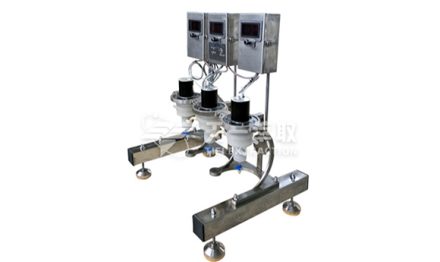
Flexible Adjustment: The centrifugal extractor can continuously adjust rotational speed and mixing intensity through a frequency converter, easily handling DMF concentration fluctuations up to 12%. It provides high operational flexibility and a high degree of automation.
4.Resource Recovery for Circular Value Creation
DMF Resource Recovery: High-efficiency extraction not only purifies wastewater but also enables efficient DMF recovery. The recovered high-purity DMF can be reused in production, turning waste into value and directly reducing raw material procurement costs.
Environmentally Friendly: The process eliminates high-concentration organic wastewater discharge and incineration exhaust pollution at the source, making it an ideal choice for achieving cleaner production and building green factories.
Successful Case: Proven Performance Through Data
A large pharmaceutical intermediate manufacturing enterprise generated DMF wastewater with a concentration of approximately 10% and a COD as high as 120,000 mg/L. The company originally used a distillation process, which suffered from high energy consumption and severe fouling, with a treatment capacity of only 5 tons per day. After introducing the Tiei Extraction CWL-M Series three-stage centrifugal extraction system:
- Processing Capacity: 15 tons/day (meeting production expansion requirements)
- Extraction Efficiency: Single-stage DMF extraction efficiency reached 96%, and after three-stage counter-current extraction, the DMF content in the treated wastewater was reduced to below 0.1%.
- Operating Cost: Overall energy consumption (electricity + solvent replenishment) was reduced by 65% compared with the distillation process.
- Return on Investment: Through DMF recovery, the equipment investment cost is expected to be recovered within 8 months, while completely eliminating environmental compliance risks.
Faced with the long-standing challenge of DMF wastewater treatment, continuing to rely on traditional processes with high energy consumption and low efficiency is no longer a sustainable solution. With its comprehensive advantages of high efficiency, energy saving, cost-effectiveness, and environmental protection, the CWL-M Centrifugal Extractor provides a new path toward sustainable development for the chemical and pharmaceutical industries.
Email: sales@tieiextraction.com
Whatsapp: +86 19069612820