In industries such as petroleum, chemical, pharmaceutical, and pesticide manufacturing, N,N-dimethylacetamide (DMAC), as a high-performance polar solvent, is widely used in the production of cephalosporin antibiotics, amoxicillin, and other pharmaceuticals, as well as in the manufacture of coatings, plastic films, heat-resistant synthetic fibers, and acrylonitrile spinning materials. Due to its strong polarity, chemical stability, and biological toxicity, large amounts of DMAC-containing wastewater are generated during use, posing significant challenges for environmental management. If discharged untreated, this wastewater can severely damage ecosystems. Developing methods to both achieve compliant wastewater discharge and recover the valuable DMAC solvent has become a critical issue that the relevant industries urgently need to address.
Limitations of Traditional Treatment Methods
Currently, the main methods for treating DMAC-containing wastewater both domestically and internationally include extraction, biochemical treatment, supercritical water oxidation, photocatalytic oxidation, physico-chemical methods, and chemical treatments. Among these, biochemical treatment is limited by the biological toxicity of DMAC, resulting in low treatment efficiency. Supercritical water oxidation and photocatalytic oxidation, on the other hand, involve high investment and operational costs, making large-scale application challenging.
In contrast, solvent extraction has emerged as the preferred approach in the industry due to its combined advantages of economic feasibility, resource recovery, and relatively low energy consumption. The principle of this method is based on the difference in solubility of solutes between two immiscible phases: by selecting a suitable extractant (such as chloroform), DMAC in the wastewater can be transferred from the aqueous phase to the organic phase, achieving separation and enrichment. When chloroform is used as the extractant, multi-stage extraction can reduce the DMAC concentration in wastewater to below 180 mg/kg, while maintaining a high recovery rate even in low-concentration DMAC systems.
Centrifugal Extraction Process: Efficiency Leap from Batch to Continuous Operation
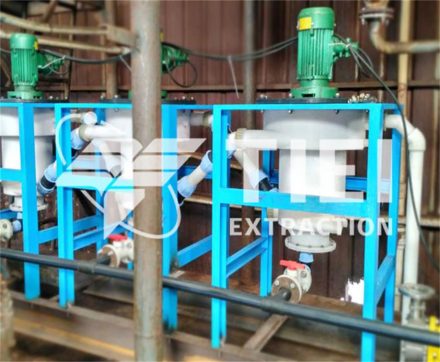
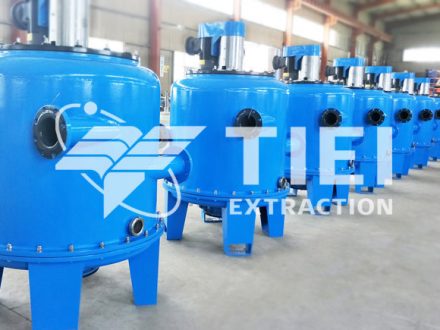
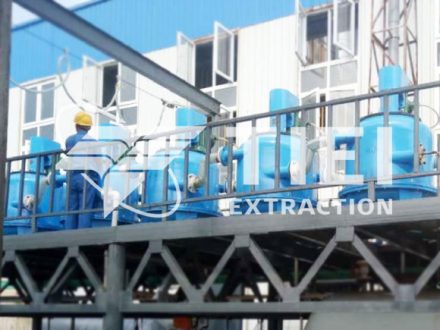
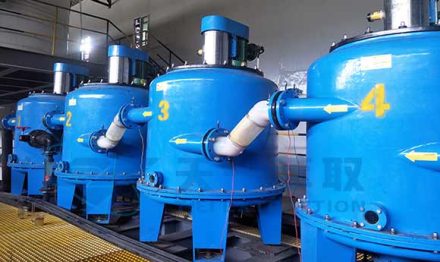
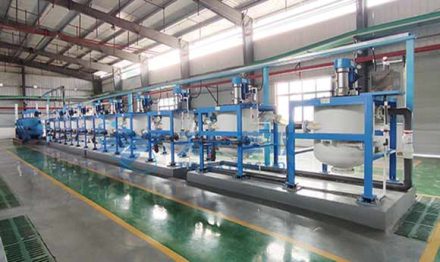
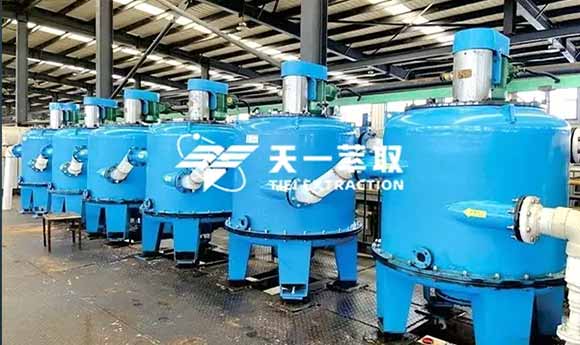
To address the shortcomings of traditional extraction equipment in DMAC wastewater treatment—such as high energy consumption, poor corrosion resistance, and frequent maintenance—Zhengzhou Tiei Extraction Technology Co., Ltd. has developed a continuous centrifugal extraction process centered on the CWL-M series centrifugal extractor, enabling a shift from batch operation to highly efficient continuous treatment.
The core process of this technology is as follows:
Mixing and Mass Transfer Stage: DMAC-containing wastewater and the selected extractant are continuously fed into the CWL-M centrifugal extractor through separate inlets according to optimized ratios. Driven by the high-speed rotation of the drum, the impeller rapidly mixes and disperses the two phases at the micron scale, allowing DMAC molecules to transfer from the aqueous phase to the organic phase within milliseconds.
Centrifugal Separation Stage: The mixed solution enters the drum separation zone under the guidance of a vortex disc. Under strong centrifugal forces, the denser extractant phase and the lighter raffinate phase achieve instantaneous separation, continuously discharged through their respective outlets. The separation interface is clear and stable, completely preventing phase entrainment and emulsification.
Extractant Regeneration Stage: The DMAC-loaded organic phase enters the stripping section, where it contacts a stripping agent to transfer DMAC into the stripping solution for subsequent recovery. The regenerated extractant is recycled back to the extraction stage, achieving a closed-loop solvent system and significantly reducing operational costs.
Technological Leap of the CWL-M Centrifugal Extractor
As the core equipment of this process, the CWL-M series centrifugal extractor demonstrates significant performance advantages in DMAC wastewater treatment:
1.Significant Energy Reduction: Through optimized flow channels and dynamic balancing technology, the energy consumption per unit of treated wastewater is only one-third to one-tenth that of traditional centrifugal extractors, providing remarkable long-term energy savings.
2.Enhanced Corrosion Resistance: All wetted parts are made of perfluorinated polymers and specialized alloy composite structures, capable of withstanding long-term exposure to DMAC, chloroform, and acidic media. The main equipment has a service life exceeding 8 years, and maintenance frequency is reduced by over 90%.
3.Breakthrough Separation Efficiency: With centrifugal field strength thousands of times that of gravity, phase separation is completed within seconds. Single-stage extraction efficiency is 5–8 times higher than conventional equipment, and multi-stage countercurrent operation can achieve an overall DMAC removal rate exceeding 99.5%.
4.Extremely Simple Operation and Maintenance: The innovative top-suspended, bearing-free support system completely eliminates bottom mechanical seals, fundamentally preventing leakage. The equipment supports 24-hour continuous automated operation, enabling unmanned extraction stages.
Industrial Validation: Stable Operation from Ton-Scale to Ten-Thousand-Ton Scale
Taking a large pharmaceutical intermediate company as an example, the enterprise generates approximately 50 tons of DMAC-containing wastewater per day. Previously, batch reactor extraction was used, with a single batch cycle of 4 hours, a DMAC recovery rate of about 85%, and extractant consumption as high as 3.5 kg per ton of wastewater. Additionally, the system required two monthly shutdowns to clean accumulated emulsified layers.
After upgrading to a three-stage countercurrent CWL-M centrifugal extraction system, the DMAC recovery rate stabilized above 96%, the DMAC concentration in the raffinate was reduced to below 150 mg/L, and extractant consumption dropped to 0.8 kg per ton of wastewater. The system operated continuously for 8,000 hours without emulsification buildup. The direct economic benefit from DMAC recovery alone exceeded 6 million RMB annually, and the equipment investment payback period was less than 10 months.
Zhengzhou Tiei Extraction can provide customers with complete DMAC wastewater extraction and recovery process validation services. Customers can send actual materials, which are tested on the CWL-M laboratory centrifugal extractor to optimize extraction ratios, determine the number of stages, and verify long-term operational stability. A comprehensive process report and equipment selection plan are then provided, minimizing the risks associated with industrial-scale scale-up.
If you are interested in centrifugal extraction process, welcome to contact Tiei Extraction.
Email: sales@tieiextraction.com
Whatsapp: +86 19069612820