As the global vehicle fleet continues to expand, automotive exhaust purification has become a focal point of environmental protection efforts worldwide. Three-way catalytic converters composed of platinum, palladium, and rhodium have been widely used in automotive exhaust purification systems since the 1990s. Currently, the automotive exhaust purification sector has become the largest consumer of platinum group metals (PGMs), accounting for more than 60% of total global demand.
Against the backdrop of increasingly scarce platinum group metal resources, recovering platinum, palladium, and rhodium from spent three-way catalytic converters offers both significant resource value and environmental benefits.
Platinum Group Metal Recovery Process Flow
Zhengzhou Tiei Extraction Technology Co., Ltd. has developed a comprehensive process for recovering PGMs from three-way catalytic converters, mainly consisting of five key stages: pretreatment, enrichment, base metal removal, separation and purification, and metal reduction.
1.Pretreatment: Spent catalytic converters undergo decanning, crushing, grinding, and screening to obtain powder of suitable particle size, preparing the material for subsequent processing.
2.Enrichment: Wet-process techniques are used to separate PGMs from the carrier, producing a high-grade concentrate.
Hydrometallurgical enrichment involves acid or alkali leaching to selectively dissolve PGMs. This method is simple, cost-effective, and the most widely used approach for PGM recovery.
3.Base Metal Removal: The enriched material is subjected to wet chemical treatment to separate and remove base metals such as iron, copper, and nickel.
4.Precious Metal Separation and Purification: This is the key step in the recovery process. Due to the similar chemical properties and variable valence states of PGMs, traditional methods such as precipitation and cementation are often complex, inefficient, and costly.
Solvent extraction technology, with its advantages of simplified process, high separation efficiency, high recovery rate, and ease of automation, is widely recognized as an advanced method for the separation and purification of PGMs.
5.Metal Reduction: The purified PGM solutions are reduced to obtain the final metallic products.
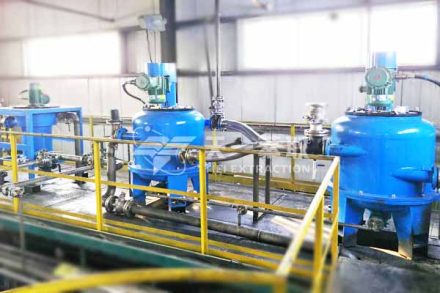
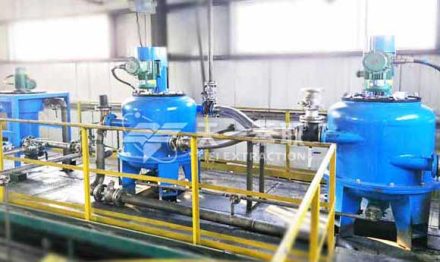
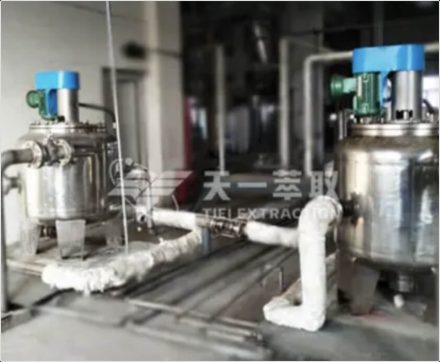
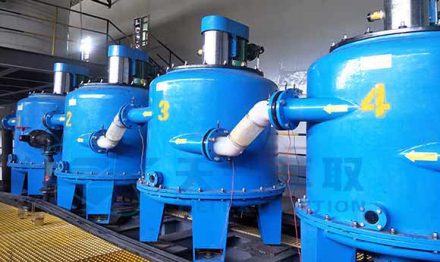
Solvent Extraction Core Equipment: CWL-M Centrifugal Extractor
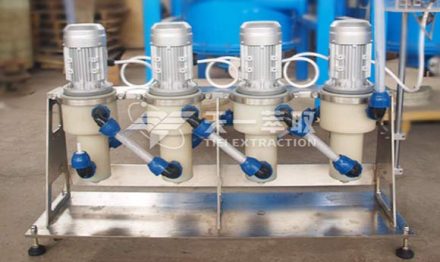
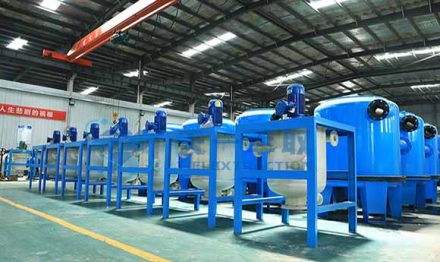
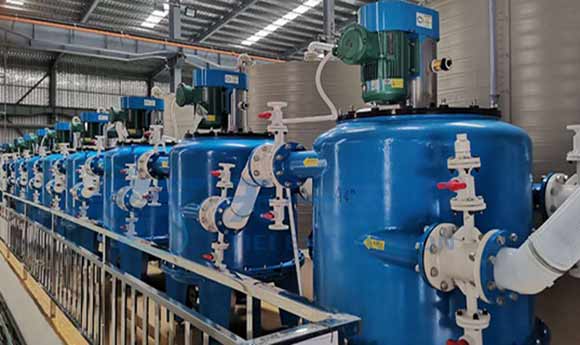
In the extraction, separation, and purification of platinum group metals (PGMs), the CWL-M centrifugal extractor developed by Zhengzhou Tiei Extraction Technology Co., Ltd. is an ideal solution. As a liquid–liquid extraction equipment, the CWL-M centrifugal extractor offers the following key advantages:
1.Stable Performance: Ensures reliable continuous operation, making it well-suited for industrial-scale production.
2.High Extraction Efficiency: Utilizing extractant systems such as 100% TBP, N235 + n-dodecane + octanol, and through 3–4 stages of countercurrent extraction, the cumulative extraction rate can exceed 99.5%.
3.High Level of Automation: Supports continuous processing and enables unattended operation of the extraction section.
4.Strong Corrosion Resistance: Wetted parts are made of special materials designed to withstand long-term exposure to acidic media.
5.Energy Saving and Environmentally Friendly: A fully enclosed design minimizes solvent volatilization and reduces environmental impact.
By adopting the CWL-M centrifugal extractor for PGM separation and purification, traditional complex processes can be effectively replaced. This significantly improves recovery rates, reduces production costs, and enhances operational safety—providing a reliable and efficient technical pathway for the resource recovery of platinum group metals from spent three-way catalytic converters.
Email: sales@tieiextraction.com
Whatsapp: +86 19069612820