Salt lake brine is not only an important source of lithium, but also contains scarce strategic metals such as rubidium and cesium. Rubidium and cesium play irreplaceable roles in high-end fields including optoelectronic materials, specialty glass, energy conversion, and aerospace. With the continued development of high-tech industries, the strategic value and market demand for rubidium and cesium resources are continuously increasing.
However, the concentrations of rubidium and cesium in salt lake brine are extremely low, typically at the ppm level, and they coexist with large amounts of potassium, sodium, magnesium, and other elements. Their highly similar physical and chemical properties make separation and purification extremely difficult. Traditional precipitation methods involve long process flows and low recovery rates. Although ion exchange methods offer a certain degree of selectivity, their limited exchange capacity makes it difficult to meet the requirements of large-scale industrial processing. As a result, a significant amount of valuable rubidium and cesium resources is discharged with the lithium precipitation mother liquor, resulting in the waste of strategic resources.
CWL-M Centrifugal Extractor: Core Equipment for Process Implementation
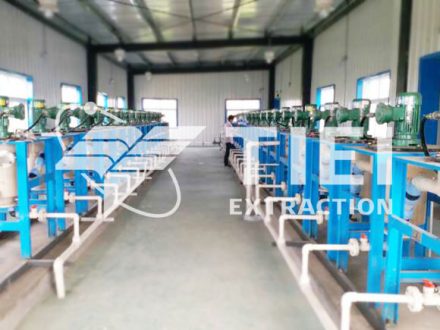
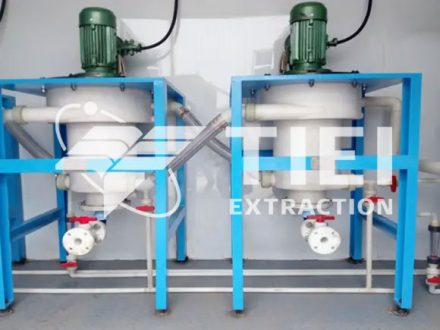
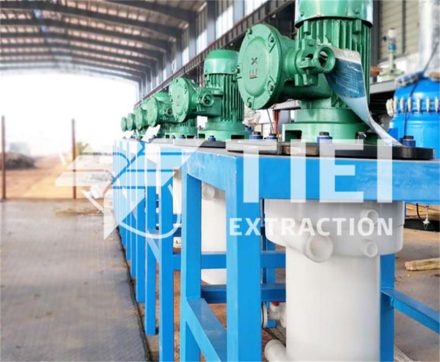
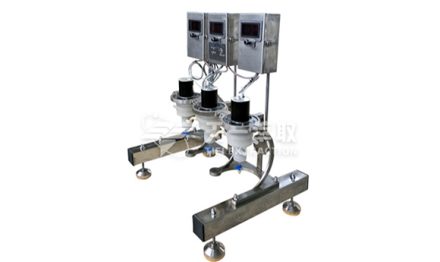
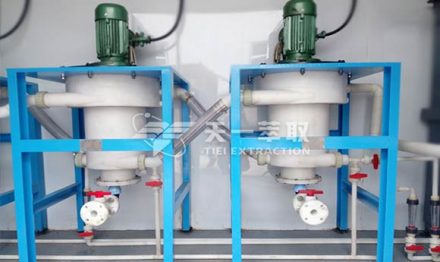
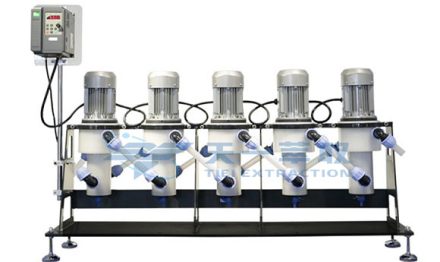
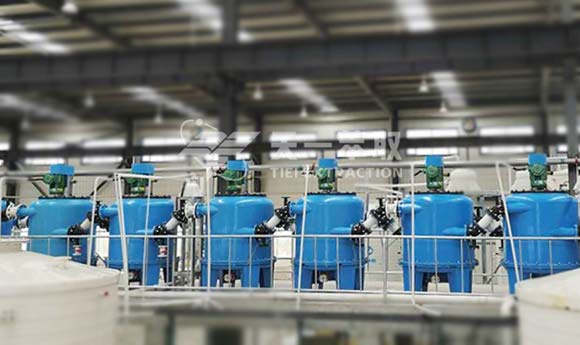
Advanced extraction processes require high-performance equipment for effective implementation. The CWL-M series centrifugal extractor, independently developed by Tiei Extraction, is the core equipment for achieving the fine separation of rubidium and cesium. Inside the CWL-M centrifugal extractor, the centrifugal force can reach hundreds of times that of gravity, enabling the two phases with only a very small density difference to complete mixing, mass transfer, and rapid separation within an extremely short period. The equipment adopts a multi-stage counter-current configuration, enabling flexible implementation of continuous and enclosed operation throughout the extraction, scrubbing, and stripping processes. Compared with traditional mixer-settlers, it offers the following significant advantages:
1.High Mass Transfer Efficiency and Rapid Separation
The centrifugal extractor employs the principles of forced mass transfer and forced separation, allowing mixing and separation to be completed within an extremely short period. It is a highly efficient separation equipment integrating mixing and clarification. Extraction in this system features rapid reaction kinetics, a small density difference between the two phases, a high phase ratio, and a large number of theoretical stages. Introducing a centrifugal extractor into this separation process can significantly improve separation efficiency. Under specific process conditions, the rubidium extraction rate can reach more than 99% with a four-stage counter-current extraction process.
2.High Separation Precision
Through multi-stage counter-current extraction and scrubbing, most of the rubidium remains in the aqueous phase, while the cesium extraction rate into the organic phase can reach more than 96%, enabling effective separation of rubidium and cesium. A two-stage extraction process can be adopted to obtain a relatively high-purity stripping solution.
3.Fully Enclosed and Corrosion Resistant
Lithium precipitation mother liquor is typically a high-salt, strongly alkaline system. The wetted parts of the CWL-M Centrifugal Extractor can be manufactured from high-quality stainless steel, duplex stainless steel, or fluoropolymer materials, providing resistance to high-salt and strongly alkaline corrosive conditions. Fully enclosed operation can effectively control the volatilization of the organic phase and improve the operating environment.
4.Continuous Automation and Easy Scale-Up
The equipment can be flexibly connected in series to achieve continuous and automated operation of the entire process, providing high process stability. From laboratory-scale testing to industrial scale-up, the test data can be directly used for engineering design.
Application Verification: From Process Development to Pilot-Scale Validation
In a pilot-scale study on the extraction and separation of rubidium and cesium from chloride-type brine, centrifugal extractors were employed for pilot-scale validation. High-purity stripping solution and optimized process parameters were successfully obtained, with good rubidium salt recovery. A pilot-scale unit for producing rubidium salts from brine using the centrifugal extraction process has been established. The process is simple to operate and readily scalable for industrial application. The overall process requires only a small amount of acid and alkali consumption to obtain high-value-added rubidium salt products, demonstrating significant economic benefits.
As the applications of rubidium and cesium continue to expand in high-tech fields, the requirements for their purity and production capacity will continue to increase. With its technological advantages including highly efficient mass transfer, second-level phase separation, and fully enclosed corrosion-resistant operation, Tiei Extraction’s CWL-M series centrifugal extractors provide a continuous and highly efficient process route for the recovery of rubidium and cesium from by-products of salt-lake lithium extraction. We provide one-stop services ranging from laboratory-scale testing to industrial-scale equipment, using actual customer feed solutions for testing and relying on measured data to provide a reliable basis for industrial application.
Email: sales@tieiextraction.com
Whatsapp: +86 19069612820