In the production processes of fine chemicals, pharmaceuticals, and hydrometallurgy, the separation of the organic phase and aqueous phase is one of the most common and critical unit operations. Whether for product extraction after reactions, solvent recovery, water washing and desalination, or phase separation after acid-base neutralization, efficient oil-water separation technology is indispensable.
However, in actual production, the separation of many oil-water systems is far from easy. In some systems, the density difference between the organic and aqueous phases is extremely small. For example, the density of dichloromethane is 1.326 g/cm³, while that of water is 1.00 g/cm³, giving a density difference of only approximately 0.326 g/cm³. In some fine chemical systems, the density difference between the organic and aqueous phases can be as low as 0.03–0.05 g/cm³. Traditional extraction equipment, such as mixer-settlers and extraction columns, relies on gravity for phase separation, resulting in low separation efficiency, long residence times, and a high tendency toward emulsification and phase entrainment.
Limitations of Traditional Gravity Separation
The operating principle of traditional oil-water separation equipment is based on gravitational settling. It utilizes the density difference between the oil and water phases: the denser aqueous phase settles downward, while the less dense organic phase rises upward, thereby achieving phase separation. This process places relatively high demands on the density difference between the two phases. The greater the density difference, the faster the separation; the smaller the density difference, the slower the separation, and in some cases, complete separation may not be achievable.
When the density difference between the two phases is extremely small, such as below 0.1 g/cm³, the gravitational settling velocity becomes extremely slow. It may take tens of minutes or even several hours to achieve acceptable phase separation. Even more challenging is that many oil-water systems are highly susceptible to emulsification during mixing. The organic phase may be dispersed into fine droplets at the micron scale and suspended in the aqueous phase, forming a stable emulsion. A charged interfacial film formed around the emulsified droplets prevents droplet coalescence and phase separation, making it difficult for traditional gravity settling to effectively break the emulsion.
As a result, incomplete separation, severe organic-phase entrainment, reduced product purity, increased solvent losses, and a heavier wastewater treatment load can all occur. The efficiency and quality of the entire production process can ultimately be constrained by this critical oil-water separation step.
The Principle of CWL-M Centrifugal Extractor
The centrifugal extractor fundamentally changes the driving force for oil-water separation by upgrading the separation force from “gravity” to “centrifugal force.”
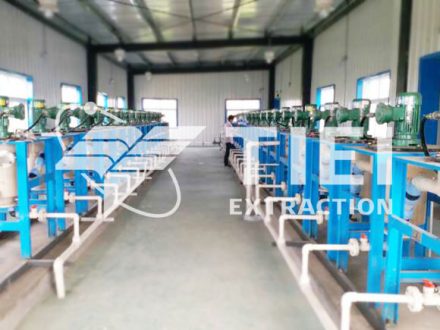
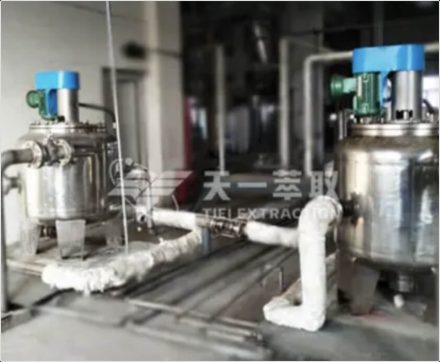
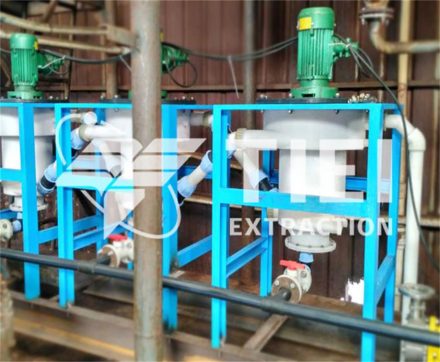
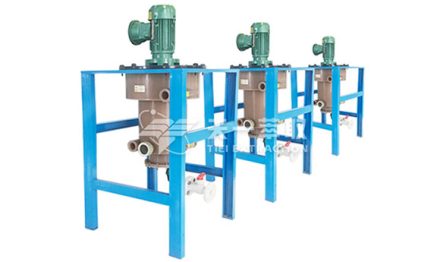
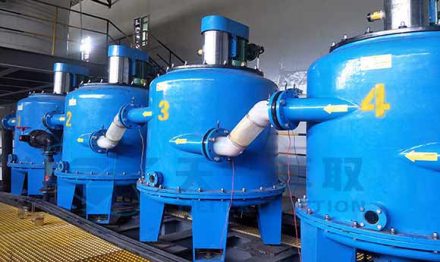
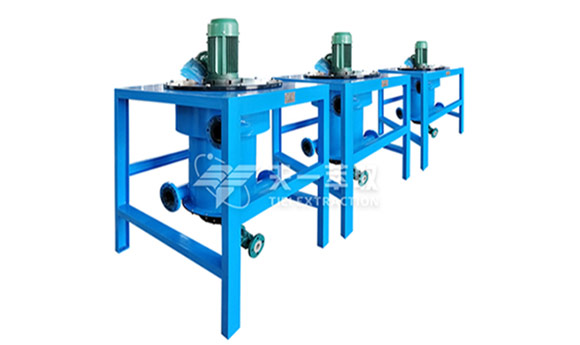
The Tiei Extraction CWL-M Series Centrifugal Extractor operates as follows: The light and heavy phase solutions enter the mixing zone between the drum and housing through two separate feed inlets at a predetermined ratio. With the high-speed rotation of the drum, the two phases are rapidly mixed and dispersed by the turbine disc and impeller, completing efficient mass transfer. The resulting mixture then enters the drum. Under a powerful centrifugal field that can reach hundreds of times the force of gravity, the denser heavy phase (aqueous phase) gradually moves away from the center of the drum toward the drum wall as it flows upward, while the less dense light phase (organic phase) gradually moves away from the drum wall toward the center. After clarification, the two phases respectively pass through their corresponding weir plates into the collection chambers and are discharged from the machine through separate outlet pipes, completing the two-phase separation.
The entire mixing and separation process is completed continuously within just a few seconds—an operating speed that traditional gravity separation cannot match.
Core Advantages of the CWL-M Centrifugal Extractor
The CWL-M Centrifugal Extractor incorporates multiple design optimizations specifically developed for difficult-to-separate oil-water systems, enabling excellent performance even under challenging operating conditions.
1.Separation Capability at Extremely Low Density Differences
The CWL-M centrifugal extractor achieves high-precision, high-throughput separation through its optimized aspect ratio. This technological breakthrough means that as long as the density difference between the two phases is greater than 0.03, the CWL-M can achieve efficient, stable, and continuous oil-water separation. In contrast, traditional equipment often requires a density difference of more than 0.1 to operate effectively. The CWL-M centrifugal extractor lowers the density difference threshold for oil-water separation by more than 70%.
2.Powerful Demulsification Capability
For highly emulsifiable oil-water systems, the CWL-M Centrifugal Extractor is equipped with an anti-emulsification sleeve device. The device forms a static mixing zone between the drum and housing, eliminating the vortices and turbulence generated by the high-speed rotation of the drum. This effectively reduces emulsification caused by excessive shear between the two phases. Combined with the forced separation effect of the centrifugal field, even highly emulsifiable systems can achieve clear and effective phase separation.
3.Separation in Seconds, Dramatically Improved Efficiency
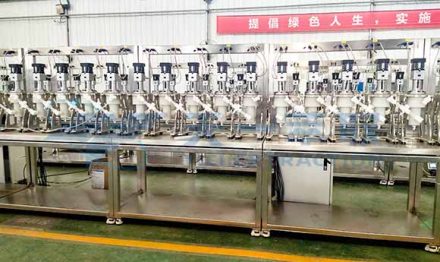
The CWL-M Centrifugal Extractor completes mixing and separation continuously within seconds. Compared with the tens of minutes or even several hours required by traditional gravity separation, its efficiency can be increased by more than 10 times. For high-throughput production lines, this means a significant reduction in equipment investment and required floor space.
4.Fully Enclosed and Continuous Operation
The CWL-M Centrifugal Extractor adopts a fully enclosed structure, effectively preventing the evaporation and leakage of organic solvents. At the same time, it supports fully automated continuous production, replacing traditional intermittent batch operations and significantly improving production stability and consistency.
5.Extremely Low Operating Costs
The power consumption of the CWL-M Centrifugal Extractor is only 10%–30% that of traditional annular-type models. Its compact structure requires only approximately one-third of the floor space of traditional equipment. The extractant has a high recycling rate, and solvent consumption is significantly reduced.
Typical Applications
The CWL-M Centrifugal Extractor demonstrates particularly outstanding performance in the following oil-water separation applications:
Fine Chemical Water Washing and Desalination: Reduces the salt content in the organic phase from 10% to below 200 ppm, reduces washing water consumption by 30%–50%, and effectively eliminates the accumulation of emulsified layers.
Solvent Recovery: Rapid separation and recovery of organic solvents such as dichloromethane, chloroform, and ethyl acetate from water.
API Extraction: Oil-water extraction and separation of heat-sensitive components such as antibiotics and vitamins. With a residence time of only a few seconds, the process effectively protects the active components.
Hydrometallurgy: Oil-water phase separation during the extraction and stripping processes of metals such as copper, nickel, cobalt.
Petrochemical Industry: Oil-water separation in processes such as lubricating oil extraction and refining and diesel desulfurization.
Conclusion
In the field of chemical oil-water separation, density difference is no longer necessarily a limiting factor. The CWL-M Centrifugal Extractor provides an efficient, stable, and continuous separation solution, offering a reliable technical pathway for difficult-to-separate systems that are challenging for traditional equipment.
With three core technologies—centrifugal-field-enhanced separation, an anti-emulsification structural design, and fully enclosed continuous operation—the Tiei Extraction CWL-M Series Centrifugal Extractor is helping an increasing number of chemical companies overcome oil-water separation bottlenecks and achieve simultaneous improvements in production efficiency and product quality.
Email: sales@tieiextraction.com
Whatsapp: +86 19069612820