In the production processes of pharmaceuticals, pesticides, and other fine chemicals, high concentrations of organic compounds, DMF (dimethylformamide), and high-salinity wastewater often appear as a “coexisting trio.” Such wastewater systems are extremely complex, typically containing nitrogen-containing heterocyclic compounds such as pyridine, organic acids, and various salts including CaCl₂, NaCl, dimethylamine hydrochloride, formates, and acetates.
DMF itself exhibits biological toxicity and poses significant risks to aquatic organisms. The combined presence of organic compounds and salts makes wastewater treatment a widely recognized technical challenge in the industry especially when selecting suitable DMF extraction equipment and process routes.
Challenge: Why Is DMF Wastewater So Difficult to Treat?
Water has a strong affinity for DMF, causing the two to remain tightly associated, making complete separation difficult even through distillation. A more critical issue arises when evaporation and desalination are performed without pretreatment: large amounts of organic compounds tend to foam intensely under heating conditions and form viscous sludge at the bottom of the evaporator when mixed with salts. This sludge is difficult to dehydrate and even harder to incinerate, while incineration may release odorous volatile organic amines.
Under high-temperature or strong acidic conditions, DMF can decompose into dimethylamine and formic acid, further accelerating sludge formation and potentially leading to evaporation system failure. Therefore, to achieve compliant discharge and resource recovery, DMF and organic components must be efficiently removed from the aqueous phase before evaporation.
Breakthrough: A Three-Step Precision Separation Solution with Centrifugal Extraction Process
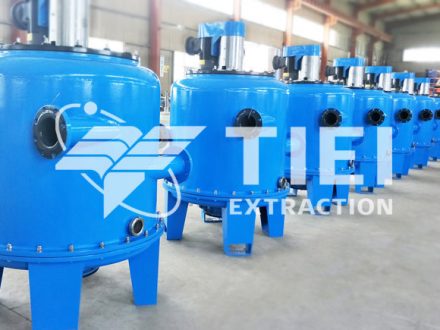
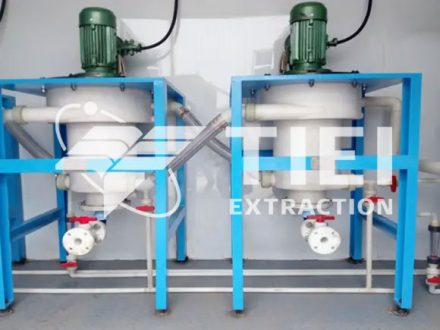
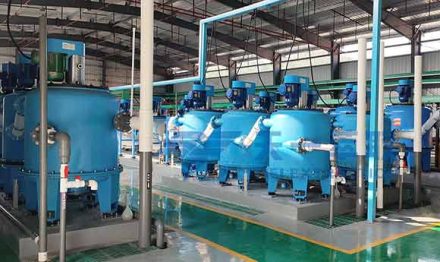
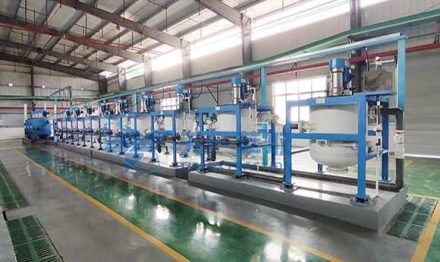
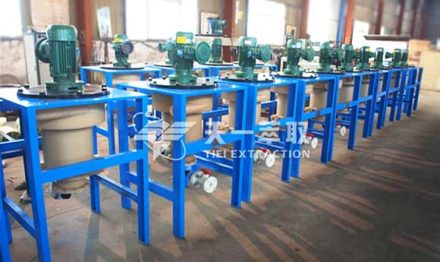
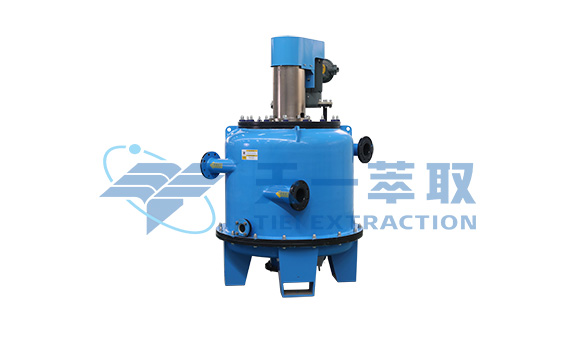
To address this long-standing industry challenge, Zhengzhou Tiei Extraction Technology Co., Ltd. has developed a liquid–liquid extraction separation system centered on the CWL-M series centrifugal extractor. Using chloroform or dichloromethane as the extractant, the system enables highly selective separation of DMF and organic compounds under ambient temperature conditions.
1.High-Efficiency Extraction: DMF Recovery Exceeding 99.9%
High-salinity wastewater containing DMF and organic compounds is fed into the CWL-M centrifugal extractor together with the extractant at an optimized phase ratio. Under a high-speed centrifugal field, the two phases achieve intensive mixing and mass transfer within milliseconds. DMF and organic components such as pyridine rapidly transfer into the extract phase (heavy phase). After extraction, residual DMF and organic content in the aqueous phase can be reduced to below 0.05%. The single-stage extraction efficiency exceeds 99%, and with multistage countercurrent operation, the overall removal rate can reach 99.95%.
2.Distillation Regeneration: Closed-Loop Solvent Recycling
The extract phase loaded with DMF and organic compounds enters the distillation section. Based on the significant boiling point differences between chloroform (61.3 °C) or dichloromethane (39.8 °C) and DMF (153 °C), efficient solvent regeneration and DMF concentration recovery are achieved through rectification. The regenerated extractant is recycled back to the extraction stage, with solvent loss controlled below 1%, significantly reducing operating costs.
3.Evaporation and Desalination: Clean Aqueous Discharge
After extraction pretreatment, the concentrations of DMF and organic compounds in the wastewater are reduced to very low levels. When entering the evaporation unit, no foaming or sludge formation occurs, allowing mixed salts to crystallize and separate smoothly. The condensed water can meet discharge standards or be reused, effectively eliminating the risk of fouling and blockage in the evaporation system.
Core Equipment: Technical Advantages of the CWL-M Centrifugal Extractor
As the core equipment of this process, the CWL-M series centrifugal extractor demonstrates significant technological advantages in DMF wastewater treatment applications:
1.Strong Corrosion Resistance for Long-Term Stability: The wetted parts adopt a composite structure of perfluoropolymer materials and special alloys, enabling long-term resistance to chloroform/dichloromethane, DMF, high-salinity brine, and acidic media. The service life of the main equipment exceeds 8 years.
2.Zero-Leakage Structure for Intrinsic Safety: An innovative top-suspended bearingless support system eliminates the need for bottom mechanical seals and bearings, fundamentally preventing extractant leakage while reducing maintenance frequency by more than 90%.
3.Ultra-Low Energy Consumption with Continuous Operation: Through optimized flow channel design and precise dynamic balancing, the energy consumption per unit processing capacity is only 1/10 to 1/3 that of conventional centrifugal extractors. The system supports stable 24/7 continuous operation, making it suitable for large-scale industrial applications.
4.High Stage Efficiency with Compact Footprint: Each CWL-M centrifugal extractor integrates mixing, mass transfer, and phase separation into a single unit. The stage efficiency is significantly higher than that of traditional mixer-settlers, while the footprint is reduced by more than 70%, making it especially suitable for retrofitting existing production lines.
Industrial Validation: Cross-Scenario Applications from Agrochemical to Pharmaceutical Wastewater
This process has been successfully implemented at industrial scale in several large agrochemical and pharmaceutical intermediate manufacturing enterprises.
Case 1: Agrochemical Wastewater Containing Pyridine, DMF, and High Salinity
At an agrochemical plant, the wastewater contained pyridine, DMF, and high-salinity components, with a COD of approximately 120,000 mg/L and a DMF concentration of 8%. After three-stage countercurrent centrifugal extraction, the DMF removal rate reached 99.7%. The extract phase was then distilled to recover DMF with a purity above 99%, while the regenerated extractant was recycled back into the system. The evaporation section achieved stable continuous desalination, saving more than RMB 6 million annually in hazardous waste disposal costs.
Case 2: Pharmaceutical Wastewater Containing Dimethylamine Hydrochloride and DMF
At a pharmaceutical facility, wastewater containing dimethylamine hydrochloride and DMF was treated using the centrifugal extraction process. The extraction efficiency remained stable above 99.5%, and the COD before evaporation was reduced from 80,000 mg/L to below 300 mg/L. The evaporator cleaning cycle was extended from 3 days to 45 days, resulting in a twofold increase in production capacity.
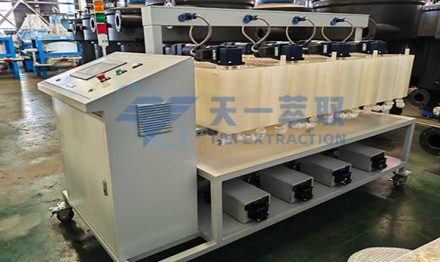
With the CWL-M series centrifugal extractor as its core liquid–liquid extraction equipment, Zhengzhou Tiei Extraction Technology Co., Ltd. provides integrated capabilities covering process package development, equipment integration, and intelligent control systems. The company is helping an increasing number of chemical enterprises transform high-concentration DMF organic wastewater from an environmental burden into a source of profit.
For DMF wastewater extraction feasibility studies, pilot-scale validation, or equipment selection solutions, welcome contact Zhengzhou Tiei Extraction.
Email: sales@tieiextraction.com
Whatsapp: +86 19069612820