In industries such as fine chemicals, pharmaceutical intermediates and polyurethane raw materials (TDI/MDI), nitration processes have always been “high-pressure zones” in terms of safety and efficiency, and are strictly regulated due to inherent risks. Traditional separation processes for nitration reaction liquids commonly face challenges such as high risk of thermal runaway, difficulty in separating waste acid, stubborn emulsified layers, low separation efficiency, high hold-up volumes, and increasing environmental pressure. These issues have become a bottleneck, limiting the industry’s transition toward continuous, green, and intelligent processes.
Leveraging years of experience in extraction and separation equipment R&D, Zhengzhou Tiei Extraction has introduced the CWL series centrifugal extractors specifically designed for nitration reaction liquid separation. Centered on “intrinsic safety, high efficiency, energy saving, environmental friendliness, and intelligent adaptability,” these machines tackle the core pain points of the industry, providing end-to-end separation solutions that help nitration enterprises upgrade capacity, optimize costs, and meet safety standards.
The Pain Points of Traditional Separation
Are you facing the following challenges in the separation of nitration reaction liquids?
1.High Safety Risks
Nitration introduces nitro groups (-NO₂) into organic molecules, typically accompanied by intense exothermic reactions. Traditional batch reactors have large hold-up volumes and poor heat transfer, making localized overheating a risk factor for thermal runaway, material surges, or explosions. Nitro compounds in the reaction mixture are highly unstable, prone to decomposition or polymerization, potentially causing accidents. After acid-base neutralization, sodium phenolate exhibits self-oxidizing properties, and if not removed before distillation, it can lead to tower explosions.
2.Low Separation Efficiency and Stubborn Emulsion Layers
Nitration reaction liquids have low interfacial tension between mixed acids and organic phases, forming stable emulsions. The densities of the two phases are often close—e.g., nitrobenzene ≈ 1.2 g/cm³, waste acid ≈ 1.4 g/cm³. Traditional gravity-settling equipment may take hours, yet interfaces remain unclear, making separation difficult, reducing efficiency, and negatively impacting product yield and purity.
3.High Environmental Pressure
Traditional batch settling methods and open equipment lead to excessive VOC emissions. After settling, the organic phase still contains high residual acid, increasing consumption of alkaline solutions and wash water in subsequent stages, and generating large volumes of high-salinity wastewater, driving up environmental treatment costs. As safety and environmental regulations tighten and continuous process upgrades become imperative, traditional batch mixer settlers can no longer meet the modern demands for safe, efficient nitration separation.
Tackling Industry Pain Points: How Centrifugal Extractors Achieve a “Dimensionality Reduction Strike”
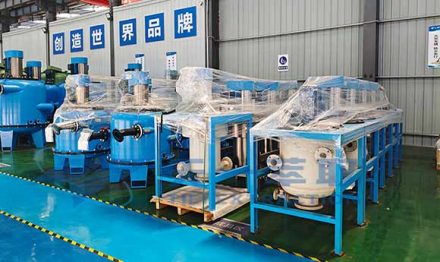
CWL centrifugal extractor provides a precise breakthrough for nitration production. By leveraging high-speed centrifugation, the CWL centrifugal extractor transforms traditional separation from a “passive waiting” process into an “active strike,” delivering three core advantages:
1.Strengthened Safety Barrier with 90% Reduced Hold-Up Volume
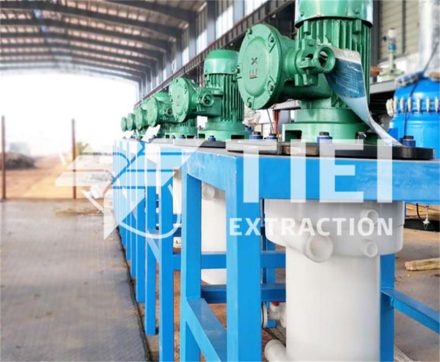
The CWL centrifugal extractor features a top-suspended single-point structure, eliminating bottom bearings and mechanical seals, with zero leakage risk. Fully enclosed operation prevents VOCs (volatile organic compounds) emissions, while real-time monitoring of speed, temperature, and flow allows automatic shutdown in emergencies, mitigating potential hazards.
While ensuring operational safety, the equipment also minimizes hold-up volume. For example, the CWL350-M centrifugal extractor handles 8 m³/h with a single-unit hold-up of only 50–60 L—about 1/10th of conventional equipment. This design fully aligns with the nitration process principles of “short residence, low hold-up, intrinsic safety,” providing enterprises with a robust safety guarantee.
2.Second-Level Separation for Continuous Production
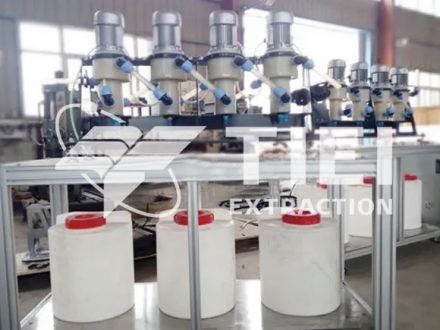
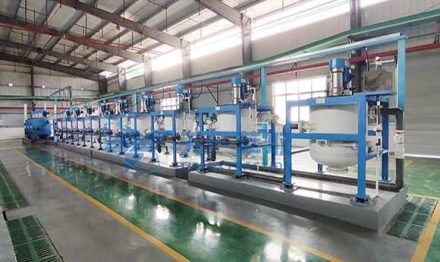
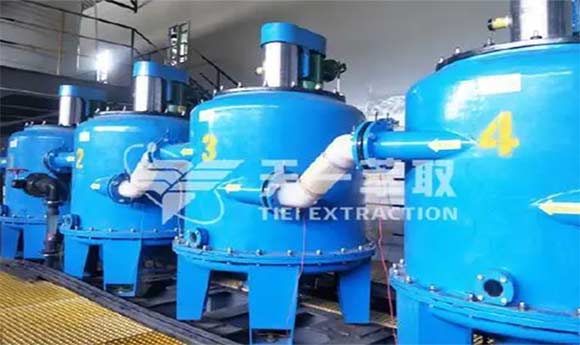
In the centrifugal extractor, high-speed rotation generates centrifugal force that instantly separates phases of different densities and discharges them. Traditional gravity settling takes over 30 minutes, whereas the centrifugal extractor completes separation in just 10–30 seconds. This rapid separation minimizes heat accumulation at the source, reducing thermal runaway risk by 99%. The equipment can be connected in multi-stage series to handle extraction, acid washing, alkali washing, and water washing in a single, continuous workflow. It perfectly adapts to continuous nitration processes, effectively addressing the industry challenge of “low separation efficiency and long residence time.”
3.Cost Reduction and Efficiency Gain: Lower Alkali and Wastewater
By exploiting density differences between phases, the CWL centrifugal extractor precisely separates oil and water, reducing free acid content in the organic phase to the desired level.
For instance, a nitrobenzene production plant replacing traditional mixer settler with the CWL centrifugal extractor reduced alkali and wash water consumption by 30–40%, significantly decreasing high-salinity wastewater generation. This enables fully continuous “separation → alkali wash → water wash” production, lowering wastewater treatment costs, reducing downstream distillation energy consumption, minimizing equipment corrosion, and extending operational cycles.
CWL Centrifugal Extractor: Precisely Engineered for Continuous Nitration Processes
With the industry trending toward continuous production, upstream microchannel reactors operate on reaction times measured in seconds. The CWL centrifugal extractor from Tiei Extraction perfectly matches this speed, truly achieving the principle: “as fast as the reaction, as fast as the separation.”
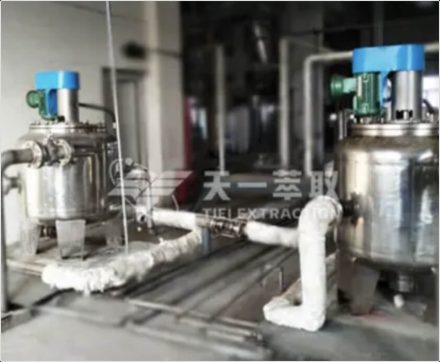
1.Premium Material Selection: To withstand the highly corrosive nature of nitration liquids, wetted components can be made from high-performance hybrid polymers, Hastelloy, titanium, duplex stainless steel, and other materials, ensuring long-term stable operation.
2.Energy-Efficient and Durable: The CWL centrifugal extractor consumes only 10–30% of the power of conventional annular-gap machines for the same throughput. Its modular design allows quick replacement of the heavy-phase weir plate, simplifying operation and reducing maintenance costs.
3.Anti-Emulsification Design: Featuring Tiei Extraction’s patented technology, the equipment optimizes drum and flow channel structures to enhance the handling of highly emulsified materials.
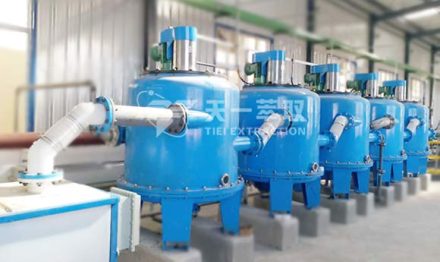
4.Automated Integration: The equipment supports DCS remote control, enabling automatic adjustment and real-time monitoring of parameters such as rotational speed, flow, and temperature without manual intervention. It is fully compatible with continuous and intelligent production requirements: it can operate as a single unit, in multi-stage series, or seamlessly integrate with microchannel reactors to form a closed-loop “nitration → separation → washing” process.
Currently, the nitration industry is rapidly transforming toward continuous, intelligent, safe, and green processes. As a core downstream separation step, upgrading liquid–liquid separation technology directly determines an enterprise’s competitive advantage.
Email: sales@tieiextraction.com
Whatsapp: +86 19069612820