In hydrometallurgy, electroplating, metal processing, battery recycling and other industries, zinc-rich solutions represent a valuable resource for recovery, but they also present significant treatment challenges. These solutions may originate from pickling waste liquor, electroplating sludge leachate, acid leachate of smelting dust, or intermediate solutions generated during battery recycling. Although they often contain relatively high zinc concentrations, they are usually accompanied by impurities such as iron, copper, and cadmium. Traditional treatment methods, including neutralization and precipitation or evaporation and concentration, are increasingly unable to meet the requirements of continuous production in terms of separation efficiency, solvent consumption, and secondary pollution control.
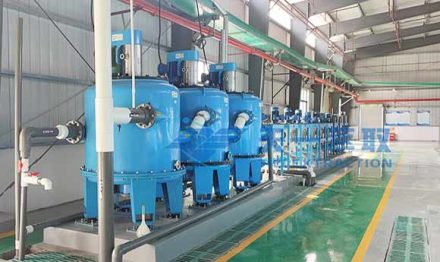
With its high selectivity, excellent product purity, and suitability for continuous operation, solvent extraction has become a mainstream technology for zinc recovery from zinc-rich solutions. The choice of extraction equipment directly determines whether the process can achieve stable operation, high recovery rates, and controllable operating costs. The CWL-M centrifugal extractor developed by Zhengzhou Tiei Extraction is a core separation equipment solution specifically designed for this critical process stage.
Why Is the Centrifugal Extractor Needed for Zinc Recovery from Zinc-Rich Solutions?
Zinc-rich solutions are rarely simple or clean systems. For example, pickling waste liquor often contains high concentrations of iron ions, making zinc-iron separation a key challenge in zinc recovery. In battery recycling and smelting leachate systems, zinc may coexist with other valuable metals, requiring the extraction process to provide both high selectivity and rapid response. Traditional mixer-settlers rely on gravity settling for phase separation. Its occupy a large floor area and retain substantial amounts of solvent. When dealing with easily emulsified systems or two phases with small density differences, their separation efficiency can decrease significantly.
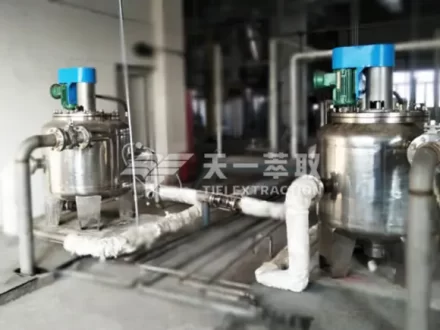
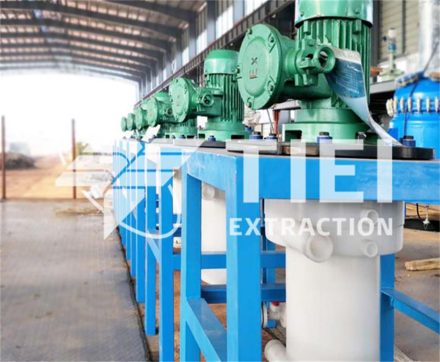
The centrifugal extractor replaces the gravitational field with a high-speed centrifugal force field. Mixing, mass transfer and phase separation between the two phases are completed within seconds. With a short liquid residence time at each stage and rapid phase disengagement, it is particularly suitable for zinc extraction processes that require accurate selectivity, rapid processing, and low solvent losses. The CWL-M series centrifugal extractor features further structural optimization. It adopt an overhead-mounted, single-support-point structure, eliminating the bottom bearing and mechanical seal from the processing area. This fundamentally reduces the risk of leakage and equipment failure. Under the same processing capacity, power consumption is only 10%–30% of that of traditional annular-gap centrifugal extractor.
Process Flow for Recovering Zinc from Zinc-Rich Solutions Using the CWL-M Centrifugal Extractor
A complete centrifugal extraction process for zinc recovery from zinc-rich solutions generally consists of five units: pretreatment, extraction, scrubbing, stripping, and product recovery. The CWL-M centrifugal extractor performs the core mass transfer and phase separation operations throughout the process.
1.Pretreatment: Providing Stable Feed for Extraction
Before entering the extraction section, the zinc-rich solution must undergo pH adjustment and suspended solids removal. For pickling waste liquor or leachate containing high iron concentrations, interfering ions can be adjusted to suitable levels for extraction through reduction, oxidation, or neutralization and precipitation. Solid particles must also be removed to prevent blockage of the extractor flow channels or phase entrainment. The objective of pretreatment is to ensure that zinc enters the centrifugal extractor in a stable form that can be selectively complexed by the extractant.
2.Extraction: Selective Mass Transfer in a Centrifugal Force Field
The zinc-containing aqueous phase and the organic phase loaded with a specific extractant are simultaneously fed into the mixing zone of the CWL-M centrifugal extractor at a predetermined phase ratio. The high-speed rotating drum generates shear forces that disperse the two phases into fine droplets. The mass transfer interface is continuously renewed, allowing zinc ions to transfer rapidly from the aqueous phase into the organic phase. The contact time for a single stage is typically only a few seconds. The resulting mixture then enters the drum's separation zone. Under a centrifugal force field hundreds of times stronger than gravity, the light and heavy phases rapidly separate according to their density differences. The zinc-loaded organic phase (light phase) moves toward the center, while the raffinate aqueous phase (heavy phase) moves toward the outer edge. The two phases are continuously discharged through separate channels, enabling counter-current operation without back-mixing.
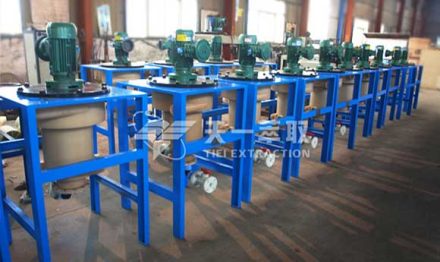
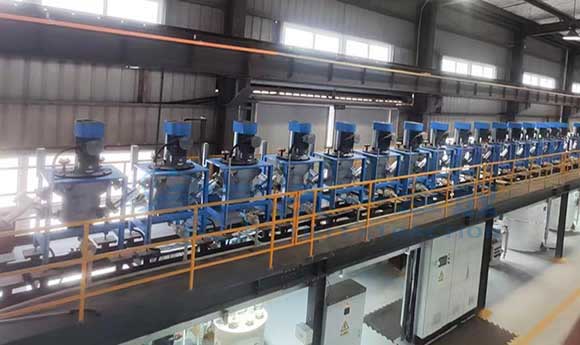
When multiple stages are connected in series, the CWL-M centrifugal extractor can achieve continuous counter-current flow between stages through the suction force generated by the mixing chamber, eliminating the need for additional interstage pumps. This provides flexible process configurations and allows the same equipment series to cover applications ranging from single-stage laboratory validation to industrial-scale multistage counter-current extraction.
3.Scrubbing: Controlling Impurity Entrapment
After leaving the extraction section, the loaded organic phase may carry small amounts of impurity ions from the aqueous phase. An appropriate acidic scrubbing solution is used to wash the loaded organic phase in a centrifugal extractor, further reducing co-extracted or entrained impurities such as iron and copper. This ensures that the organic phase entering the stripping section has a clean zinc loading profile. This step directly affects the purity of the final zinc product and is an indispensable part of zinc-iron separation processes.
4.Stripping: Transferring Zinc Back into the Aqueous Phase
The scrubbed loaded organic phase is brought into contact with a stripping solution (commonly dilute sulfuric acid or an alkaline solution) in another centrifugal extractor stage. Under stripping conditions, zinc is desorbed from the organic phase and transferred into the aqueous phase, producing a concentrated zinc-rich strip solution. Meanwhile, the organic phase is regenerated and returned to the extraction section for recycling. Because the CWL-M centrifugal extractor has a low internal liquid hold-up, the system can quickly reach a new equilibrium when stripping conditions or phase ratios are adjusted, reducing the generation of off-specification intermediate solutions.
5.Product Recovery: Electrowinning, Crystallization, or Precipitation
The zinc-rich solution obtained from stripping can be processed further based on the project’s product strategy: it may be sent directly to an electrowinning circuit to produce high-purity zinc, subjected to evaporation and crystallization to yield zinc salts (such as zinc sulfate or zinc chloride), or converted into zinc oxide via precipitation and calcination. In the context of pickling waste liquor, a process centered on the CWL-M centrifugal extractor—comprising "pretreatment, extraction, scrubbing, and stripping"—can boost zinc recovery rates to over 99.9%. Furthermore, the regenerated organic phase can be recycled, significantly reducing overall operating costs.
Key Advantages of the CWL-M Centrifugal Extractor in Zinc Recovery
1.High Separation Efficiency for Complex Zinc-Containing Solutions
The centrifugal force field is significantly stronger than the gravitational field. The CWL-M centrifugal extractor maintains stable phase separation even when handling zinc extraction systems that are easily emulsified, have low interfacial tension, or feature small density differences between the two phases. Entrainment losses of extractant are significantly reduced, saving organic solvent and lowering the subsequent oil-removal load in wastewater treatment.
2.High Stage Efficiency, Fewer Extraction Stages, and Smaller Footprint
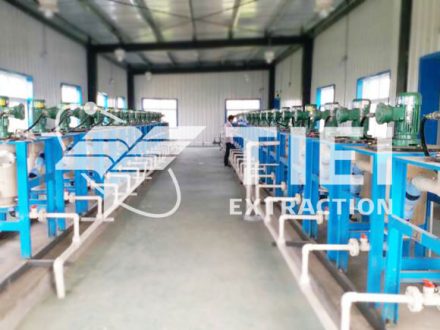
Mixing and separation are highly integrated within a single rotating unit, resulting in high single-stage efficiency. Fewer extraction stages are therefore required to achieve the same zinc recovery rate. The CWL-M centrifugal extractor features a compact structure, occupying approximately one-tenth of the floor space required by traditional mixer-settlers. This offers practical advantages for upgrading existing production lines and constructing new facilities where space is limited.
3.Low Solvent Hold-Up and Rapid Process Response
The CWL-M centrifugal extractor has a small effective internal volume, resulting in a low organic phase inventory within the system. This is particularly advantageous for zinc recovery processes involving relatively expensive extractants. When fluctuations occur in feed flow rate, pH, or phase ratio, the CWL-M centrifugal extractor can re-establish equilibrium within a short period, reducing the risk of off-specification products and unnecessary solvent losses.
4.Fully Enclosed Operation with Low Solvent Losses and Energy Consumption
The fully enclosed design minimizes the evaporation and escape of organic solvents, improves the operating environment, and reduces the frequency of solvent replenishment. Compared with traditional liquid-liquid extraction equipment, the CWL-M centrifugal extractor can reduce power consumption by more than 30% under equivalent processing conditions. For zinc recovery units requiring long-term continuous operation, these energy savings translate directly into lower operating costs.
5.Corrosion-Resistant Construction for a Wide pH Range
The CWL-M series centrifugal extractors can be equipped with drums made of perfluorinated polymer materials or polymer-based fluorinated composite materials, providing resistance to strong acids and mixed-acid corrosion. They can accommodate common zinc extraction systems, including sulfuric acid and hydrochloric acid systems, as well as process conditions across different pH ranges. The overhead-mounted structure eliminates the bottom bearing and mechanical seal, further reducing the risk of corrosive process solutions damaging critical moving components.
6.Wide Processing Capacity, from Laboratory Testing to Industrial-Scale Production
The CWL-M series centrifugal extractors offer a comprehensive product range, with drum diameters covering applications from laboratory-scale testing to industrial-scale production. Their mixing throughput ranges from several liters per hour to the 100,000-liter-per-hour level. Process parameters such as the number of extraction stages, phase ratio, and residence time can first be established through laboratory and pilot-scale testing, then scaled up to industrial production based on the same structural principles, reducing the risks associated with process scale-up.
Typical Applications
The CWL-M centrifugal extractor is suitable for a wide range of zinc recovery applications involving zinc-rich solutions, including:
Zinc-iron separation and zinc recovery from hot-dip galvanizing pickling waste liquor.
Zinc enrichment from electroplating sludge leachate.
Selective zinc extraction from acid leachate of smelting dust.
Separation of valuable metals from intermediate solutions generated during battery recycling.
Resource recovery from heavy-metal wastewater containing zinc.
For projects involving relatively high zinc concentrations, complex coexisting impurities, continuous operation requirements, and low solvent consumption targets, centrifugal extraction offers significant competitive advantages in terms of separation efficiency and total life-cycle costs.
Conclusion
From zinc-rich solutions to high-purity zinc products, the extraction section is the key stage determining both zinc recovery and overall process economics. The CWL-M centrifugal extractor uses a centrifugal force field to intensify mass transfer and phase separation. Through its compact, enclosed, and low-hold-up structural design, it translates the goals of high recovery rates and low operating costs into practical continuous production processes.
If you are evaluating equipment selection for a zinc recovery project involving zinc-rich solutions, Zhengzhou Tiei Extraction can provide laboratory-scale and pilot-scale process validation to help determine the appropriate number of extraction stages, phase ratio, and equipment throughput for your specific feed solution.
Email: sales@tieiextraction.com
Whatsapp: +86 19069612820