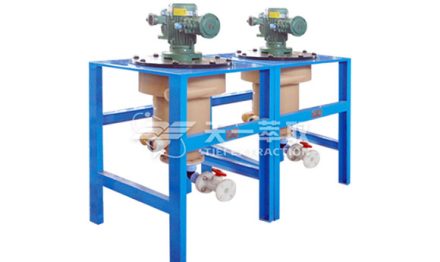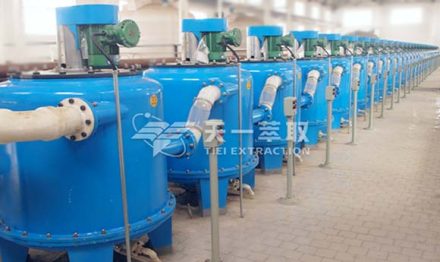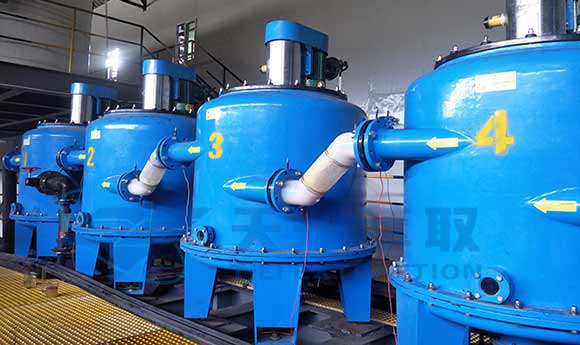
N-Methyl-2-pyrrolidone (NMP), a high-performance solvent widely used in lithium batteries, polymer materials, electronic chemicals, and other industries, has long presented challenges in wastewater treatment. The fundamental issue is that NMP is completely miscible with water and has a high boiling point. Conventional distillation is not only energy-intensive but is also constrained by azeotropic behavior, making it difficult to achieve both high recovery rates and the product purity required for reuse. When NMP in wastewater represents both an environmental burden and a considerable recoverable material value, the treatment approach itself needs to be reconsidered. The CWL-M centrifugal extractor provides an engineering solution based on physical separation, with continuous multi-stage counter-current operation at its core.
Process Overview: A Continuous Process from Wastewater to High-Purity NMP
The process logic of treating NMP wastewater with CWL-M centrifugal extractors is relatively straightforward, with every step focused on "efficient mass transfer and rapid phase separation." The complete process can be summarized as follows:
NMP wastewater → Pretreatment (pH adjustment/filtration) → Centrifugal extraction (counter-current contact with extractant) → Loaded organic phase → Stripping/distillation and regeneration → High-purity NMP product;
Raffinate phase (purified water) → Discharge after meeting standards or reuse.
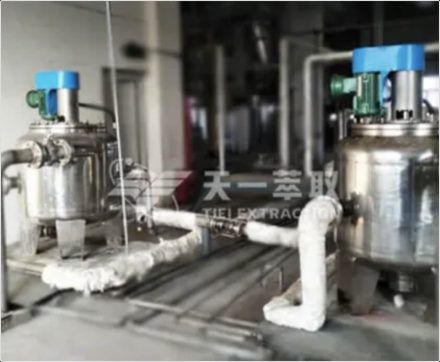
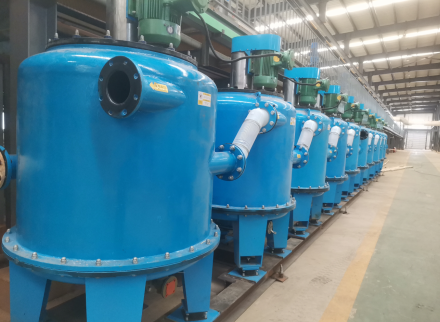
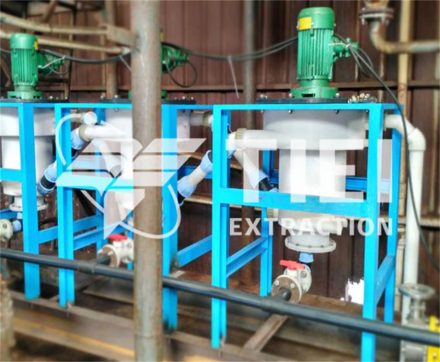
Within the centrifugal extraction unit, wastewater and extractant flow through multiple CWL-M centrifugal extractors in opposite directions. At each stage, the two phases are intensively mixed and brought into full contact under a centrifugal force field hundreds of times greater than gravity. NMP molecules transfer from the aqueous phase into the extractant phase, after which rapid phase separation takes place inside the rotating drum. The interstage arrangement follows a continuous counter-current configuration: the raffinate phase flows from the previous stage to the next, while the extract phase flows back from the final stage toward the first stage. This arrangement maximizes the mass transfer driving force while minimizing extractant consumption. The contact time at each stage is measured in seconds, and the entire multi-stage system operates continuously rather than in intermittent batches.
After extraction, the loaded organic phase enters the stripping or distillation process, where NMP is released and purified to a purity of over 99%. The regenerated extractant is then recycled back to the extraction section. The NMP concentration in the raffinate can be reduced to below 0.1%, with COD simultaneously reduced significantly. Subsequent treatment generally requires only relatively simple biological treatment to meet discharge or reuse requirements.
Why Centrifugal Extraction? The Specific Advantages of CWL-M Centrifugal Extractor in NMP Systems
1.Bypassing Azeotropic Limitations: High Recovery and High Purity Without Compromise
When traditional distillation is used to treat NMP wastewater, the azeotropic behavior of the NMP-water system typically limits the NMP recovery rate to 75%–80%, while the purity of the recovered NMP is approximately 90%, making it difficult to reuse directly in upstream production processes.
CWL-M centrifugal extractors employ physical solvent extraction. The separation driving force comes from the selective solubility of NMP in the extractant rather than vapor-liquid equilibrium. Therefore, the process is not subject to azeotropic limitations. Actual operating data indicate that, with a multi-stage counter-current configuration, the NMP recovery rate can consistently exceed 98%, while product purity can reach over 99%, providing recovered NMP with the quality required for direct reuse.
2.A Significant Difference in Stage Efficiency: Over 95% vs. 60%–80%
The core engineering value of centrifugal extractors lies in their mass transfer efficiency. CWL-M centrifugal extractors adopt a high-speed centrifugal structure with an annular gap. Under the high-speed centrifugal force field, the two liquid phases form extremely thin liquid films and a large interfacial contact area, resulting in a significantly higher mass transfer coefficient than that of traditional extraction columns relying on gravity settling. The single-stage extraction efficiency can exceed 95%, compared with the typical stage efficiency of 60%–80% for traditional packed extraction columns. The direct benefits of higher stage efficiency include fewer required stages to achieve the same recovery rate, lower extractant circulation rates, and a more compact overall system.
3.Extractant Entrainment Controlled Below 50 ppm, Significantly Reducing Downstream Treatment Loads
The hidden costs of an extraction process often do not arise from the extraction section itself, but from the downstream treatment burden and solvent replenishment costs caused by extractant losses through the raffinate.
The rotating drum design of CWL-M centrifugal extractors enables the phase interface to be clearly defined and precisely controlled, keeping extractant entrainment in the raffinate below 50 ppm. This means that the organic load entering subsequent biological or membrane treatment units is extremely low. It not only reduces extractant losses but also helps prevent the risk of secondary pollution caused by solvent entrainment.
4.A Fundamental Change in Energy Consumption and Space Requirements
The distillation route relies primarily on continuous heating and steam consumption, whereas the main energy consumption of CWL-M centrifugal extractors comes from the motor driving the rotating drum. Their energy consumption per unit of output is approximately one-third to one-quarter that of traditional distillation processes. Meanwhile, the extractant is recycled in a closed-loop system, resulting in virtually zero consumption.
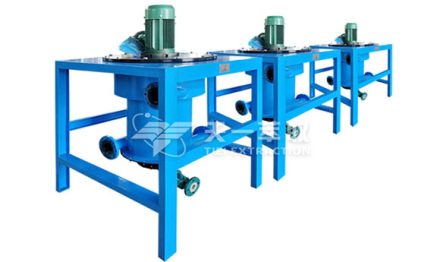
In terms of space requirements, a single CWL-M Centrifugal Extractor integrates mixing and separation functions within a compact housing, occupying only a fraction of the floor space required by a traditional extraction column. Its modular design allows multiple units to be flexibly connected in series or parallel according to the required processing capacity. Production capacity can therefore be expanded without having to redesign the factory layout.
5.Fully Enclosed Operation and Automation: Improved Compliance and Operational Stability
Both NMP and many associated extractants have volatility and certain occupational health risks. The fully enclosed structure of CWL-M centrifugal extractors helps prevent the escape of organic vapors and liquid leakage, meeting the stringent explosion protection and environmental requirements of the chemical and lithium battery industries.
The variable-frequency control system can automatically adjust the rotational speed and stage-to-stage operating parameters according to feed flow rate and concentration. Even when water quality fluctuates, the system can maintain stable recovery performance, significantly reducing the frequency of manual intervention.
Conclusion
The essence of NMP wastewater treatment is to identify an engineering solution that balances environmental compliance with resource recovery, without relying on high energy consumption or sacrificing product recovery quality. With multi-stage counter-current continuous extraction at its core, the CWL-M centrifugal extractor achieves NMP recovery rates of over 98% and product purity of over 99%, while significantly reducing energy consumption, floor space requirements, and solvent losses to levels that are difficult to achieve with conventional distillation processes. For production facilities with substantial NMP consumption and wastewater containing recoverable concentrations of NMP, centrifugal extraction is no longer simply an alternative treatment option. It represents a resource-recovery and material-loop solution that deserves serious technical and economic evaluation.
Zhengzhou Tiei Extraction Technology Co., Ltd. specializes in the R&D of liquid-liquid centrifugal extraction equipment and the provision of supporting engineering solutions. The CWL-M series of centrifugal extractors covers a complete range of models, from laboratory-scale process validation to large-scale industrial applications with high processing capacities. Welcome to contact Tiei Extraction to discuss your specific wastewater parameters and obtain a tailored process evaluation and equipment selection recommendation.
Email: sales@tieiextraction.com
Whatsapp: +86 19069612820