During the manufacturing processes of liquid crystal displays (LCDs) and semiconductors, large quantities of mixed waste acid containing acetic acid, nitric acid, and phosphoric acid are continuously generated. Among these components, phosphoric acid has relatively high recycling and utilization value, such as being used as a raw material for fertilizers and through other resource recovery pathways, making it a key target for recovery in the industry. However, the physicochemical properties of acetic acid, nitric acid, and phosphoric acid are relatively similar, making it difficult for conventional methods such as neutralization precipitation and evaporative crystallization to achieve selective separation among the three components. At present, many companies still rely on neutralization treatment followed by direct discharge.
The drawbacks of this traditional treatment method are obvious: the neutralization reaction generates large quantities of soluble salts such as acetates and nitrates. When discharged into water bodies, these salts can increase the risk of eutrophication and, at the same time, result in the waste of valuable phosphoric acid resources. As global environmental regulations become increasingly stringent and the concept of a circular economy continues to gain importance in the industrial sector, developing a clean process that can efficiently recover phosphoric acid while significantly reducing environmental impact has become a technical challenge that urgently needs to be addressed in the wet electronic chemicals and panel manufacturing industries.
To address this need, Zhengzhou Tiei Extraction Technology Co., Ltd. has developed a selective phosphoric acid recovery process specifically designed for the acetic acid–nitric acid–phosphoric acid ternary mixed-acid system. The core concept of this process is to utilize a specific extractant that has a high selective extraction capacity for acetic acid and nitric acid while exhibiting almost no extraction of phosphoric acid. Through a closed-loop process consisting of extraction–stripping–solvent recycling, phosphoric acid can be efficiently separated and purified from the mixed-acid mother liquor.
The process consists of two main stages:
1.Extraction Stage
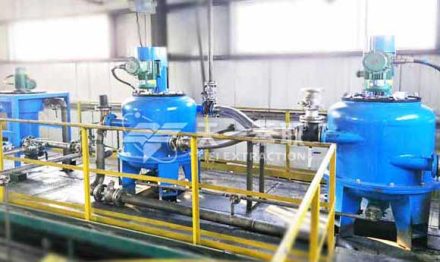
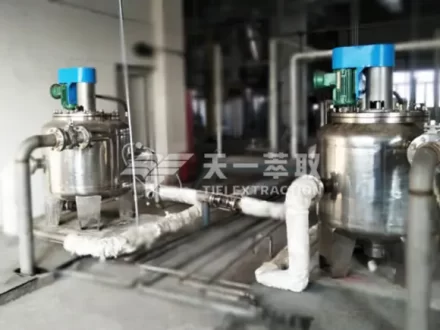
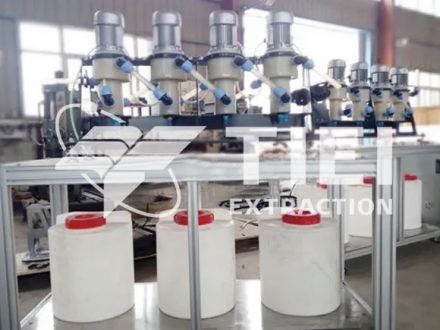
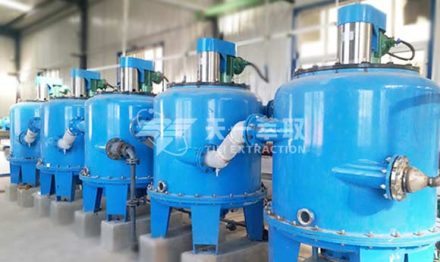
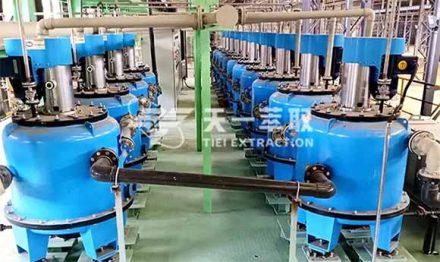
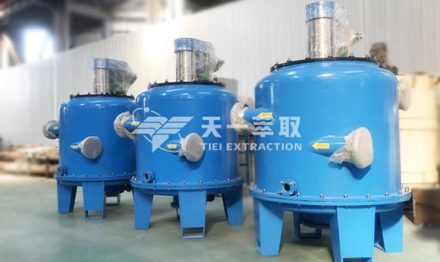
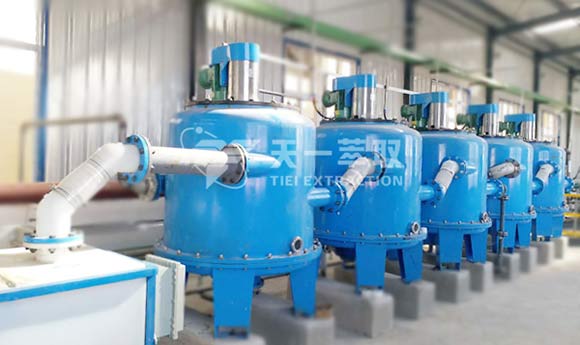
The mixed-acid waste liquor enters the CWL-M centrifugal extractor supplied by Zhengzhou Tiei Extraction where it comes into counter-current contact with an extractant formulated from a combination of trialkyl phosphate and an aromatic organic solvent. Under the high-speed rotation of the centrifugal extractor, the two phases are thoroughly mixed and mass transfer takes place efficiently. Acetic acid and nitric acid are selectively extracted into the organic phase, while phosphoric acid remains almost entirely in the aqueous phase, thereby achieving the preliminary separation of phosphoric acid from acetic acid and nitric acid.
This extraction stage adopts multi-stage counter-current operation. Through stage-by-stage equilibrium, the extraction efficiency is significantly improved, ensuring that the purity of phosphoric acid in the aqueous phase meets the requirements for subsequent resource utilization.
2.Stripping Stage
The organic phase loaded with acetic acid and nitric acid enters the stripping section, where it is mixed and contacted with salt-containing stripping agent in another group of centrifugal extractors. Acetic acid and nitric acid are transferred from the organic phase back into the aqueous phase, forming an acetic acid–nitric acid mixed aqueous solution, which can be further concentrated or treated as required.
The regenerated extractant is returned to the extraction stage for repeated use, significantly reducing organic solvent consumption. Meanwhile, the high-purity phosphoric acid solution obtained from the process can be directly used as a raw material for industrial-grade or agricultural-grade phosphoric acid.
The process adopts multi-stage counter-current centrifugal extraction, allowing a concentration gradient to form between the waste liquor and extractant across the different stages, thereby providing a sufficient driving force for mass transfer. This effectively ensures the removal rates of acetic acid and nitric acid and, consequently, the stable purity of the final phosphoric acid product. After being regenerated through the stripping process, the extractant can be repeatedly recycled, keeping operating costs under control. In addition, the entire system operates in a closed configuration, minimizing VOC emissions and complying with the requirements of modern clean chemical production.
In practical industrial applications, this technology not only effectively avoids the environmental risks associated with neutralization and discharge of waste acid, but also provides enterprises with a low-cost, high-value-added pathway for phosphoric acid resource recovery. Zhengzhou Tiei Extraction Technology Co., Ltd. can provide one-stop solutions, from core equipment selection to system integration and commissioning, according to the specific composition of customers' mixed-acid waste liquor, such as acid concentrations and types of impurities, as well as the required treatment capacity. The solution covers the configuration of extraction and stripping stages, phase ratio control, and automated operation support.
If you are facing challenges in technology selection or process optimization for phosphoric acid recovery from mixed-acid waste liquor, please feel free to contact our technical team for further discussion and obtain targeted experimental validation and engineering recommendations.
Email: sales@tieiextraction.com
Whatsapp: +86 19069612820