In fields such as hydrometallurgy, chemical separation, and environmental resource recovery, the selection of liquid-liquid extraction equipment directly affects production efficiency and operating costs. As two mainstream types of extraction equipment, mixer-settlers and centrifugal extractors often make industry professionals hesitate when selecting equipment due to their differences in working principles and performance. This article provides a systematic comparison of these two types of equipment, offering a reference for your equipment selection.
Mixer-Settler: A Classic Choice Based on Gravity Settling
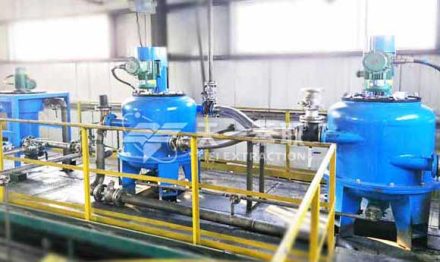
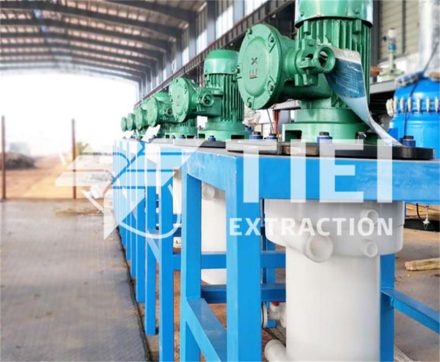
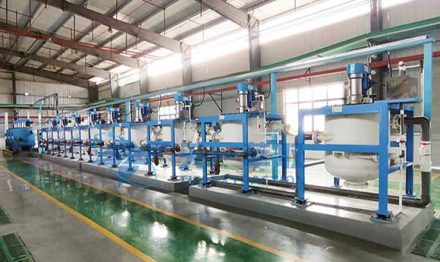
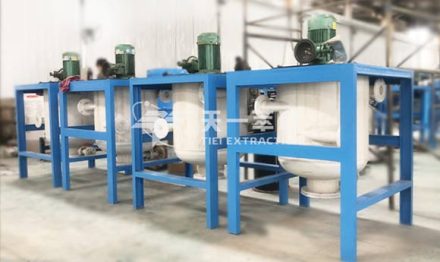
The mixer-settler is one of the earlier types of traditional extraction equipment. Its working principle relies on gravity to achieve the natural separation of two phases. The equipment is typically divided into a mixing chamber and a settling chamber at a ratio of approximately 1:3. Under agitation, the feed liquid undergoes mass transfer in the mixing chamber and then flows into the settling chamber through an overflow baffle. The two phases naturally separate according to their density difference, with the outlet openings designed according to the densities of the lighter and heavier phases.
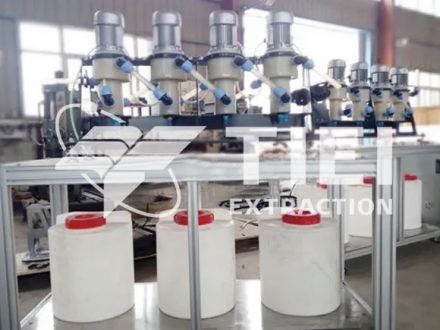
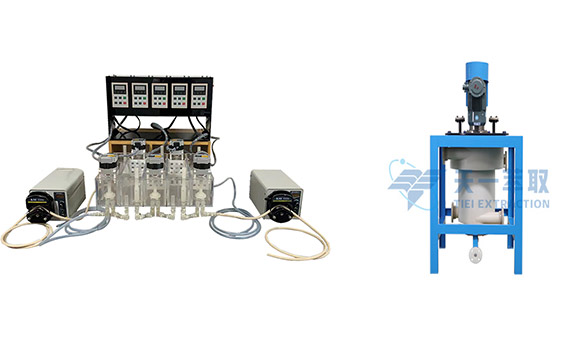
In terms of materials, laboratory-scale units are typically available in sizes such as 300 mL, 1 L, and 2 L, and are mainly made of PMMA (acrylic) or PP (polypropylene). The 9 L specification is primarily made of PMMA.
The advantages of mixer-settlers include a simple structure, stable operation, flexible stage configuration, and relatively low manufacturing costs. However, their gravity-based separation mechanism results in slow phase separation, a large equipment footprint, and a high solvent holdup. In addition, it is difficult to achieve fully automated and continuous operation.
Centrifugal Extractor: An Efficient Upgrade Driven by a Centrifugal Force Field
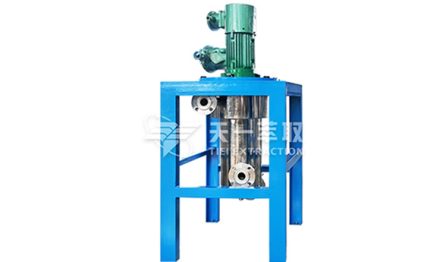
The centrifugal extractor represents a development direction toward high-efficiency separation technology. Its working principle utilizes the centrifugal force field generated by high-speed rotation. The heavier phase moves toward the wall of the drum, while the lighter phase gathers toward the center, thereby achieving rapid separation of the two phases. The equipment adopts a two-inlet, two-outlet configuration, with the heavy-phase outlet located at the upper section and the light-phase outlet located at the lower section.
In terms of material configuration, taking the CWL-M centrifugal extractor from Zhengzhou Tiei Extraction Technology Co., Ltd. as an example, the drum is manufactured entirely from fluoropolymer materials, providing excellent resistance to strong acid corrosion. The piping is made of PVDF, combining good corrosion resistance with transparency for easy observation.
The centrifugal extractor offers significant performance advantages: high single-stage efficiency, high extraction rates, a compact footprint, low power consumption, and significant energy-saving benefits. It also supports fully automatic continuous operation without the need for constant manual supervision, making it particularly suitable for continuous production in modern chemical plants.
The Key Reasons Why Centrifugal Extractors Can Replace Mixer-Settlers
Higher Efficiency: Centrifugal extractors use centrifugal force to achieve rapid phase separation. The phase separation time can be reduced from tens of minutes under gravity settling to the order of seconds, resulting in more thorough separation and effectively addressing problems such as phase entrainment and emulsification that can occur with traditional equipment.
Lower Operating Costs: This is mainly reflected in two aspects: first, significantly lower power consumption; and second, reduced consumption of extractants. The power consumption of the CWL-M centrifugal extractor is only 1/10 to 1/3 that of traditional centrifugal extraction equipment, providing significant energy-saving advantages, particularly during long-term continuous operation.
Smaller Footprint: As the number of stages and processing capacity of mixer-settlers increase, the required installation area grows significantly. In contrast, centrifugal extractors feature a compact structure. For the same processing capacity, their footprint can be reduced to approximately 1/5 to 1/3 of that required by traditional processes, making them particularly suitable for the technical upgrading and transformation of existing production lines.
In response to issues found in some traditional centrifugal extraction equipment, such as corrosion, frequent damage to bottom mechanical seals and bearings, and high maintenance costs, Zhengzhou Tiei Extraction Technology Co., Ltd. has developed the CWL-M series centrifugal extractor through years of research and technological innovation.
This liquid-liquid extraction equipment achieves technological advances in three key areas.
First, the materials have been comprehensively upgraded. In addition to stainless steel, special materials such as fluoropolymers can be selected to withstand corrosion from strong acids, strong alkalis, and organic solvents.
Second, the innovative structural design eliminates the bottom bearing and mechanical seal, significantly reducing maintenance costs.
Third, its power consumption is only 1/10 to 1/3 that of traditional equipment, delivering significant energy-saving benefits.
In conclusion, if your process requires high-efficiency continuous production, controllable long-term operating costs, and limited installation space, the centrifugal extractor is undoubtedly a more convenient and efficient choice.
Zhengzhou Tiei Extraction Technology Co., Ltd. can provide complete technical solutions ranging from process validation to equipment integration. Specific equipment selection can be customized according to processing capacity, feed-liquid characteristics, and process requirements.
For detailed technical information, please feel free to contact the Tiei Extraction for further discussion.
Email: sales@tieiextraction.com
Whatsapp: +86 19069612820