During industrial processes such as petrochemical production and oil/fat hydrogenation, hydrogenation catalysts gradually lose their activity after prolonged use and become spent catalysts. The nickel content in these spent catalysts can typically reach 6% to 20%, which is significantly higher than the mining grade of primary nickel ores, making them valuable secondary resources for recycling. However, the main challenge in nickel recovery from spent catalysts lies in the coexistence of impurities such as zinc and iron. In particular, zinc has similar chemical properties to nickel, making separation difficult. Improper treatment may affect the nickel extraction recovery rate and the purity of the final product.
To address this technical challenge, Zhengzhou Tiei Extraction Technology Co., Ltd. has developed a centrifugal solvent extraction separation process specifically designed for nickel recovery from spent catalysts. This process introduces two key improvements based on the traditional acid leaching–solvent extraction route:
First, mixed extractants are used to optimize extraction selectivity, reducing the interference of impurities such as zinc during nickel extraction.
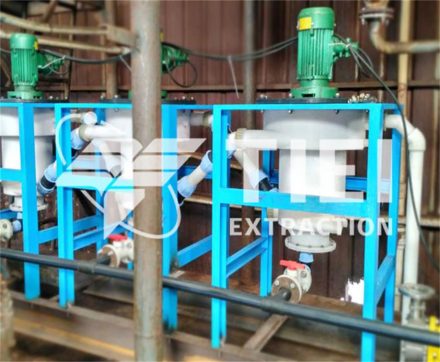
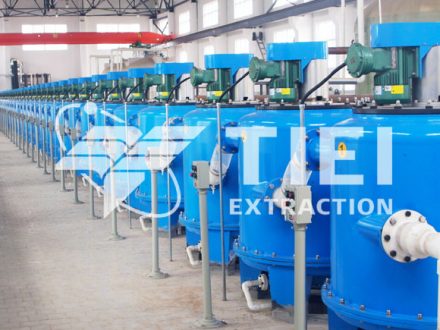
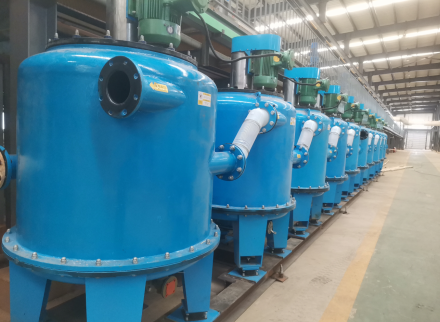
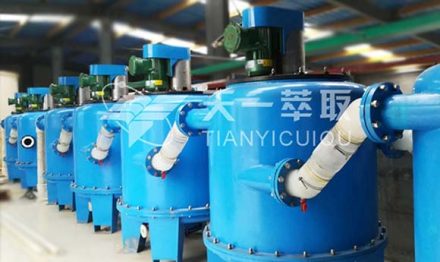
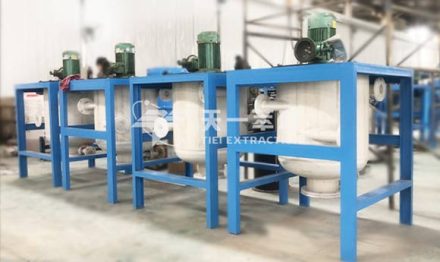
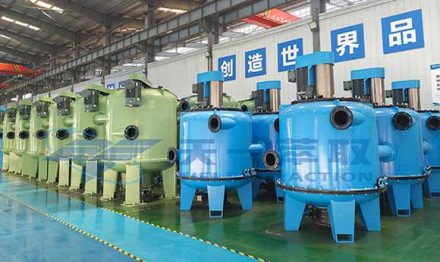
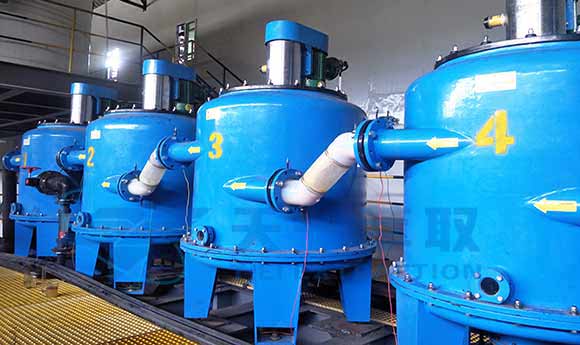
Second, the CWL-M centrifugal extractor is adopted as the core liquid-liquid extraction equipment, enabling continuous operation of multi-stage counter-current extraction.
Using the CWL-M centrifugal extractor as the nickel extraction equipment, the specific process flow includes the following steps:
1.Spent nickel catalysts are first subjected to oxidative roasting and desulfurization in a rotary kiln, where sulfur is converted into hydrogen sulfide or sulfur dioxide and removed from the flue gas through lime neutralization. The desulfurized material is then crushed to below 100 mesh and subjected to sulfuric acid leaching. Hydrogen peroxide is added to the leachate for oxidation, and the pH value is adjusted to 10. Iron and other impurities are removed through pressure filtration. The purified nickel sulfate solution then enters the solvent extraction section.
2.During the centrifugal solvent extraction process, the CWL-M centrifugal extractor is used. The extractant is prepared with P204, kerosene, and industrial white oil in a specific ratio. The extraction process is completed under a centrifugal force field, achieving rapid mixing, mass transfer, and phase separation between the two phases. The loaded organic phase undergoes scrubbing and stripping to obtain a high-purity nickel sulfate aqueous solution, while the organic phase is recycled back to the extraction system for reuse. Finally, the nickel sulfate solution is evaporated and crystallized at 105°C to produce refined nickel sulfate products.
In the CWL-M centrifugal extractor, the extractant and nickel sulfate metal solution undergo rapid mixing and mass transfer under the centrifugal force field. Nickel ions transfer from the aqueous phase to the organic phase, achieving separation from impurity elements. The organic phase and raffinate are rapidly separated under centrifugal force and discharged independently from the equipment, ensuring stable continuous operation.
By adopting this centrifugal solvent extraction separation process, the single-stage nickel extraction recovery rate can consistently exceed 95%, and the product purity meets the standards for refined nickel sulfate, making it suitable for downstream applications such as battery materials and electroplating. During this process, the CWL-M centrifugal extractor demonstrates the following advantages:
1.High processing flexibility, allowing adaptation to different production capacities.
2.Simple process flow with convenient operation and control.
3.Stable stripping solution quality, meeting the requirements of various downstream applications.
4.Low residual organic solvent content in the treated aqueous phase, reducing the burden on subsequent wastewater treatment.
5.Compact equipment footprint, facilitating integration into existing plant layouts.
Zhengzhou Tiei Extraction Technology Co., Ltd. can provide complete technical solutions from laboratory validation to industrial equipment integration based on the specific composition of spent catalysts and processing capacity requirements. For more detailed information on the process flow or solvent extraction equipment selection recommendations, please feel free to contact us for further technical discussions.
Email: sales@tieiextraction.com
Whatsapp: +86 19069612820