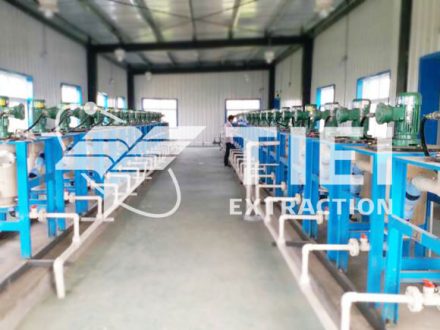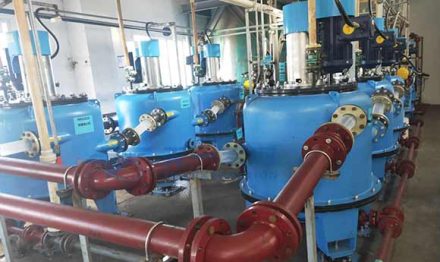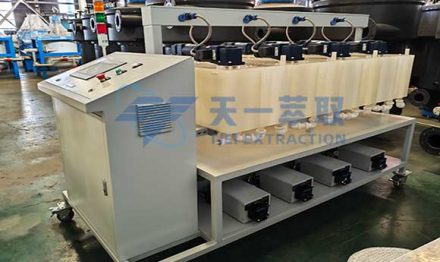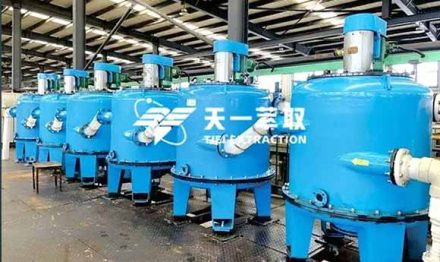
Acid washing, alkali washing, and water washing are conventional unit operations in process flow diagrams. However, in actual production facilities, these stages are often among the most vulnerable points affecting the operational stability of batch reactors. The typical problems include emulsion layer accumulation, unpredictable phase separation times, and batch-to-batch variations in product purity. As throughput increases or impurity control requirements become more stringent, gravity settling shifts from the default solution to a process bottleneck.
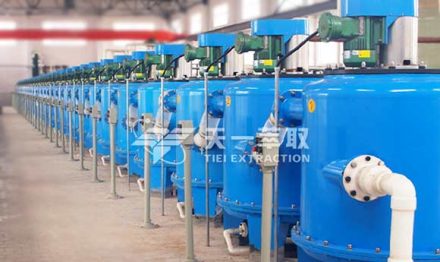
Centrifugal extractor provides a solution to these constraints. However, effective implementation depends on selecting equipment according to the actual process system rather than relying on generic throughput parameter tables. For acid-base washing applications, equipment selection primarily involves four dimensions: throughput and scale-up logic, material compatibility with acidic and alkaline environments, stage efficiency and residence time, and equipment architecture that determines emulsion controllability.
Dimension 1: Throughput — Matching the Process Stage
The first consideration in equipment selection should be the process stage the equipment is intended to serve, rather than its maximum processing capacity.
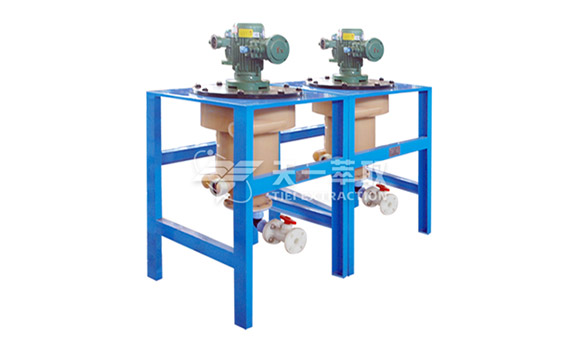
At the laboratory scale, the primary constraint is usually the availability of process materials. Laboratory models with rotor diameters of approximately 50 mm have a maximum throughput of around ≤50 L/h, with a single-unit power consumption of less than 1 kW. They can be used to evaluate phase ratios, rotational speeds, and stage numbers with minimal quantities of process fluids. The key criterion at this stage is whether the laboratory model maintains the same hydrodynamic operating range as the industrial model. If not, the risks associated with scale-up will ultimately be borne by the buyer.
At the pilot scale, throughput typically ranges from several hundred liters per hour to approximately 1 m³/h. The evaluation focus shifts from separation feasibility to continuous operating stability and the width of the process operating window. At the industrial scale, CWL-M centrifugal extractors cover single-unit throughputs ranging from several cubic meters to tens of cubic meters per hour. For multistage countercurrent operation, 3 to 12 stages can be configured according to separation difficulty and target purity requirements.
Selection Conclusion: Suppliers offering only a single industrial equipment size, without laboratory or pilot-scale platforms for generating scale-up data, cannot help buyers effectively control scale-up risks. The CWL-M centrifugal extractor series centrifugal extractor covers the complete size range from laboratory testing to industrial production. The same mixing and separation geometry is maintained across different models, ensuring that stage efficiency and phase ratio data obtained during laboratory testing have corresponding relevance after scale-up.
Dimension 2: Materials — The Primary Engineering Decision for Acid-Base Environments
The corrosion behaviors of hydrochloric acid, sulfuric acid, and sodium hydroxide systems differ significantly. The presence of chloride and fluoride ions introduces localized corrosion risks that may exceed those associated with uniform corrosion. Material selection should therefore begin with the composition, concentration, and temperature of the process medium, rather than simply determining whether the medium is acidic.
In weak acid, weak alkali, and neutral salt systems, 316L stainless steel offers a good balance of economy and reliability under ambient to moderately elevated temperature conditions. Established surface treatment solutions are also available for pharmaceutical and food-grade applications. However, in strong acid systems (concentrated hydrochloric acid and sulfuric acid) or high-concentration sodium hydroxide systems, chloride-induced pitting corrosion and alkali-induced stress corrosion cracking can become service-life limitations for 316L stainless steel.
Perfluorinated polymer materials (PTFE and lined structures) offer one of the broadest chemical compatibility ranges, with excellent resistance to strong acids, strong alkalis, and most organic solvents. CWL-M centrifugal extractor can be manufactured with perfluorinated polymer materials for wetted components, providing a non-metallic corrosion barrier for strong acid, mixed acid, and alkaline solution systems. The engineering limitations of this approach are primarily related to maximum operating temperature and mechanical loading. Continuous operating temperatures for PTFE-lined systems are generally controlled below approximately 180°C, and such systems are not suitable for operating conditions involving abrasive solid particles.
Hastelloy C-276 is suitable for hot concentrated hydrochloric acid, sulfuric acid–nitric acid mixed systems, chloride-containing oxidizing agents, and alternating oxidizing–reducing environments. Its material cost is significantly higher than that of stainless steel. Selection should therefore be based on lifecycle corrosion rates and shutdown costs rather than initial installation costs.
Selection Conclusion: There is no single material capable of covering all operating conditions in acid-base extraction applications. The appropriate approach is to determine the pH, chloride/fluoride ion concentrations, temperature, and oxidizing properties of the process medium, and then select the most suitable option among 316L stainless steel, perfluorinated materials, and Hastelloy alloys. Corrosion testing should be conducted when necessary. The wetted components of CWL-M centrifugal extractor can be customized in materials ranging from stainless steel to perfluorinated materials and special alloys, ensuring compatibility between equipment materials and the process system.
Dimension 3: Stage Efficiency and Residence Time — Stage Configuration and Purity Stability
The engineering objectives of acid-base extraction can be summarized by two key indicators: the minimum residual acid/alkali concentration and the amount of aqueous phase entrained in the organic phase. These two indicators determine the required number of countercurrent stages, solvent losses, and the subsequent wastewater treatment load.
The structural limitation of gravity-settling equipment lies in its residence time requirements. The clarification section of a mixer-settler typically requires residence times ranging from tens of minutes to several hours. In acid-base washing systems characterized by small density differences and low interfacial tension, stable emulsion layers are almost inevitable. This further extends phase separation time and increases phase entrainment. The centrifugal extractor integrates mixing and separation within a single unit, reducing residence time to the range of seconds to several tens of seconds. Stage efficiency can typically exceed 99%, while volumetric efficiency can be 30 to 50 times that of traditional mixer-settlers.
This fundamentally changes the logic of stage configuration under actual operating conditions. Residual acid concentrations that previously required an 8-stage traditional mixer-settler system can be achieved or even exceeded with fewer countercurrent stages when using centrifugal extractors. For the sequential alkali-washing and water-washing stages commonly found in pharmaceutical and fine chemical intermediate production, the seconds-level residence time offers additional engineering value. Target molecules that are sensitive to alkali or contact time are less likely to undergo degradation or isomerization due to prolonged exposure to the alkaline aqueous phase.
Selection Conclusion: The number of stages required for acid-base extraction should not simply replicate the configuration of traditional equipment. Instead, measured stage efficiency data from laboratory or pilot-scale tests should serve as the starting point for recalculating the theoretical number of stages required to achieve the target residual concentration, with an appropriate engineering margin retained. CWL-M centrifugal extractors can generate the stage efficiency and phase separation data required for these calculations at laboratory and pilot scales, allowing industrial stage configurations to be established on the basis of measured mass transfer behavior.
Dimension 4: Equipment Architecture — Emulsion Control and Continuous Operating Reliability
Emulsion formation is a common operating condition in acid-base extraction systems. Low interfacial tension, small density differences, and the presence of surface-active substances mean that the equipment's ability to control mixing intensity, together with its sealing and bearing architecture, directly determines long-term operating stability.
A structural weakness of traditional annular-gap centrifugal extractors is their bottom mechanical seal and bottom bearing arrangement. Mechanical seal service life is limited. Once the seal fails, process fluids can enter the bearing area, rapidly causing equipment failure. Following on-site repairs, maintaining dynamic balance becomes difficult, and operating conditions may progressively deteriorate. The CWL-M centrifugal extractor adopts an overhead suspension structure with a single support point. Bottom bearings and mechanical seals are eliminated from the process area. This removes the corresponding failure pathway at the structural level, ensuring that maintenance intervals during continuous operation in acidic and alkaline environments are no longer constrained by mechanical seal service life.
The mixing structure is equally important. Excessive shear artificially promotes emulsion formation, while insufficient shear results in inadequate mass transfer. The CWL-M centrifugal extractor offers optional mixing structures and supports rapid replacement of heavy-phase weir plates. When the process fluid changes from a weak acid to a strong alkali, or when the phase ratio changes significantly, the separation interface can be adjusted without replacing the entire machine. This feature directly affects changeover time and cleaning efficiency in multi-product production lines in the pharmaceutical and fine chemical industries.
Selection Conclusion: Three conditions should be confirmed when selecting equipment for acid-base extraction applications: adjustable mixing intensity, rapid readjustment of the heavy-phase interface to accommodate changes in the process system, and a sealing and bearing design that eliminates the risks of acid–alkali corrosion and wear at their source during continuous operation. The overhead suspension architecture and optional mixing structures of the CWL-M centrifugal extractor are designed around these three requirements.
Application Verification: Different Industry Priorities Across the Four Dimensions
Pharmaceuticals and Pharmaceutical Intermediates
Sequential alkali washing, water washing, and acid washing are commonly used in post-synthesis processing. The primary constraints are the effects of contact time on product stability and the control of cross-contamination. Seconds-level residence time, low liquid holdup, and CIP-compatible equipment architecture take priority over maximum throughput. Material selection typically starts with 316L stainless steel. For stages involving high-concentration alkaline solutions or chloride-containing media, the advantages of perfluorinated wetted components may outweigh the differences in initial equipment costs.
Fine Chemicals (Pesticides, Dyes, and Intermediates)
Process fluids are frequently changed, and the same equipment may need to alternate between acidic, alkaline, and neutral water-washing operations. Rapid adjustability of heavy-phase weir plates and the adaptability of mixing structures to easily emulsified systems are the primary selection variables. Equipment architectural flexibility has a greater impact on operating costs than upgrading to a higher material grade.
Hydrometallurgy and Metal Salt Processing
In the washing stages following acidic leaching, corrosive environments are primarily characterized by hot concentrated sulfuric acid, hydrochloric acid, or chloride-containing media. Material selection therefore becomes a priority. 316L stainless steel is generally insufficient for long-term operation. Perfluorinated materials and Hastelloy alloys are potential candidates, with the final choice depending on the specific combination of temperature, chloride concentration, and oxidation–reduction conditions. Throughput requirements are relatively high, and single-unit processing capacity, together with multistage countercurrent stage efficiency, jointly determines the number of equipment units required and the overall floor space.
Waste Liquid/Wastewater Treatment and Resource Recovery
Acid–alkali neutralization and phase separation operations often involve process fluids with highly variable compositions and potentially suspended solid particles. Resistance to feed fluctuations, anti-clogging design, and the operational flexibility of continuous solids/liquid discharge take priority over maximum stage efficiency. Material selection requires balancing the broad chemical compatibility of perfluorinated materials against their mechanical strength limitations.
Conclusion
The selection of centrifugal extractors for acid-base extraction is essentially a process of mapping the chemical constraints of the process system (acids, alkalis, salts, and temperature) and its physical constraints (density difference, interfacial tension, emulsion tendency, and residence-time sensitivity) onto four engineering dimensions of the equipment: the throughput range supports the scale-up pathway, material selection matches the corrosive environment, stage efficiency and residence time support the target purity, and equipment architecture controls emulsion formation and continuous operating risks at their source.
The CWL-M centrifugal extractor series centrifugal extractor provides corresponding solutions across all four dimensions: a complete range of equipment sizes from laboratory testing to industrial production; material options ranging from stainless steel to perfluorinated materials and special alloys; and architectural flexibility combining short residence times, high stage efficiency, adjustable mixing structures, and rapid weir plate replacement. For process engineers and technical managers evaluating the continuous-process upgrading of acid-base extraction operations, the priority is to break down the process fluid characteristics and target performance indicators across these four dimensions, and then complete the equipment selection accordingly.
Email: sales@tieiextraction.com
Whatsapp: +86 19069612820