DMF (Dimethylformamide) is an excellent chemical solvent widely used in organic synthesis, pharmaceuticals, pesticides, and other industries. However, wastewater containing high concentrations of organic compounds, DMF, and salts is generated during production. Such wastewater is commonly found in pesticide and pharmaceutical manufacturing. The organic compounds may include nitrogen-containing heterocyclic compounds such as pyridine and organic acids, while the salts may include calcium chloride, sodium chloride, dimethylamine hydrochloride, calcium formate, sodium formate, calcium acetate, and sodium acetate.
DMF is toxic to biological organisms and poses significant risks to aquatic life. Other organic compounds and salts also place pressure on the environment. Therefore, DMF-containing wastewater must undergo rigorous treatment before discharge. At the same time, DMF is a valuable solvent with recovery potential. How to achieve both effective wastewater treatment and resource recovery has become a key concern in the industry.
What Are the Challenges in DMF Wastewater Treatment?
The real challenge in selecting DMF extraction equipment and designing the process lies in the strong affinity between water and DMF, which makes direct separation through conventional distillation difficult. Reducing residual DMF to the ppm level is even more challenging.
For industrial wastewater containing high concentrations of salts, organic matter, and DMF, direct evaporation for desalination also presents a series of problems. During evaporation, organic compounds and DMF in the wastewater tend to generate large amounts of foam. Meanwhile, a viscous, paste-like substance composed of organic matter, mixed salts, and water can form at the bottom of the evaporator, making it difficult to separate water from salts. This paste-like material cannot be directly incinerated either, as the process would generate volatile organic amines with unpleasant odors.
More critically, DMF decomposes into dimethylamine and formic acid under high-temperature or strongly acidic conditions. These decomposition products, together with organic compounds and salts, further aggravate paste formation, preventing the dehydration process from operating properly.
Three-Step Pretreatment Approach Using the CWL-M Centrifugal Extractor
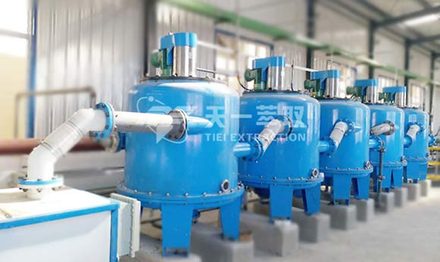
To address these challenges, Zhengzhou Tiei Extraction Technology Co., Ltd. proposes a three-step pretreatment approach centered on the CWL-M centrifugal extractor: first remove organic compounds and DMF, then evaporate the wastewater to remove salts, and finally recover the solvent. This process makes high-salt, high-organic-matter wastewater easier to treat.
Step 1:Removal of Organic Compounds and DMF by Centrifugal Extraction
Chloroform or dichloromethane is selected as the extractant. It is brought into contact with the high-salt, high-organic-matter wastewater in the CWL-M centrifugal extractor for multistage counter-current extraction.
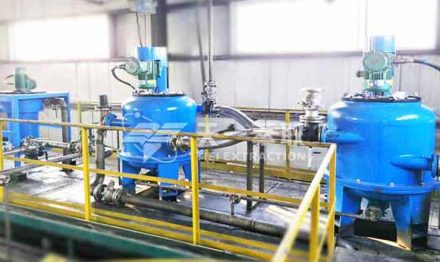
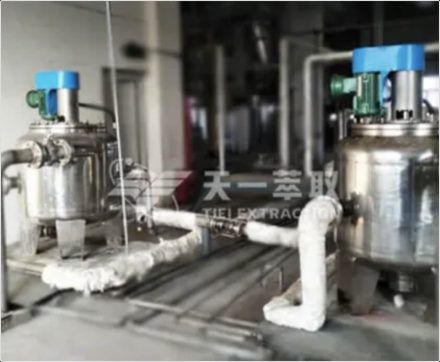
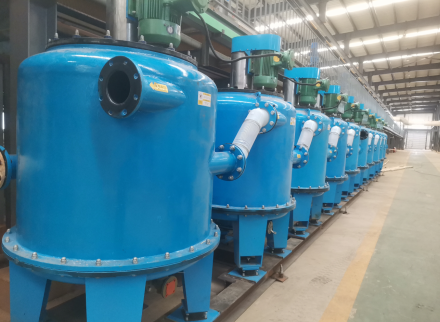
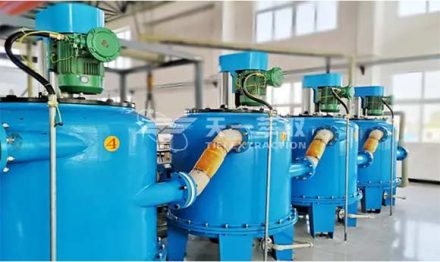
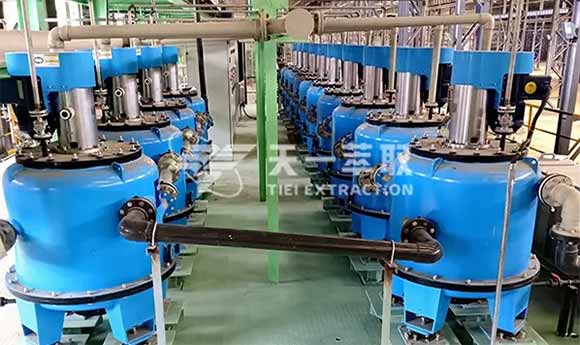
As a liquid-liquid extraction equipment, the CWL-M centrifugal extractor uses a centrifugal force field to achieve rapid mixing and separation of the two phases. It features a short stage residence time and rapid phase separation, effectively reducing emulsion formation and entrainment. After extraction, the vast majority of organic compounds and DMF in the wastewater are transferred into the extract phase. Under specific operating conditions, the separation rate of organic compounds and DMF can exceed 99.5%, reaching up to 99.95%.
The key purpose of this step is to remove organic compounds and DMF in advance, preventing them from interfering with the subsequent evaporation process and clearing the way for desalination.
Step 2:Evaporation and Desalination
After extraction pretreatment, the concentrations of organic compounds and DMF in the wastewater are significantly reduced. When the wastewater enters the evaporator, foam formation is greatly reduced, and the viscous paste-like material no longer forms at the bottom. As a result, water and mixed salts become relatively easier to separate. The condensate generated during evaporation can be reused or treated to meet discharge standards, while the mixed salts can be separated through crystallization.
Step 3:Distillation and Recovery of the Extract Phase
The extract phase loaded with organic compounds and DMF is sent to the distillation process. By utilizing the significant boiling point difference between DMF (153°C) and chloroform (61.3°C) or dichloromethane (39.8°C), DMF can be separated from the extraction solvent.
After regeneration, the extraction solvent is recycled, while DMF is recovered as a valuable component, enabling resource utilization.
Equipment Selection from Laboratory Testing to Industrial Applications
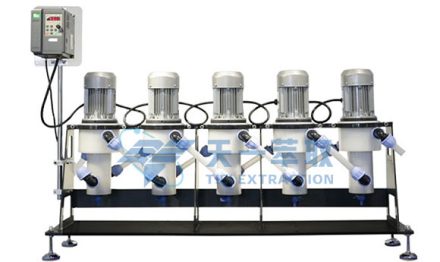
For projects where process parameters are still under investigation, laboratory-scale centrifugal extractor can first be used for preliminary testing. This helps evaluate extractant, determine the phase ratio and number of extraction stages, and obtain data on the separation rates of organic compounds and DMF, as well as raffinate specifications. Based on these results, industrial extraction and separation equipment can then be selected.
Zhengzhou Tiei Extraction Technology Co., Ltd. provides a complete product range, from laboratory-scale to industrial CWL-M centrifugal extractors. We also offer process design and equipment selection support for high-salt, high-organic-matter DMF wastewater treatment projects. For more detailed process parameters or equipment solutions, please contact Zhengzhou Tiei Extraction.
Email: sales@tieiextraction.com
Whatsapp: +86 19069612820