With the rapid advancement of global industrialization, the generation of zinc-containing waste—such as zinc dross, spent batteries, and electroplating sludge—continues to increase year by year. These wastes are not only an environmental challenge but also a valuable "urban mine" rich in recoverable zinc resources.
As a mature and environmentally friendly recycling route, hydrometallurgical zinc recovery has become the preferred approach across the industry. In this resource recovery revolution, the performance of liquid-liquid extraction equipment plays a critical role in determining zinc recovery rates, product purity, and overall operating costs.
Key Process Flow of Hydrometallurgical Zinc Recovery
Hydrometallurgical recovery of zinc from zinc-containing waste generally involves the following key steps:
1.Pretreatment and Leaching
After crushing and screening, zinc-containing waste is treated with an acidic leaching solution. In the presence of complexing agents such as chloride ions, zinc is selectively dissolved into the aqueous phase in the form of zinc ions (Zn²⁺).
2.Purification and Impurity Removal
The leach solution contains various impurity ions, including iron, copper, cadmium, and cobalt. These impurities are gradually removed through chemical precipitation or solvent extraction, allowing zinc ions to be enriched in the solution.
3.Solvent Extraction and Separation
This is the core stage of hydrometallurgical zinc recovery. The zinc-containing solution is thoroughly mixed with organic extractants such as P204 or P507, enabling zinc ions to be selectively transferred into the organic phase. Through the subsequent stripping process, zinc is transferred back into the aqueous phase, achieving high-level enrichment and deep purification.
4.Electrowinning or Precipitation
The high-purity zinc solution can be processed through electrowinning to produce metallic zinc cathodes. Alternatively, by adjusting the pH value, zinc can be precipitated as products such as zinc oxide (ZnO) or zinc hydroxide (Zn(OH)₂).
Throughout the entire process, the efficiency of extraction and stripping directly impacts the quality of the final zinc product and the overall production cost. Therefore, the performance of the liquid-liquid extraction equipment responsible for these operations is of critical importance.
CWL-M Centrifugal Extractor: An Ideal Choice for Hydrometallurgical Zinc Recovery
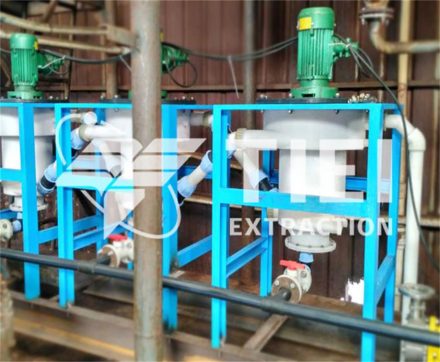
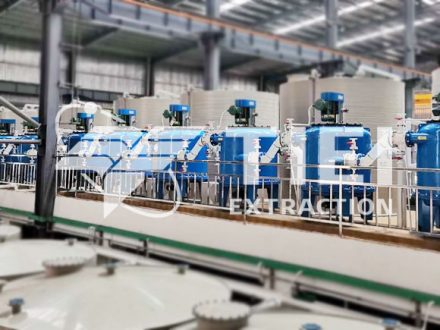
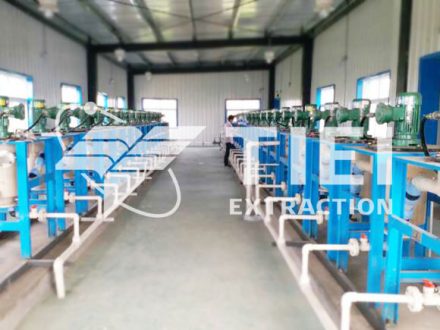
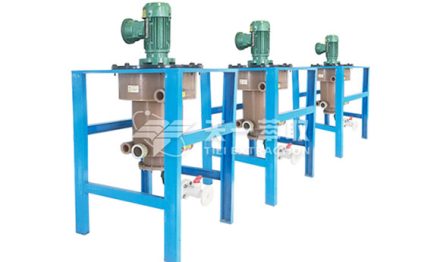
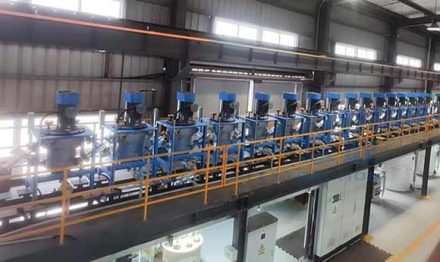
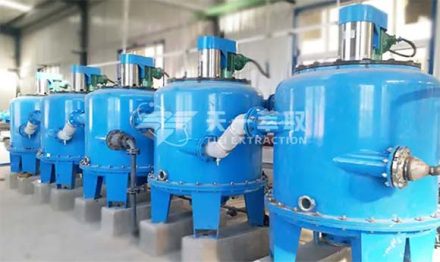
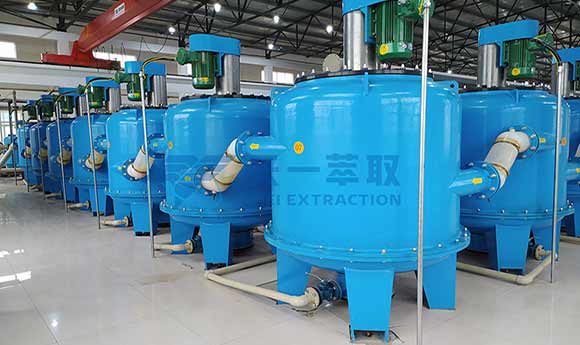
To meet the operational requirements of zinc-containing waste recycling, Zhengzhou Tiei Extraction has independently developed the CWL-M Series Centrifugal Extractor, providing a new solution for hydrometallurgical zinc production. With the following advantages, the equipment has been successfully applied in multiple zinc-containing waste recovery projects:
1.Simple Structure, Stable and Reliable
The equipment features no complex transmission components, resulting in a low failure rate and making it highly suitable for continuous industrial operation.
2.Low Energy Consumption, High Throughput
Compared with conventional equipment, processing capacity per unit is increased by more than 30%, while energy consumption is significantly reduced, helping enterprises lower operating costs and improve efficiency.
3.Fully Fluoropolymer Materials with Excellent Corrosion Resistance
All liquid-contacting components are made of fluoropolymer materials such as PTFE and PVDF, enabling long-term resistance to highly corrosive media including sulfuric acid, hydrochloric acid, and chloride ions. Service life is far superior to that of stainless steel or ordinary plastic equipment.
4.Outstanding Mixing and Separation Performance
The high-speed centrifugal force field enables intensive liquid-liquid mixing and rapid phase separation. Zinc extraction efficiency can exceed 99%, while entrainment loss remains below 50 ppm.
5.Convenient Heavy-Phase Weir Plate Replacement
As different waste materials vary significantly in composition, the CWL-M centrifugal extractor supports quick replacement of heavy-phase weir plates, allowing flexible adaptation to changes in leach solution viscosity, density, and flow rate without replacing the entire unit.
6.Low Liquid Hold-Up, Safe and Environmentally Friendly
The internal liquid inventory is only one-fifth to one-tenth that of conventional equipment, reducing solvent leakage risks and lowering the initial investment cost of the organic phase.
7.High Degree of Automation
The system can be integrated with PLC/DCS control systems to enable remote monitoring and automatic adjustment of parameters such as flow rate, rotational speed, and temperature, significantly reducing manual intervention.
Application Case: Zinc Recovery from Electroplating Sludge
A company specializing in the treatment of zinc-containing electroplating sludge previously used mixer-settlers for extraction. The zinc recovery rate was only 85%, while organic phase consumption reached 3 tons per month. After introducing the CWL-M Centrifugal Extractor:
Zinc extraction efficiency increased to 98.5%
Organic phase consumption decreased by 60%
Footprint was reduced by 70%
Annual comprehensive economic benefits increased by more than RMB 2 million
Recovering zinc from zinc-containing waste is not only an environmental responsibility but also an economic opportunity. With its outstanding performance in efficiency, corrosion resistance, energy saving, and intelligent operation, the CWL-M Centrifugal Extractor is rapidly becoming a standard configuration in the hydrometallurgical zinc industry.
Whether you are processing zinc dross, spent batteries, or electroplating sludge, we can provide customized liquid-liquid extraction and separation solutions tailored to your specific requirements.
Email: sales@tieiextraction.com
Whatsapp: +86 19069612820