Naphthalenesulfonic acid is an important chemical intermediate based on a naphthalene ring structure linked with sulfonic acid groups. It is widely used in the production of dyes, pharmaceuticals, pesticides, concrete water reducers, and other chemical products.
During the manufacturing process of naphthalene-based dye intermediates, wastewater containing naphthalene compounds is generated. If discharged without proper treatment, this wastewater can cause serious pollution to soil and water bodies.
Naphthalenesulfonic acid wastewater has several distinctive characteristics: COD reaching tens of thousands of mg/L, high acidity (pH often less than 2), deep color, salt content as high as 14% to 19%, and poor biodegradability. In addition, the strong water solubility of the acid group enables naphthalenesulfonic acid molecules to spread and migrate easily with water flow. Without effective treatment, they can contaminate large areas of water bodies and threaten drinking water safety.
Why Choose the CWL-M Centrifugal Extractor for Naphthalenesulfonic Acid Wastewater Treatment?
Whenever we work with customers dealing with naphthalenesulfonic acid wastewater, the most frequently asked questions are:
“Our wastewater has a pH below 1 and COD levels of tens of thousands. Can your equipment really achieve discharge standards?”
“How do you solve the corrosion problem?”
“Will the extraction cost be too high?”
Below, we directly answer these core questions.
Question 1: Can High Extraction Efficiency Be Achieved Under Extremely High COD and Strong Acidity?
Yes. The extraction efficiency is significantly higher than that of conventional extraction columns and mixer-settlers.
The difficulties of naphthalenesulfonic acid wastewater include:
1.The sulfonic acid group is highly water-soluble, making it difficult for conventional extractants to capture.
2.High-salt and strongly acidic environments can easily cause equipment corrosion and scaling.
3.Traditional mixer-settlers provide poor mixing and slow phase separation, while multi-stage systems require a large installation footprint.
CWL-M Centrifugal Extractor Solution
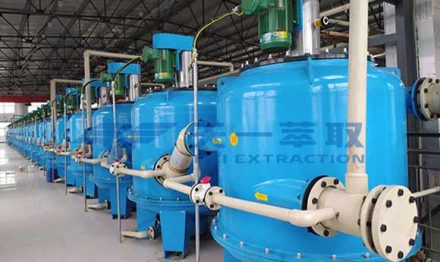
1.The CWL-M centrifugal extractor utilizes a high-speed centrifugal force field to break liquid droplets into micron-sized particles, increasing the mass transfer area by 10–20 times and significantly enhancing mass transfer efficiency.
2.The extraction efficiency of a single stage is superior to that of conventional extraction equipment. With multi-stage counter-current operation (3–5 stages), the overall extraction efficiency can reach ≥95%, while COD removal exceeds 90%.
3.The residence time is extremely short, with mixing and phase separation completed within seconds, preventing side reactions or degradation of naphthalenesulfonic acid under acidic conditions.
Actual Project Data
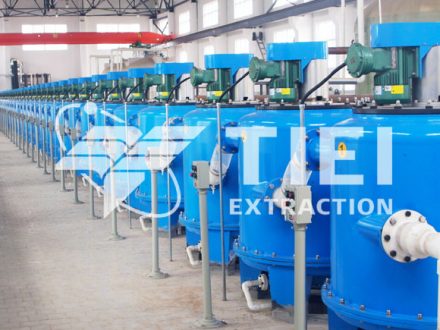
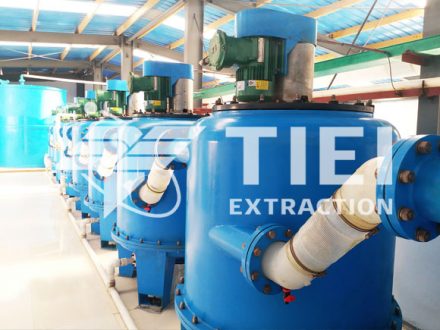
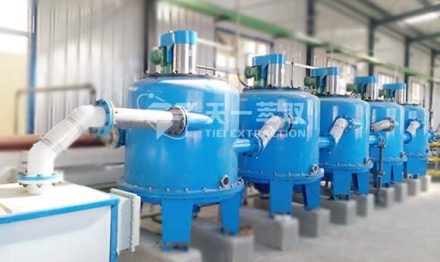
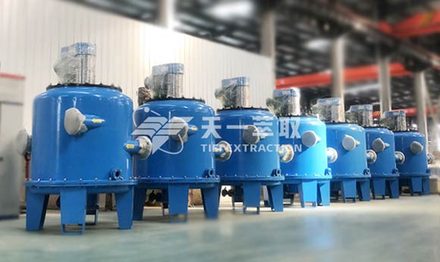
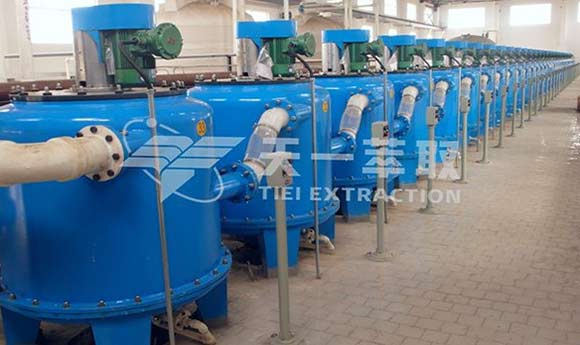
At a chemical plant treating sodium naphthalenesulfonate wastewater (COD 27,040 mg/L, pH < 1), five CWL650-M centrifugal extractors were used in a two-stage cross-current extraction process. The COD was reduced to 1470 mg/L, with a removal rate of 94.6%, and the raffinate was nearly colorless.
Question 2: Can the Equipment Withstand Strong Acid and High Salt Corrosion?
CWL-M centrifugal extractors address corrosion through both material selection and structural design, with a service life of 10 years or more.
Naphthalenesulfonic acid wastewater typically has a pH below 1 and sodium sulfate concentrations as high as 14%–19%. Ordinary stainless steel may suffer pitting corrosion within days.
Our Corrosion-Resistance Solution
Drum and Housing Materials: Optional materials include 316L stainless steel, 2205 duplex stainless steel, Hastelloy alloys, and polymer hybrid materials, resistant to material systems with pH < 1 and Cl -> 5%.
Equipment structure: Top-suspended single-support structure, with no bottom bearings or mechanical seals in the processing area, completely eliminating leakage; Modular design for easy disassembly and cleaning.
Question 3: Will Operating Costs Be Too High? Can Valuable Materials Be Recovered?
Operating costs are controllable, and the process can even generate additional revenue. The recovery of naphthalenesulfonic acid itself has significant economic value.
Cost breakdown: Taking a wastewater treatment capacity of 10 m³/h as an example
| Treatment Method | Traditional Chemical Oxidation | Centrifugal Extraction |
| Direct Treatment Cost per Ton of Wastewater | Approximately RMB 30–35/ton | Approximately RMB 18–22/ton |
| Chemical/Extractant Consumption | Large amount of oxidizing agents required | Extractant recycling rate >99% |
| Power Consumption | High (aeration and heating required in oxidation tanks) | Low (power consumption of new-generation models is only one-third that of traditional annular-gap designs) |
| Hazardous Waste Disposal | Large amount of sludge generated, resulting in high disposal costs | Virtually no sludge generated, only a small amount of concentrated saline solution |
Revenue Sources
Recovery of Naphthalenesulfonic Acid Products: Product purity reaches ≥98%, allowing direct reuse in dye synthesis or concrete water reducer production. In one project, the annual recovery of naphthalenesulfonic acid generated economic benefits exceeding RMB 1 million.
Reduction of Hazardous Waste Disposal Costs: After treatment by the extraction process, COD is significantly reduced, substantially lowering the load on subsequent evaporation and incineration systems. The volume of hazardous waste is reduced by more than 30%.
CWL-M centrifugal extractor is naturally well-suited for naphthalenesulfonic acid wastewater because they can:
Operate effectively under strongly acidic extraction conditions.
Achieve rapid phase separation and prevent emulsification.
Resist corrosion caused by high salt concentrations.
Recover high-value organic compounds.
If your wastewater exhibits two or more of these characteristics, contact us. We provide laboratory-scale testing and pilot-scale validation to verify performance with real data—not with marketing claims.
Email: sales@tieiextraction.com
Whatsapp: +86 19069612820