The core of lubricating oil refining is to remove polar impurities from distillate oil or residual oil, thereby improving the viscosity index, oxidation stability, and color of the oil. Solvent extraction uses polar solvents such as NMP, furfural, and phenol-water to selectively dissolve and separate undesirable components, making it a key method for improving oil quality. Although traditional rotating disc extraction columns and packed extraction columns offer large processing capacities and relatively good operational flexibility, they generally suffer from limitations such as restricted refined oil yield, high solvent consumption, equipment corrosion, and increasing environmental pressure, which can affect the market competitiveness of lubricating oil producers.
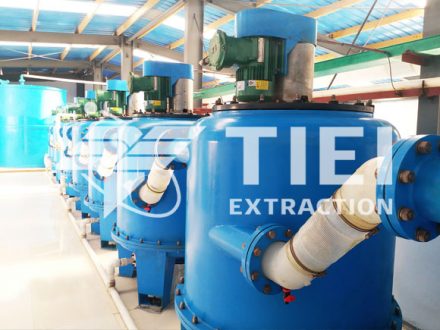
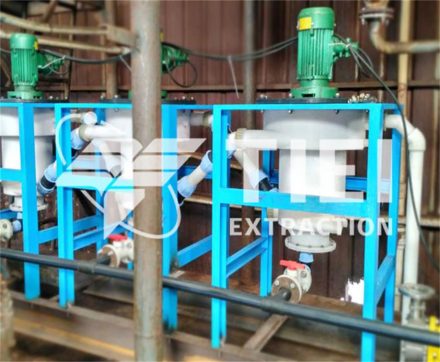
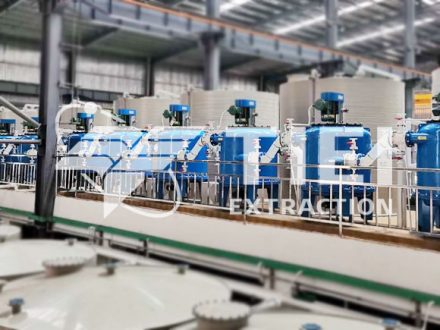
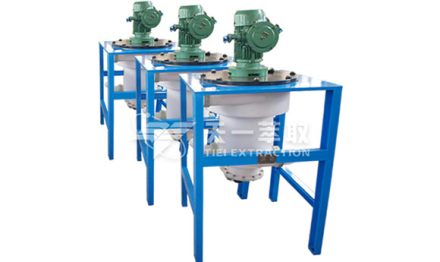
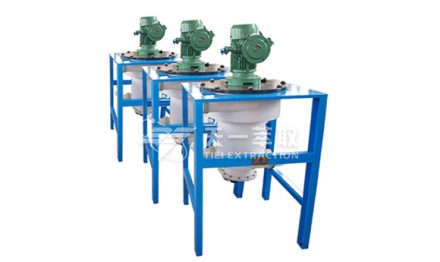
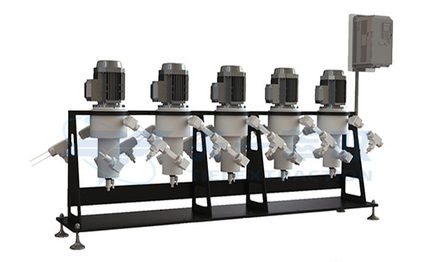
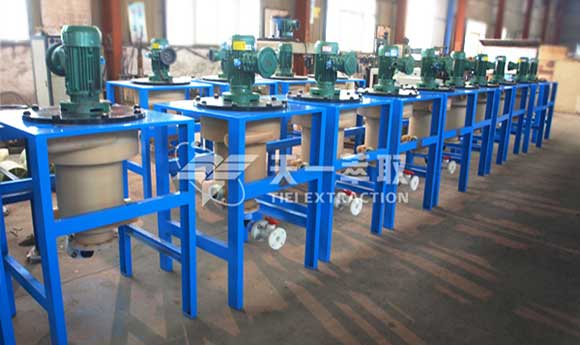
To address these challenges, Zhengzhou Tiei Extraction has optimized the design of the CWL-M Centrifugal Extractor. It features short residence time per stage, rapid two-phase separation, and high single-stage extraction efficiency, while significantly reducing equipment investment and solvent regeneration costs. The equipment has been operating stably in multiple lubricating oil refining projects, delivering good results. In particular, in NMP refining and NMP wastewater recovery, the CWL-M Centrifugal Extractor, combined with a complexation extraction process, can achieve an NMP recovery rate of over 99.8%, substantially reducing production costs and enabling solvent recycling.
Limitations of Traditional Solvent Extraction Equipment
In the solvent refining of lubricating oil, extraction equipment directly determines mass transfer efficiency, phase separation performance, and the economic efficiency of solvent recovery. traditional extraction columns commonly have the following limitations:
Long residence time and large liquid holdup, which may affect heat-sensitive materials.
A tendency toward emulsification, slow phase separation, and difficulty in controlling the interface.
Limited refined oil yield, with relatively high solvent consumption and regeneration load.
Large equipment size, resulting in high space requirements and capital investment.
Insufficient sealing may lead to solvent volatilization, creating environmental and safety concerns.
For high-value polar solvents such as NMP, which have strong dissolving capabilities, insufficient recovery efficiency not only increases production costs but also adds to the wastewater treatment burden.
Technical Advantages of the CWL-M Centrifugal Extractor
The CWL-M Centrifugal Extractor uses centrifugal force generated by high-speed rotation to intensify liquid-liquid mixing and separation, offering significant advantages in lubricating oil refining:
1.Short Residence Time per Stage
Materials rapidly undergo mixing, mass transfer, and centrifugal phase separation inside the equipment, making it suitable for continuous production.
2.Rapid Two-Phase Separation
For systems with small density differences and a tendency to emulsify, centrifugal separation can significantly improve the stability of phase separation.
3.High Single-Stage Extraction Efficiency
The number of required extraction stages can be reduced, thereby lowering solvent circulation volume and equipment investment.
4.Closed and Continuous Operation
The closed design reduces solvent volatilization, improves the operating environment, and lowers safety and environmental risks.
5.Small Footprint and High Automation
The modular design facilitates process modification and capacity expansion, making the equipment suitable for both new installations and the upgrading of existing plants.
6.Reduced Solvent Regeneration Costs
With improved extraction efficiency, the impurity load in the solvent phase can be better controlled, reducing the operating pressure on the solvent regeneration system.
NMP Wastewater Recovery: Centrifugal Extraction + Complexation Extraction
Lubricating oil refining wastewater still contains a high concentration of NMP. As NMP is a relatively high-value solvent, direct discharge or inefficient recovery can result in solvent losses and increased environmental pressure. By combining a centrifugal extractor with a complexation extraction process, NMP in the wastewater can be selectively recovered.
The basic principle is as follows: the complexing agent reacts with NMP to form an extractable complex, which is then rapidly separated into two phases by the CWL-M Centrifugal Extractor. The NMP is subsequently stripped and regenerated, allowing it to return to the production system for recycling. This process can achieve an NMP recovery rate of over 99.8%, significantly reducing solvent procurement costs and the wastewater treatment burden.
Compared with traditional extraction equipment, the CWL-M Centrifugal Extractor also demonstrates advantages in complexation extraction, including rapid phase separation, low entrainment, and stable continuous operation, making it suitable for the recovery and recycling high-value solvents.
Zhengzhou Tiei Extraction specializes in liquid-liquid extraction and centrifugal extraction technologies. The CWL-M series Centrifugal Extractor can be applied in lubricating oil refining, NMP solvent recovery, complexation extraction, fine chemicals, environmental treatment, and other fields. The equipment is designed to provide efficient mass transfer, rapid phase separation, continuous closed operation, and low solvent consumption, making it suitable for projects with stringent requirements for yield, cost, and environmental performance.
If your lubricating oil refining project is facing challenges such as low yield, high solvent consumption, difficulties in NMP recovery, or high wastewater treatment pressure, please contact Zhengzhou Tiei Extraction for CWL-M Centrifugal Extractor selection rrecommendations and process testing support.
Email: sales@tieiextraction.com
Whatsapp: +86 19069612820