In the field of liquid-liquid extraction and separation, centrifugal extractor is gradually replacing traditional mixer-settlers and extraction columns, becoming a preferred equipment solution in industries such as fine chemicals, pharmaceuticals, and hydrometallurgy. However, when faced with different processing capacities, material systems, and compliance requirements, selecting a centrifugal extractor that is truly suited to a specific application is far more complex than it may seem.
1.The First Selection Question: Matching Processing Capacity with Equipment Size
The selection of a centrifugal extractor starts with a basic question: How much liquid needs to be processed per day?
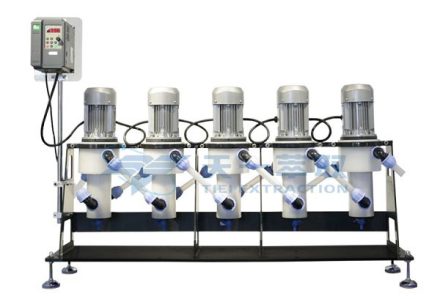
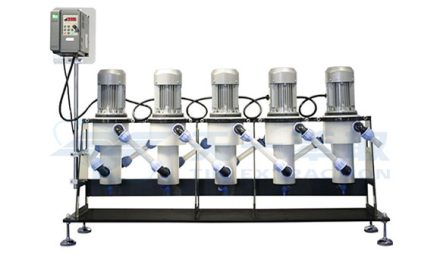
At the laboratory R&D stage, the feed liquid is often valuable and available space is limited, so the equipment needs to be compact. Zhengzhou Tiei Extraction's typical laboratory centrifugal extractor features a 50 mm drum diameter, a liquid-holding capacity controlled at approximately 100–200 mL, and a theoretical processing capacity of 20–50 L/h. This type of equipment can typically be installed inside a fume hood, with a footprint of no more than 0.15 m². It enables the development and evaluation of key process parameters, such as phase ratio, rotational speed, and extraction stages, with minimal material consumption.
At the pilot-plant stage, the equipment needs to provide continuous operation and process validation capabilities, with processing capacities typically increasing to 500–1,000 L/h. At this stage, the equipment should maintain fluid-dynamic parameters similar to those of industrial-scale models, helping ensure that laboratory and pilot-scale data can be effectively scaled up while avoiding the efficiency losses commonly encountered when scaling up conventional equipment.
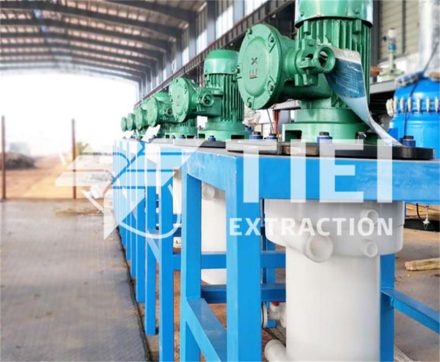
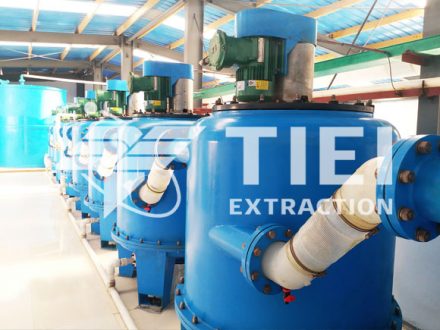
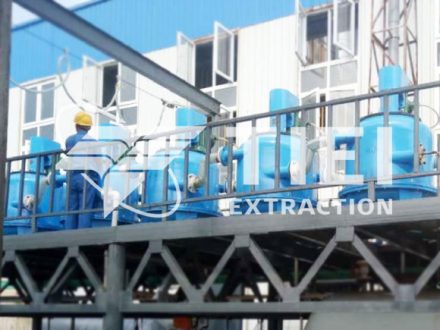
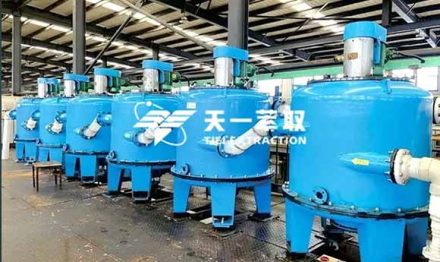
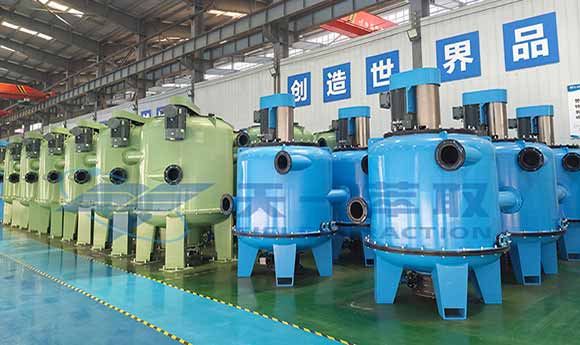
For industrial production, the processing capacity of a single unit can range from 2 m³/h to 60 m³/h, allowing flexible equipment configurations according to production requirements. Multi-stage counter-current configurations are commonly adopted, with 3 to 12 stages available according to specific requirements to meet different separation difficulties and process targets.
2.Material Selection: Determining the Corrosion Resistance Boundary of the Process
The material selection of a centrifugal extractor is not about choosing the most expensive material, but about selecting the material that best matches the process system. The key consideration is the corrosive nature of the process medium.
For conventional sulfate and hydrochloric acid systems, 316L stainless steel is an economical and reliable choice. When the system contains high concentrations of chloride ions, duplex stainless steel 2205 or Hastelloy C-276 may be required. For organic-phase systems containing halogenated hydrocarbons, such as dichloromethane and chloroform, the wetted components should be manufactured using PTFE, PPS, or other fluoropolymer and high-performance composite materials.
The pharmaceutical industry has even more stringent material requirements. A configuration featuring a PTFE equipment housing, a PPS composite drum, and a Hastelloy drive shaft can cover many common pharmaceutical extraction systems involving halogenated hydrocarbons, esters, aromatic hydrocarbons, and acidic media. At the same time, the equipment structure needs to facilitate cleaning. The process-contact area can be designed without bottom bearings and mechanical seals, helping eliminate potential sources of cross-contamination at the equipment level.
3.Rotational Speed and Power Consumption: Engineering Challenges in a Compact Design
High rotational speed and compact equipment size present inherent engineering challenges. The smaller the drum diameter, the higher the rotational speed required to achieve the same centrifugal force. For laboratory-scale equipment with a drum diameter of only 50 mm, the rotational speed needs to reach the required operating range while motor power is controlled within 250 W. This places significantly higher requirements on dynamic balancing accuracy, bearing selection, and structural rigidity compared with conventional equipment.
Adjustable rotational speed is a fundamental requirement for process development. Different material systems have different density differences, viscosities, and interfacial tensions, requiring different centrifugal field strengths to achieve optimum separation performance. Variable-frequency speed control combined with a PLC control system enables precise adjustment and real-time monitoring of the rotational speed, providing greater flexibility and control during process development and operation.
4.Continuous Operation: The Key Transition from Batch to Continuous Processing
Batch operation using traditional reactors can result in significant batch-to-batch variations, extensive manual intervention, and limited production capacity. One of the core advantages of a centrifugal extractor is its ability to transform batch extraction into continuous extraction and production.
Continuous operation requires equipment to possess the following capabilities: stable and controllable feed flow rates, precise adjustment of phase ratios, smooth inter-stage material flow without back-mixing, and rapid response to abnormal operating conditions. Ancillary systems typically include feed pumps, flow meters, pressure sensors, and PLC control cabinets. In the pharmaceutical industry, provisions must also be made for the safe discharge of process fluids during abnormal events, such as power outages.
Conclusion
The selection of a centrifugal extractor is essentially a comprehensive balance between process requirements, engineering constraints, and compliance requirements. Processing capacity determines the equipment size. The material system determines the material selection. Process objectives determine the required control precision. Industry-specific requirements determine the applicable compliance boundaries.
From laboratory-scale testing to pilot-scale validation and full-scale industrial production, every step of equipment selection should be based on actual process data and clearly defined engineering parameters. Relying on data—rather than judgment based solely on experience—is the correct approach to equipment selection.
Email: sales@tieiextraction.com
Whatsapp: +86 19069612820