In the field of standalone energy storage, the competition between lithium iron phosphate (LFP) and all-vanadium redox flow battery (VRFB) technologies is essentially a trade-off between short-term capital returns and long-term asset stability. Lithium iron phosphate batteries, with advantages such as low initial investment, short construction periods, and high system efficiency (up to 88%), have become the dominant choice for purely market-oriented investments. All-vanadium redox flow batteries, on the other hand, feature inherent safety, an ultra-long service life of 25 years, support for 100% depth of discharge, and minimal cycle degradation, making them an important choice for projects with stringent safety requirements and long-duration energy storage demonstration projects.
However, regardless of which technology route is selected, the preparation and purification of vanadium electrolyte, the core material of all-vanadium redox flow batteries, is a critical factor in determining project economics and operational stability. This process, in particular, relies on the support of high-efficiency separation equipment.
Vanadium Electrolyte: The “Blood” of All-Vanadium Redox Flow Batteries
The energy storage medium of all-vanadium redox flow batteries is a sulfuric acid solution containing vanadium ions in different oxidation states. The purity of the electrolyte directly affects the energy efficiency, cycle life, and self-discharge rate of the battery. The presence of impurity ions such as iron, chromium, aluminum, and silicon can cause side reactions, reduce coulombic efficiency, and may even result in electrolyte poisoning and failure.
The preparation of industrial-grade vanadium electrolyte typically uses vanadium slag, stone coal, or vanadium-titanium magnetite as raw materials. Through processes such as roasting, leaching, impurity removal, extraction, and stripping, a high-purity vanadyl sulfate solution is obtained. Among these processes, solvent extraction is the core unit operation for the deep separation of vanadium from impurity ions.
Traditional mixer-settlers, due to their large number of stages, large footprint, and significant solvent entrainment, have difficulty meeting the efficiency and stability requirements of large-scale vanadium electrolyte production. Especially in continuous and large-scale projects, the separation precision and operational stability of extraction equipment have become important factors affecting electrolyte consistency and cost control.
Centrifugal Extraction Technology: Key Equipment for Vanadium Electrolyte Purification
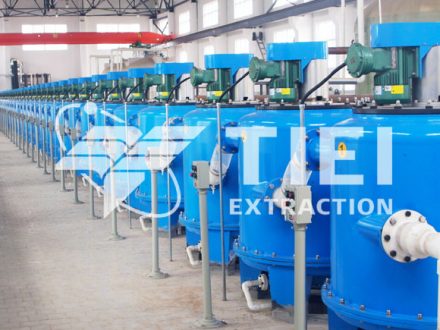
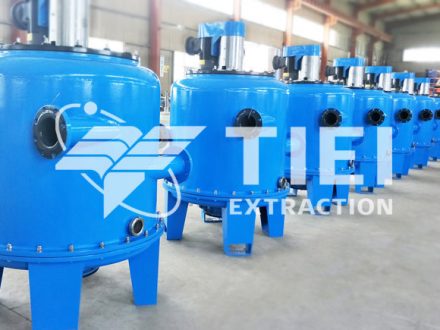
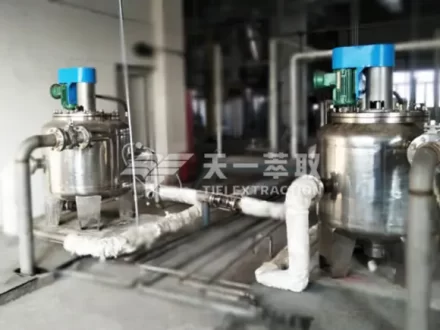
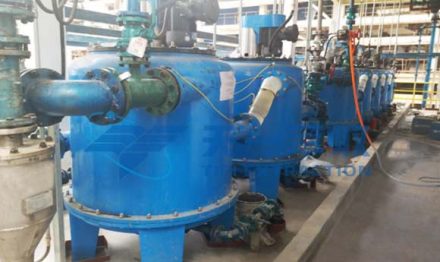
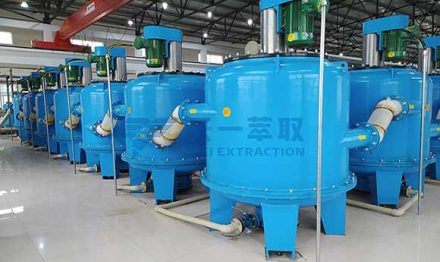
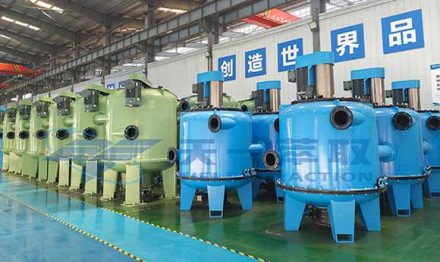
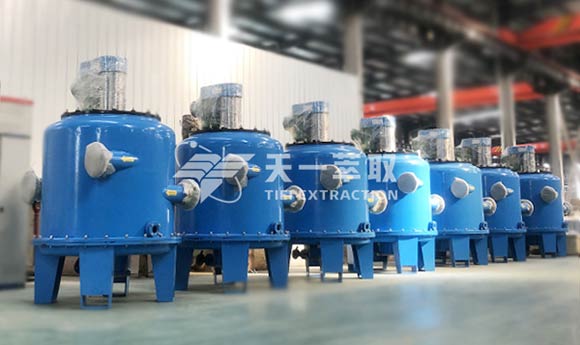
The CWL-M Series centrifugal extractor utilizes the centrifugal force generated by high-speed rotation to enable the aqueous and organic phases to complete mixing, mass transfer, and rapid separation within seconds. In vanadium electrolyte purification processes, its technical advantages are mainly reflected in the following aspects:
1.High-Efficiency Mass Transfer, Reducing the Number of Stages
Forced mixing under a centrifugal force field breaks the liquid into micron-sized droplets, increasing the mass-transfer interfacial area by 5–8 times compared with traditional equipment. The extraction efficiency of a single stage can reach more than 90%. The number of stages required for the separation of vanadium from impurities such as iron and aluminum can be reduced by more than 40%, significantly reducing equipment investment and footprint.
2.Rapid Phase Separation, Preventing Emulsification
Vanadium leach solutions often contain emulsification-prone impurities such as silica colloids. The forced separation generated by the centrifugal force field enables the two phases to separate clearly within 1–2 seconds. The organic-phase entrainment rate is below 0.1%, fundamentally suppressing the accumulation of emulsified layers and ensuring continuous and stable operation.
3.Fully Enclosed and Corrosion-Resistant
The vanadium electrolyte system is a strongly acidic sulfuric acid medium. The wetted parts of the equipment can be made of 316L stainless steel, duplex stainless steel, or fluoropolymer materials to withstand long-term corrosion. The fully enclosed structure prevents solvent volatilization and improves the working environment.
4.Continuous Automation and Easy Scale-Up
The modular design supports flexible multi-stage series connection, and experimental data can be directly scaled up linearly to industrial-scale models. The PLC intelligent control system enables 24-hour continuous unattended operation, making it suitable for large-scale vanadium electrolyte production.
Supporting the Entire Process from Vanadium Extraction to Electrolyte Preparation
Across the vanadium industry chain, centrifugal extraction technology can be applied to multiple stages: from extracting and enriching vanadium from leach solutions of stone coal or vanadium slag, to deep impurity removal during vanadium electrolyte preparation, and further to the recovery and regeneration of electrolyte after the retirement of vanadium batteries.
For all-vanadium redox flow battery projects adopting an electrolyte leasing model, the purity and consistency of the electrolyte directly affect leasing costs and battery performance, placing higher demands on the separation precision of extraction equipment. With its advantages of high efficiency, enclosed operation, continuous processing, and easy scale-up, the CWL-M Series centrifugal extractor is becoming an important equipment choice for vanadium electrolyte purification and recovery.
Conclusion
The competitiveness of all-vanadium redox flow batteries depends not only on stack design and system integration, but also on the cost and quality of the electrolyte, the core material. As key equipment for vanadium electrolyte purification, centrifugal extraction technology is providing solid support for the large-scale application of all-vanadium redox flow energy storage.
Tiei Extraction has long been dedicated to the R&D and engineering application of centrifugal extraction equipment. The CWL-M Series centrifugal extractor can provide equipment selection and process support for applications including vanadium electrolyte purification, vanadium resource recovery, and vanadium battery electrolyte regeneration. If you are planning an all-vanadium redox flow battery electrolyte project, we welcome you to contact us to explore more efficient and reliable separation solutions together.
Email: sales@tieiextraction.com
Whatsapp: +86 19069612820